Robohub.org
Restoring surgeons’ sense of touch with robotic fingertips
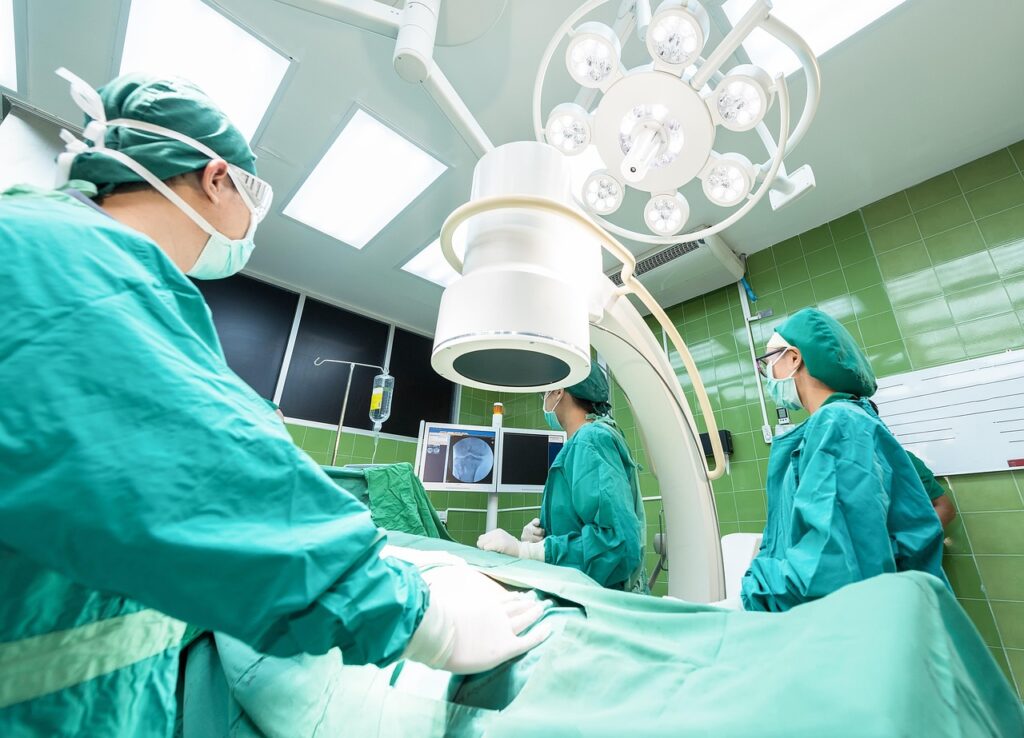
By Anthony King
Modern surgery has gone from long incisions to tiny cuts guided by robots and AI. In the process, however, surgeons have lost something vital: the chance to feel inside the body directly. Without palpation, it becomes harder to detect tissue abnormalities during an operation.
A group of surgeons and engineers across Europe is now trying to bring back this vital aspect of surgery.
Working within an EU-funded research collaboration called PALPABLE, they are developing a soft robotic “fingertip” that can sense how firm or soft tissue is during minimally invasive and robotic surgery. The research runs until the end of 2026, with a first prototype expected to be tested by surgeons around March 2026.
By combining optical sensing, soft robotics and AI, the team is designing a probe that mimics the way a fingertip presses and feels during surgery. It would gently probe organs and create a visual map of tissue stiffness, displayed on a screen to guide surgeons as they operate.
Losing the surgeon’s touch
For many surgeons, the loss of direct touch has been one of the quiet trade-offs of modern surgery.
Sooner or later, I believe the vast majority of surgeries will be robotic.
“We started 30 years ago with open surgery and using our fingers,” said Professor Alberto Arezzo from the University of Turin, Italy. He specialises in minimally invasive and robotic surgery and mostly treats patients with colorectal cancer.
“Then we moved into the era of keyhole surgery, which reduced tactile feedback because we began to use long instruments,” he said.
From the 1990s, keyhole surgery became increasingly common, allowing surgeons to operate through small incisions with the help of a camera. Patients benefited from less trauma, shorter hospital stays and faster recovery.
But this came at the expense of physical touch. That matters because tumours often feel different from healthy tissue – stiffer, less pliable or irregular – important differences that experienced hands can detect.
Finding tumour margins
When operating on cancer, surgeons walk a fine line: remove too much tissue and function may suffer; remove too little and cancer may remain, and then spread again, requiring more surgery.
“We don’t want to do that. We want it done in one shot,” said Dr Gadi Marom at Hadassah Medical Centre in Jerusalem, one of the clinicians involved in the research, who specialises in minimally invasive and robotic surgery on patients with stomach and oesophagus diseases.
This is where sensing technology could help. By translating physical contact into visual information, such as a colour-coded map showing softer and firmer areas, surgeons could regain a functional equivalent of touch.
“With a new instrument, we want to be able to determine the margins around a tumour,” said Marom.
Using light to feel
To do that, engineers on the team are turning to light.
The probe they are developing contains fibre-optic cables embedded in a soft, flexible tip. When pressed against tissue, the tip deforms and the light travelling through the fibres changes.
“A silicone dome presses against soft tissue, allowing us to map both the direction and the magnitude of the applied force,” explained Dr Georgios Violakis at Hellenic Mediterranean University in Heraklion, Crete.
Those tiny shifts in light intensity and wavelength are then translated into information about tissue stiffness.
In the lab, the team has already built and calibrated early versions of the soft membrane and light-based sensors, with partners contributing across the system.
Queen Mary University of London (UK) is helping design and refine the membranes, the Fraunhofer Institute (Germany) is developing the functional films, while Bendabl (Greece), Tech Hive Labs (Greece) and the University of Essex (UK) are advancing the software needed to visualise stiffness and tactile maps.
The prototype will be validated in lab tests before it is used on patients.
The bottom line is that we will be able to give better care to our patients.
The fibre‑optic cables are each about the width of a human hair. Similar sensing technology has long been used to detect small movements in large structures such as aircraft, skyscrapers and nuclear reactors. Here it is being applied on a much smaller scale to detect subtle differences in human tissue.
“For touching organs inside an anaesthetised patient, the device needs to be both highly accurate and high resolution,” said Professor Panagiotis Polygerinos, a soft robotics researcher at Hellenic Mediterranean University.
“Something like this might have been possible sooner, but the technology would have been far more expensive and less precise, making it impractical for clinical use.”
Bringing touch to robots
As surgery grows increasingly robotic, the loss of tactile feedback is becoming more pressing – and restoring a sense of touch even more vital.
“When I operate with a robot I have the advantage of 3D vision,” said Marom. “And I don’t have to stand for the entire surgery.” That matters in long procedures, such as removing a patient’s oesophagus, which can take up to eight hours.
Robotic surgery also raises new possibilities. Marom hopes it may eventually allow surgeons, in carefully selected cases, to remove small tumours from the oesophagus without removing the entire organ.
But there is a downside.
“In robotic surgery, tactile feedback is largely absent,” said Arezzo. “That’s why this work is so important.”
Both surgeons believe robotics will continue to expand in operating theatres, but only if surgeons are given better sensory information.
“Sooner or later, I believe the vast majority of surgeries will be robotic,” said Arezzo.
For Marom, working closely with engineers has been essential. “I am exposed to soft robotics and many new technologies,” he said. “I see how new instruments can be developed.”
“The bottom line is that we will be able to give better care to our patients,” he added.
Research in this article was funded by the EU’s Horizon Programme. The views of the interviewees don’t necessarily reflect those of the European Commission. If you liked this article, please consider sharing it on social media.
This article was originally published in Horizon, the EU Research and Innovation magazine.

AUAI is supported by: