
Robohub.org
Book Review: Implementation of Robot Systems, by Mike Wilson
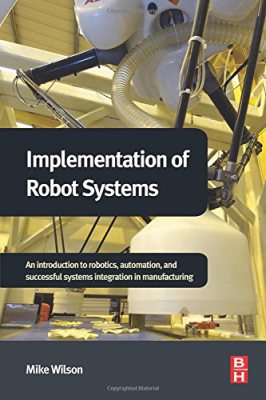
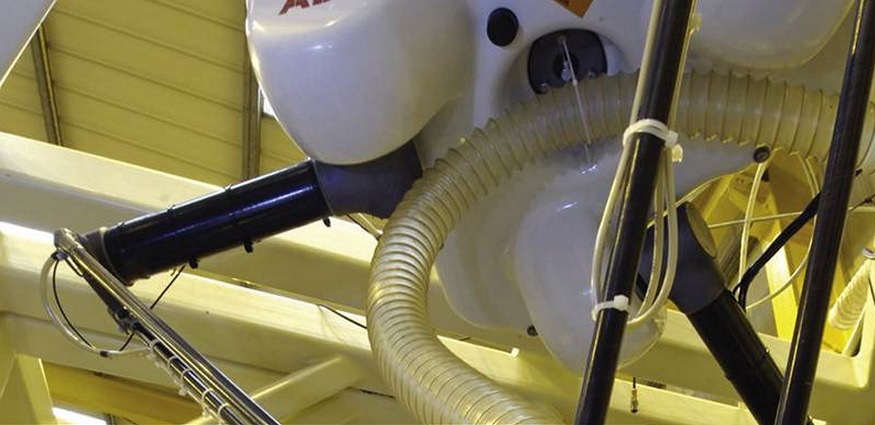 Implementation of Robot Systems by Mike Wilson is a book about how to integrate robots into the manufacturing process. Wilson takes you through the process of deploying and developing your robotic systems, because, as Wilson puts it: “All successful projects require a methodical approach to project planning.” By following his lessons from over 30 years of experience working with robotics and automation, you can learn how to spec, design, order, monitor, and evaluate manufacturing robots.
 After the introductory section discussing the history of robots in manufacturing we jump into a discussion of the different types of robots (articulated, SCARA, cartesian, parallel mechanisms, etc…), how they perform, and how to select the proper robot type. For performance he picks out the following four items that you need to evaluate for a given application and robot.
1. Weight carrying capacity
2. Repeatability (path and tool position)
3. Reach and Working envelope (configuration, number of axes, etc..)
4. Speed (for each axis or given path).
That list is followed by a list of how to select your robot. It is a combination of the items above and a few more things such as:
5. Mounting capabilities
6. Dimensions and weight
7. Protection and environmental considerations
8. Electrical requirements
The following two chapters are all about the common components in a manufacturing system and the applications that robots are commonly used for. So to build your robotic system you will need to start by considering:
- Handling Equipment: conveyors, ground vehicles, part feeders, bowl feeders, linear feeders, blow feeders, bandoleer feeders, and magazine feeders
- Vision Systems: For inspection and positioning
- Process Equipment: There are two types of process equipment.
- Equipment that handles parts
- Equipment that applies a process: Welding, Painting, dispensing, cutting, etc..
- Grippers and Tool Changers
- Tooling & Fixturing
- Assembly Automation Components
- System Controls
- Safety & Guarding
While I just provided a list, the book goes into detail about each of the above categories.
Now that the reader knows what they need to consider and how to evaluate a solution, we can look at typical applications. The primary applications discussed include: welding (arc, spot and laser), dispensing (painting, adhesives, and sealant), processing (cutting, grinding, deburing, and polishing), handling (casting, molding, forging, stamping, inspection, palatizing, and packing), followed by some electronics assembly. For each of these topics the concept and requirements are first discussed, followed by a section on developing a solution.
After developing the ideas required to iterate a system we are ready to develop specifications for each section. The author discusses the process starting with the concept and requirements, all the way to testing, warranties, and training.
Once your solution is in place it is important to quantify the benefits that you are receiving. The author discusses the 10 key benefits of robots as developed by the International Federation of Robotics in 2005:
- Reduce operating cost
- Improve product quality and consistency
- Improve quality of work for employees
- Increase production output
- Increase product manufacturing flexibility
- Reduce material waste and increase yield
- Comply with safety rules and improve workplace health and safety
- Reduce labor turnover and difficulty of recruiting workers
- Reduce capital costs
- Save space in high-value manufacturing areas
These ten areas are a good start for justifying robots as part of a business model. They can also be used to evaluate a system before purchasing.
After reading this book I found it interesting to see the different processes and methods that robots are typically used for in manufacturing. If you are looking to get into the field, then you should read this book. While I think it is great that the author walks the reader through the different tasks, and how to evaluate the robotic solutions, I often felt that the book was repetitive.
I think this book is good for researchers looking to break into manufacturing robotics, to help get a good idea of various manufacturing processes. It might also useful when writing grants to have metrics that you can discuss. For a practicing (maybe beginner) engineer, this book has good chapters on project management and how to evaluate a system pre and post installation.
I would like to thank Wiley for providing me with a hard copy of this book for review.
The post Book Review: Implementation of Robot Systems by Mike Wilson appeared first on Robots For Roboticists.
If you liked this article, you may also be interested in:
- Toughbook: The super rugged laptop teardown
- Selecting a camera and lens for your robot
- Things to think about when transporting your robot
- Developing trust in autonomous robots: Seminar with Michael Wagner
See all the latest robotics news on Robohub, or sign up for our weekly newsletter.
tags: books

AUAI is supported by:









