Robohub.org
 

MATLAB Robotics System Toolbox and ROS

by
26 March 2015


share this:
Capture

By Ilia Baranov

Recently, Mathworks released a new toolbox for Matlab. This is exciting for a number of reasons: it includes everything from data analysis to coordination of multiple robots. In today’s post, we explore using this Robotics System Toolbox to connect to both real and virtual Jackal robots.

The toolbox has made a number of improvements since the “beta” version that we wrote a tutorial on a while ago. Matlab now supports services, parameters, analyzing rosbag data, and has a very robust series of tutorials. They even support generating code in Matlab Simulink, and then having it run on a ROS robot, with no extra downloads needed. This should make development of control algorithms faster for robots, and enable fairly detailed testing outside of ROS.

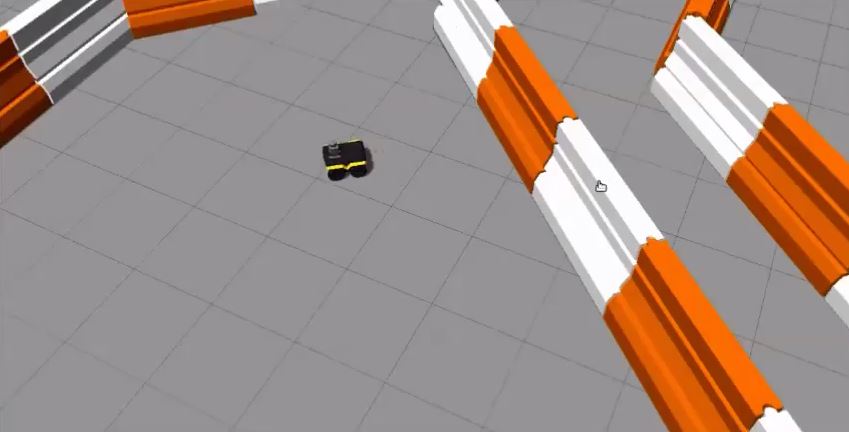
The following video looks at running a Jackal in circles, in both real and virtual space. It also compares a simple obstacle avoidance program, using lidar, that wanders around the environment.

https://youtu.be/K8_wjMCHQMw

To run the obstacle avoidance sample on a Jackal, ensure that the Matlab Robotics System Toolbox is installed, and download this file: Jackal_New.m

Change the first IP address to your Jackal (real or simulated) and the second to your own computer (the one running Matlab).

If you are ready to try analyzing bag data, download our sample file from the run shown in the video, and plot the laser data.

laserAvoid_Real.bag , scan_plot.m

Link to the toolbox:

http://www.mathworks.com/products/robotics/

Looking for other Clearpath tutorials? Check these out.


tags: , ,


Clearpath Robotics Clearpath Robotics is dedicated to automating the world's dullest, dirtiest and deadliest jobs through mobile robotic solutions.

            AUAI is supported by:


Subscribe to Robohub newsletter on substack


Related posts :

Exploring the Moon will require rovers that can think for themselves – an upcoming NASA mission will test whether they can

  04 Sep 2026
NASA is planning to send three small rovers to the Moon to autonomously compute how to best explore a patch of ground.

Surviving the paper deluge: Notes from an ICRA panel on publishing, LLMs, and the future of peer review

Experts discuss peer-review challenges and possibilities for reshaping the process.

When expressive humanoid robots are awkward, people become wary – new brain study

  31 Aug 2026
People become more suspicious of a humanoid robot that makes errors, especially when the robot is an expressive conversation partner.

First 11 vs 11 humanoid soccer game played at RoboCup 2026

  28 Aug 2026
Watch highlights from this historic match.

How green is your robot? And other awkward questions

Robots clean rivers and sort waste, monitor ecosystems, and inspect renewable-energy infrastructure. But even the greenest robot has an environmental footprint.

These tiny drones are powered by sound

  24 Aug 2026
EPFL engineers have designed acoustic cavities that convert sound waves into thrust, propelling small robots and ultralight aerial vehicles without on-board actuators or electronics.

#AAMAS2026 blue sky award winner: Foundation world models for agents in changing environments

and   21 Aug 2026
Hear from the AAMAS 2026 Best Blue Sky Paper Award winner.

Robotics roadmaps from around the world spotlight of the month: Japan

Robots have been a prolific theme in Japanese pop culture and media since the 1950s


AUAI is supported by:


Subscribe to Robohub newsletter on substack


©2026.05 - Association for the Understanding of Artificial Intelligence