Robohub.org
 

MIT CSAIL’s 6-foot-tall NASA humanoid robot has landed

by
28 April 2016


share this:
Valkyrie

By Adam Conner-Simons, MIT CSAIL

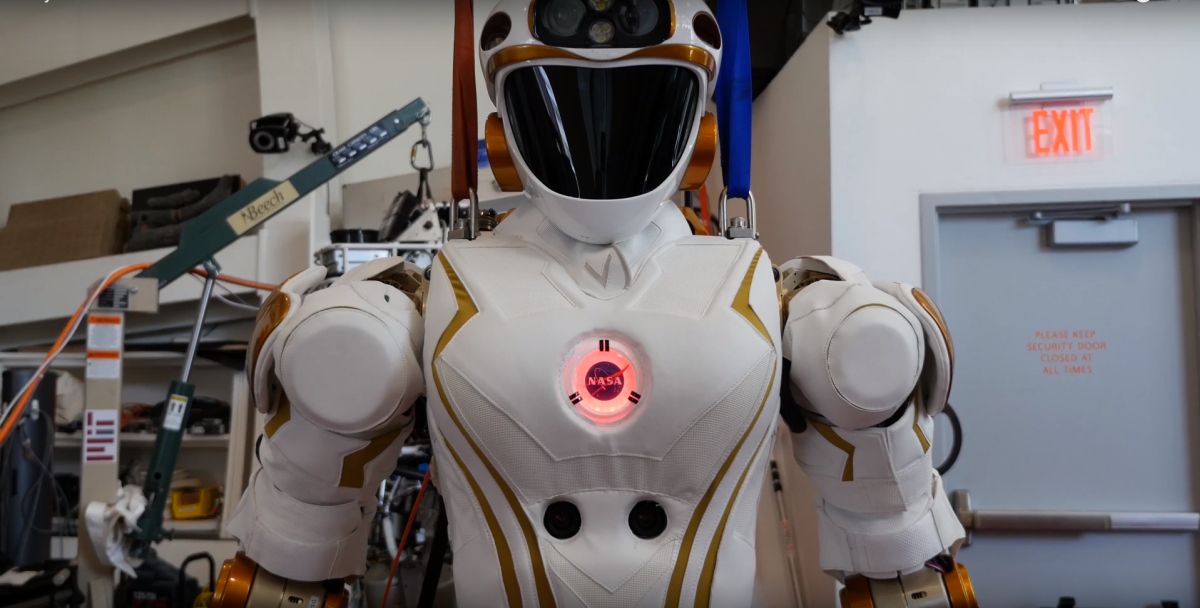
This week MIT’s Computer Science and Artificial Intelligence Laboratory (CSAIL) received an unusual package: a six-foot-tall, 300-pound humanoid robot that NASA hopes to have serve on future space missions to Mars and beyond.

A team of researchers led by CSAIL principal investigator Russ Tedrake will program their new “Valkyrie” robot to autonomously perform a variety of challenging tasks that would allow it to help or even replace astronauts on missions.

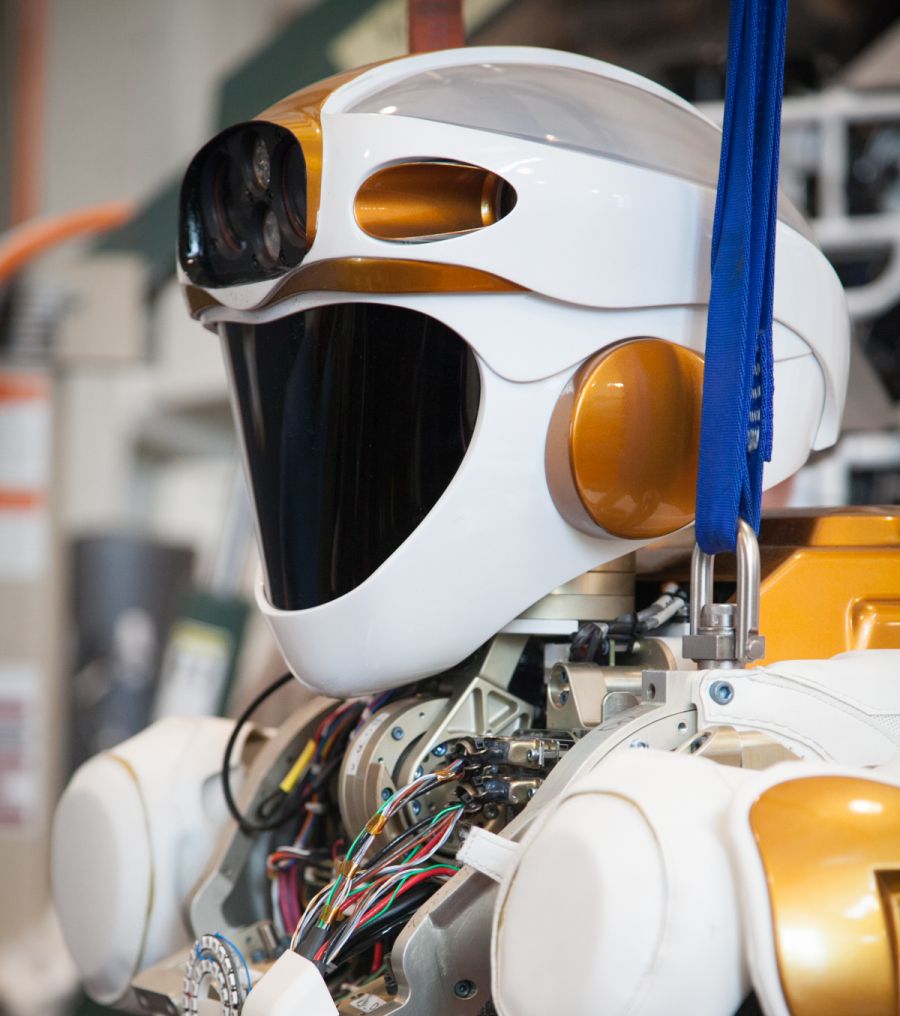
Valkyrie is fully electric, with four body cameras, 28 torque-controlled joints and 44 degrees of freedom. The robot boasts more than 200 individual sensors, including 38 on each hand (six on each palm, and eight along each of its four fingers).

Other researchers participating in the project include professors Leslie Kaelbling and Tomas Lozano-Perez, who will conduct work on high-level autonomy.

“Our work is about vetting the robot and seeing what it is capable of,” says Tedrake, whose team received a two-year research grant from NASA for the project. “If we can integrate the autonomy work with our planning and control algorithms, it could result in an unprecedented level of autonomous capabilities for a humanoid robot.’
robot-nasa2


Tedrake’s team at CSAIL’s Robot Locomotion Group has extensive experience developing autonomous robots. The group spent the last three years doing research as part of the DARPA Robotics Challenge, where they programmed another six-foot-tall robot named Atlas to complete a series of tasks that included opening doors, turning valves, drilling holes, climbing stairs and driving a car.

Besides the CSAIL team, NASA also awarded a Valkyrie robot to Northeastern University in conjunction with the University of Massachusetts at Lowell.


tags: , ,


CSAIL MIT The Computer Science and Artificial Intelligence Laboratory – known as CSAIL ­– is the largest research laboratory at MIT and one of the world’s most important centers of information technology research.

            AUAI is supported by:


Subscribe to Robohub newsletter on substack


Related posts :

RoboChem Flex: democratisation of the autonomous synthesis robot

  02 Jun 2026
A versatile, modular design and the option for "human-in-the-loop" analytics.

Robot Talk Episode 158 – Autonomous robot deliveries, with Ahti Heinla

  29 May 2026
In the latest episode of the Robot Talk podcast, Claire chatted to Ahti Heinla from Starship Technologies about their AI-powered delivery robots that operate independently on streets and pavements.

Light-activated gel could impact wearables, soft robotics, and more

  28 May 2026
In the field of ionotronics, data are transferred through ions, potentially providing a bridge between electronics and biological tissue.

Handle with care: Soft robot gripper picks ripe fruit without bruising

  27 May 2026
Stretchable fiber-optic sensors used to create a soft robot gripper.

Robot Talk Episode 157 – Generating new robot designs, with Josie Hughes

  22 May 2026
In the latest episode of the Robot Talk podcast, Claire chatted to Josie Hughes from École Polytechnique Fédérale de Lausanne about using AI to develop new designs for robotic manipulators.

Robotics Café brings together autonomous robot practitioners

  20 May 2026
Recently launched series for researchers, students and industry practitioners aims to provide a platform for students to present their work.

Table tennis robot defeats some of world’s best players – why this has major implications for robotics

  18 May 2026
Ace, from Sony AI, is the first robot to beat elite human players in competitive physical sport.

Robot Talk Episode 156 – Rugged robots for dangerous missions, with Gavin Kenneally

  15 May 2026
In the latest episode of the Robot Talk podcast, Claire chatted to Gavin Kenneally from Ghost Robotics about robot dogs for defence, security, and public safety.


AUAI is supported by:


Subscribe to Robohub newsletter on substack


©2026.05 - Association for the Understanding of Artificial Intelligence