
Robohub.org
Quiet inroads in robotics: the Vecna story
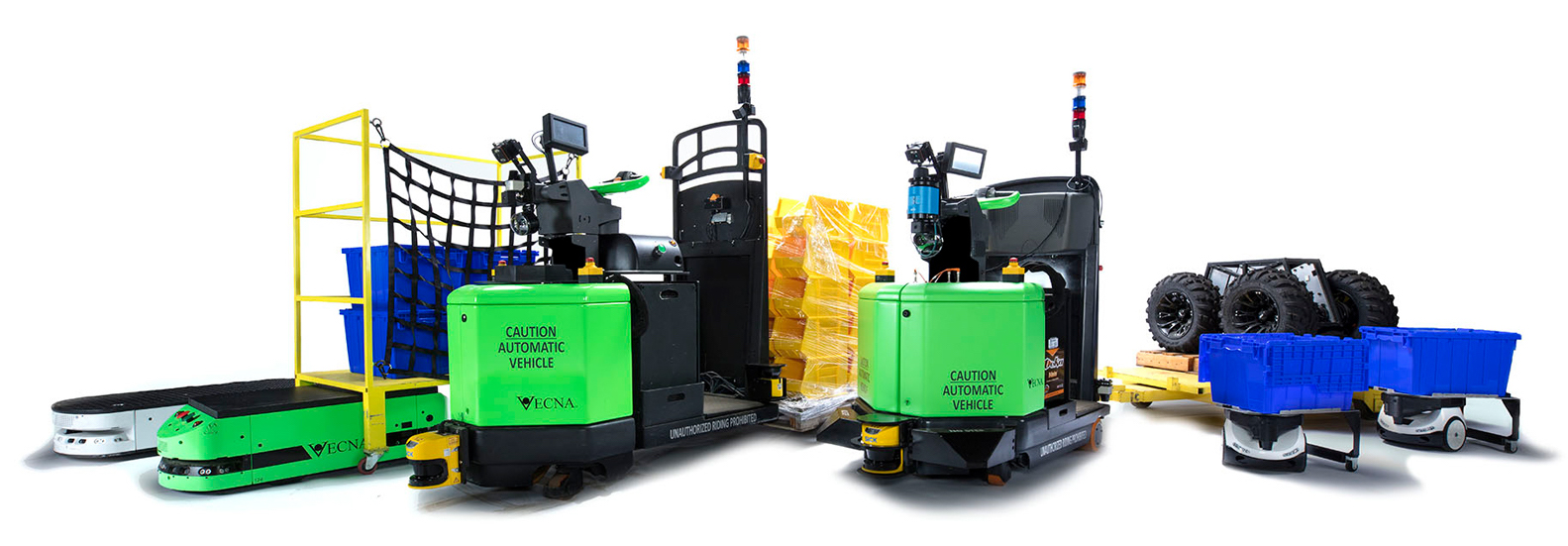
Robotics is undergoing fundamental change in three core areas: collaboration, autonomous mobility and increasing intelligence.
Autonomous mobility technology is entering the industrial vehicle marketplace of AGVs, forklifts and tugs with new products, better navigation technologies and lower costs.
Forecasters Grandview Research and IDTechEx suggest that autonomous forklifts and tugs will emerge as the standard from 2022/2023 onwards, ultimately growing to represent 70% of annual mobile material handling equipment by 2037. The key to this transformation is unmanned mobile autonomy. These new mobile autonomous robots can achieve higher productivity and cost efficiencies because the technology largely reduces the driver labor costs, increases safety, and lowers insurance rates and spoilage.
The Vecna Story
Cambridge, MA-based Vecna Technologies, founded in 1998 by a group of MIT scientists on a $5,000 shoe-string investment from the founders, has self-funded itself into a profitable ongoing manufacturer, researcher and software firm serving the healthcare, logistics and remote presence marketplaces. They have amassed more than a hundred issued and pending patents and employ more than 200.
Earlier this year Vecna Technologies spun off 60 employees and the robotics business to found and operate Vecna Robotics working with a large number of partners and contractors. The new entity’s primary applications are to provide mixed fleets of mobile robotic solutions for:
- Goods to person
- Receiving to warehouse
- Production cell to cell
- Point to point gofering
- Zone picking transport
- Tote and case picking transport
Vecna already has a broad range of products serving these applications: from tuggers like at FedEx (see video below) to RC20s which are the lowest cost per performance mobile robot on the market and several models in between. Thousands of Vecna robots are deployed worldwide in (1) major manufacturing facilities doing line-side replenishment; (2) in major shipping companies moving non-conveyables and automating indoor and outdoor tuggers and lifts; and (3) in major 3PLs and retailers doing order fulfillment transport both for store replenishment and for e-commerce.
A recent NY Times story exemplifies how these new Vecna Robotics autonomous mobile robots are impacting the world of material handling. In this case, Vecna robots are used by FedEx to handle large items that don’t fit on conveyor belts.
“When a truck filled with packages arrives, workers load the bulky items onto trailers hitched to a robot. Once these trailers are full, they press a button that sends the vehicle on its way. Equipped with laser-based sensors, cameras and other navigation tools, the robots stop when people or other vehicles get in the way. In some cases, they even figure out a new way to go.”
Vecna robots have vision systems that allow them to navigate safely around humans so that they can share common paths. And they have Autonomy Kit, a general purpose robot brain that can turn any piece of equipment into a safe and efficient mobile robot. Everything from large earth moving and construction equipment to forklifts, tuggers, floor cleaners, and even small order fulfillment and each picking systems can easily be automated and operate in collaborative human-filled environments. Further, all Vecna systems are directed by a smart centralized controller for optimization, traffic control and service. Because Vecna Robotics is finding so much demand (and success) in this sector, it is considering bringing in outside money to fund a more rapid expansion into the marketplace.
Meanwhile, Vecna Technologies, sans the robotics group, remains a leader in healthcare information technology providing patient portals, payment solutions, kiosks, mobile apps, telepresence and medical logistics, and “will continue to innovate and accelerate cutting edge solutions to our customers in the commercial and government healthcare markets,” says Vecna CTO Daniel Theobald.
Marketplace full of competitors, many from China

Source: Styleintelligence G2P Robotics, Feb 2018
As competitors sense the growing demand from distribution and fulfillment center executives in need of solutions to pick, pack and ship more parcels quickly, there are many startups and companies inventing or modifying their products to solve those problems and take advantage of the demand.

There is also increasing demand from factory managers who need flexibility to move goods within their facilities that cannot be handled economically by human workers or fixed conveyor systems.
Both markets are growing exponentially and, as can be seen by the two charts above, there are many players competing in the field. Further, the market is also fueled by approved investment priorities in capital purchases that were put off during and after the financial crisis of 2008-9. This can be seen in the VDC Research graphic on the right which surveyed manufacturing executives about their capital purchasing plans for 2018-2020.

Vecna responded to those demands years ago when it began developing and expanding its line of robots and accompanying software. The refocusing that went into spinning off Vecna Robotics will help enable Vecna to continue to be a big, innovative and progressive player in the mobile robotics market.

AUAI is supported by:









