
Robohub.org
 

Opportunities in DARPA SubT Challenge

by
14 July 2020


share this:
Opportunities Still Available to Participate in the DARPA Subterranean (SubT) Challenge: Cave Circuit 2020 and Final Event 2021. Join us for an introduction of the DARPA Subterranean Challenge with Program Manager Timothy Chung on Monday July 20 at 12pm PDT https://www.eventbrite.com/e/opportunities-with-darpa-subt-challenge-tickets-113037393888

About this Event

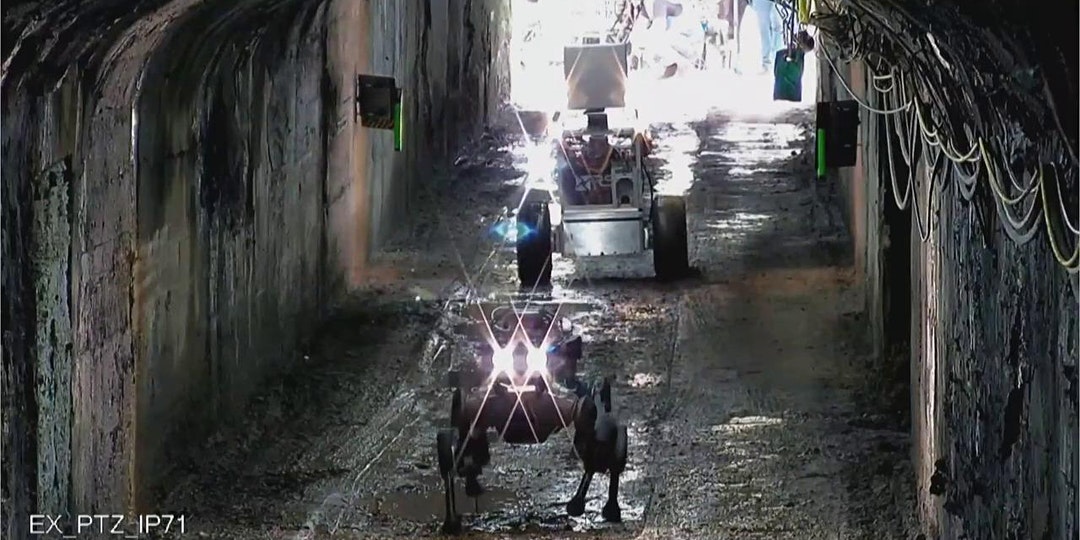
The DARPA Subterranean (SubT) Challenge aims to develop innovative technologies that would augment operations underground.

The SubT Challenge allows teams to demonstrate new approaches for robotic systems to rapidly map, navigate, and search complex underground environments, including human-made tunnel systems, urban underground, and natural cave networks.

The SubT Challenge is organized into two Competitions (Systems and Virtual), each with two tracks (DARPA-funded and self-funded).

The Cave Circuit, the final of three Circuit events, is planned for later this year. Final Event, planned for summer of 2021, will put both Systems and Virtual teams to the test with courses that incorporate diverse elements from all three environments. Teams will compete for up to $2 million in the Systems Final Event and up to $1.5 million in the Virtual Final Event, with additional prizes.

Learn more about the opportunities to participate either virtual or systems Team: https://www.subtchallenge.com/
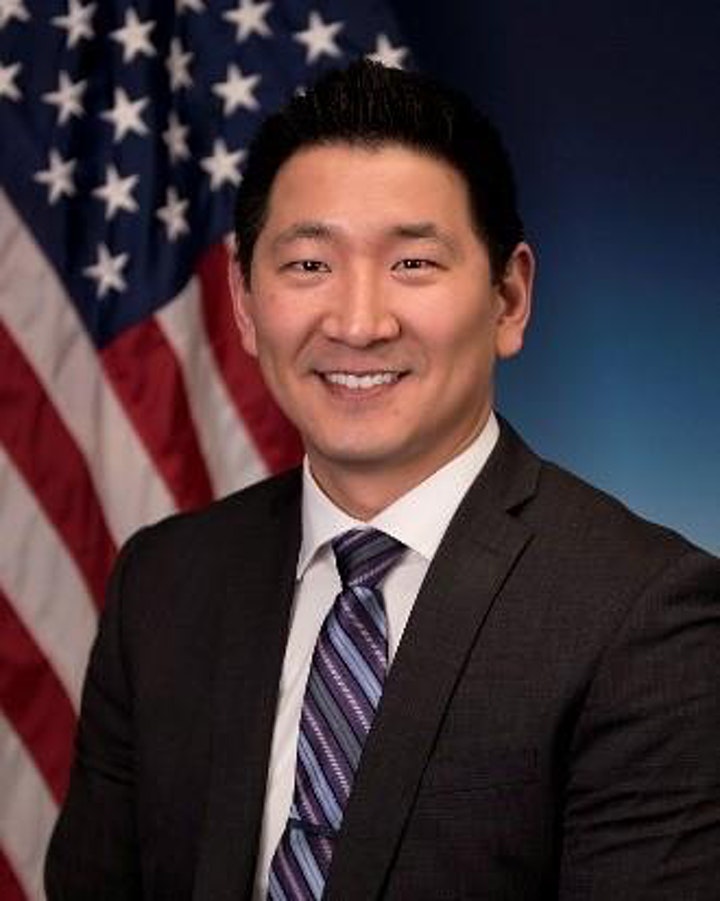
Dr. Timothy Chung – Program Manager

Dr. Timothy Chung joined DARPA’s Tactical Technology Office as a program manager in February 2016. He serves as the Program Manager for the OFFensive Swarm-Enabled Tactics Program and the DARPA Subterranean (SubT) Challenge. His interests include autonomous/unmanned air vehicles, collaborative autonomy for unmanned swarm system capabilities, distributed perception, distributed decision-making, and counter unmanned system technologies.

Prior to joining DARPA, Dr. Chung served as an Assistant Professor at the Naval Postgraduate School and Director of the Advanced Robotic Systems Engineering Laboratory (ARSENL). His academic interests included modeling, analysis, and systems engineering of operational settings involving unmanned systems, combining collaborative autonomy development efforts with an extensive live-fly field experimentation program for swarm and counter-swarm unmanned system tactics and associated technologies.

Dr. Chung holds a Bachelor of Science in Mechanical and Aerospace Engineering from Cornell University. He also earned Master of Science and Doctor of Philosophy degrees in Mechanical Engineering from the California Institute of Technology.

Learn more about DARPA here: www.darpa.mil



Andra Keay is the Managing Director of Silicon Valley Robotics, founder of Women in Robotics and is a mentor, investor and advisor to startups, accelerators and think tanks, with a strong interest in commercializing socially positive robotics and AI.

            AUAI is supported by:


Subscribe to Robohub newsletter on substack


Related posts :

Watch the ICRA keynote and plenary talks

  16 Sep 2026
If you missed the conference you can catch up on IEEE TV.

Building and programming autonomous robots at the York Micromaze Hackathon

and   11 Sep 2026
From 25–27 August, UK RAS STEPS members came together for a three-day Micromaze Robot Hackathon.

Robotics roadmaps from around the world spotlight of the month: United States of America

US robotics researchers and industry are looking for a cohesive national robotics strategy.

Could robots help tackle loneliness? BBC’s Ann Droid raises questions about the future of care

  07 Sep 2026
While the series exaggerates what robots can currently do, some of the technology it depicts is already being tested.

Exploring the Moon will require rovers that can think for themselves – an upcoming NASA mission will test whether they can

  04 Sep 2026
NASA is planning to send three small rovers to the Moon to autonomously compute how to best explore a patch of ground.

Surviving the paper deluge: Notes from an ICRA panel on publishing, LLMs, and the future of peer review

Experts discuss peer-review challenges and possibilities for reshaping the process.

When expressive humanoid robots are awkward, people become wary – new brain study

  31 Aug 2026
People become more suspicious of a humanoid robot that makes errors, especially when the robot is an expressive conversation partner.


AUAI is supported by:


Subscribe to Robohub newsletter on substack


©2026.05 - Association for the Understanding of Artificial Intelligence









