
Robohub.org
Tesla’s auto lane-changing, Audi’s self-driving race car and other recent announcements
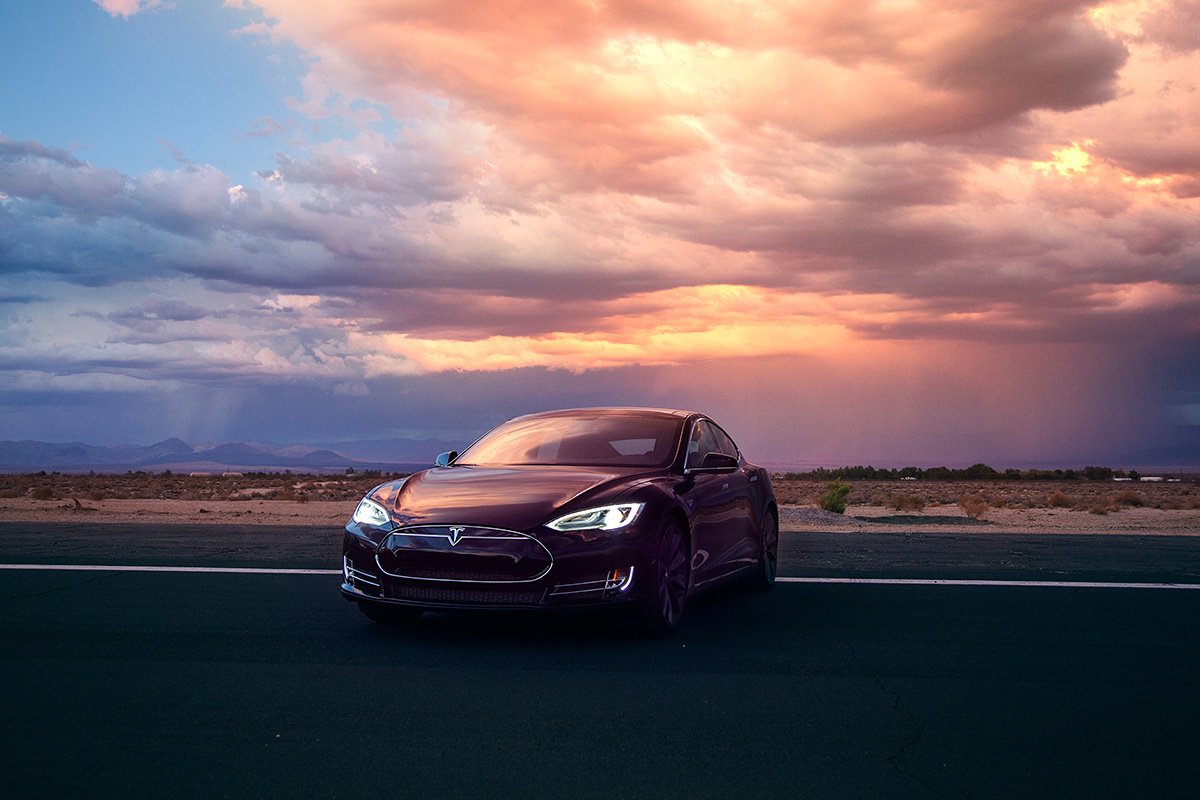
Tesla is certainly an important company to watch. As the first successful start-up car company in the USA, they are showing they know how to do things differently, taking advantage of the fact that they don’t have a baked in knowledge of “how a car company works” the way other companies do.
Tesla’s announcements of plans for more self-driving features are important. Unfortunately, the announcements around the new dual-motor Model S involve offerings quite similar to what can be found already in cars from Mercedes, Audi and a few others. Namely advanced ADAS and the combination of lane-keeping and adaptive cruise control to provide a hands-off cruise control where you must keep your eyes on the road.
One notable feature demonstrated by Tesla is automatic lane change, which you trigger by hitting a turn signal. That’s a good interface, but it must be made clear to people that they still have the duty to check that it’s safe to change lanes. It’s not that easy for a robocar’s sensors, especially the limited sensor package in the Telsa, to see a car coming up fast behind you in the next lane. On some highways relative speeds can get pretty high. You’re not likely to be hit by such cars, but in some cases that’s because they will probably brake for you, not because you did a fully safe lane change.
Much more interesting is Elon Musk’s prediction of a real self-driving car in 5 to 6 years. He means one where you can read a book, or even, as he suggests, go to sleep. Going to sleep is one of the greatest challenges, almost as hard as operating unmanned or carrying a drunk or disabled person. You won’t likely do that just with cameras — but 5 to 6 years is a good amount of time for a company like Tesla.
Another unusual thing about Tesla is that while they are talking about robocars a lot, they have also built one of the finest driver’s cars ever made. The Model S is great fun to drive, and has what I call a “telepathic” interface sometimes — the motors have so much torque that you can almost think about where you want to go and the vehicle makes it happen. (Other examples of telepathic interfaces include touch-typing and a stickshift.) In some ways it is the last car that people might want to automate. But it’s also a luxury vehicle, and that makes self-driving desirable too.
Audi Racing

Another recent announcement creating buzz is Audi’s self-driving race car on a test track in Germany. Audi has done racing demos several times now. They are both important but also unimportant. It definitely makes sense to study how to control a car in extreme, high performance situations. To understand the physics of the tires so fully that you can compete in racing will teach lessons of use in danger situations (like accidents) or certain types of bad weather.
http://youtu.be/eOYsI1cqUrw
At the same time, real-world driving is not like racing, and nobody is going to be doing race-like driving on ordinary streets in their robocar. 99.9999% of driving consists of “staying in your lane” and some other basic maneuvers and so racing is fun and sexy but not actually very high on the priority list. (Not that teams don’t deserve to spend some of their time on a bit of fun and glory.) The real work of building robocars involves putting them through all the real-world road situations you can put them through, both real, and in some cases, simulated on a track or in a computer.
Google first showed its system to many people by having it race figure-8s on the roof parking lot at the TeD conference. The car followed a course through a group of cones at pretty decent speeds and wowed the crowd with the tight turns. What most of the crowd didn’t know was that the cones were only there for show, largely. The car was guiding itself from its map of all the other physical things in the parking lot — line markers, pavement defects and more. The car is able to localize itself fine from those things. The cones just showed the public that it really was following the planned course. At the same time, making a car do that is something that was accomplished decades ago, and is used routinely to run “dummy cars” on car company test tracks.
A real demo turns out to be very boring, because that’s how being driven should be.
This doesn’t mean we won’t see more impressive demos soon. Many people have shown off automatic braking. Eventually we will see demos of how vehicles respond in danger situations — accidents, pedestrians crossing into the road and the like. A tiny part of driving but naturally one we care about. And we will want them to understand the physics of what the tires and vehicle are capable of so that they perform well, but not so they can find the most efficient driving line on the track.
There was some debate about having a new self-driving car contest like the DARPA grand challenges, and a popular idea was man vs. machine, including racing. That would have been exciting. We asked ourselves whether a robot might have an advantage because it would have no fear of dying. (It might have some “fear” of smashing its owners very expensive car.) Turns out this happens on the racetrack fairly often with new drivers who try to get an edge by driving like they have no fear, that they will win all games of chicken. When this happens, the other drivers get together to teach that new driver a lesson. A lesson about cooperating and reciprocation in passing and drafting. So the robots would need to be programmed with that as well, or their owners would find a lot of expensive crashes and few victories.
This article originally appeared on robocars.com.
tags: automotive, Tesla

AUAI is supported by:









