
Robohub.org
Call for euRathlon/TRADR Summer School 2016 on heterogeneity in robotic systems
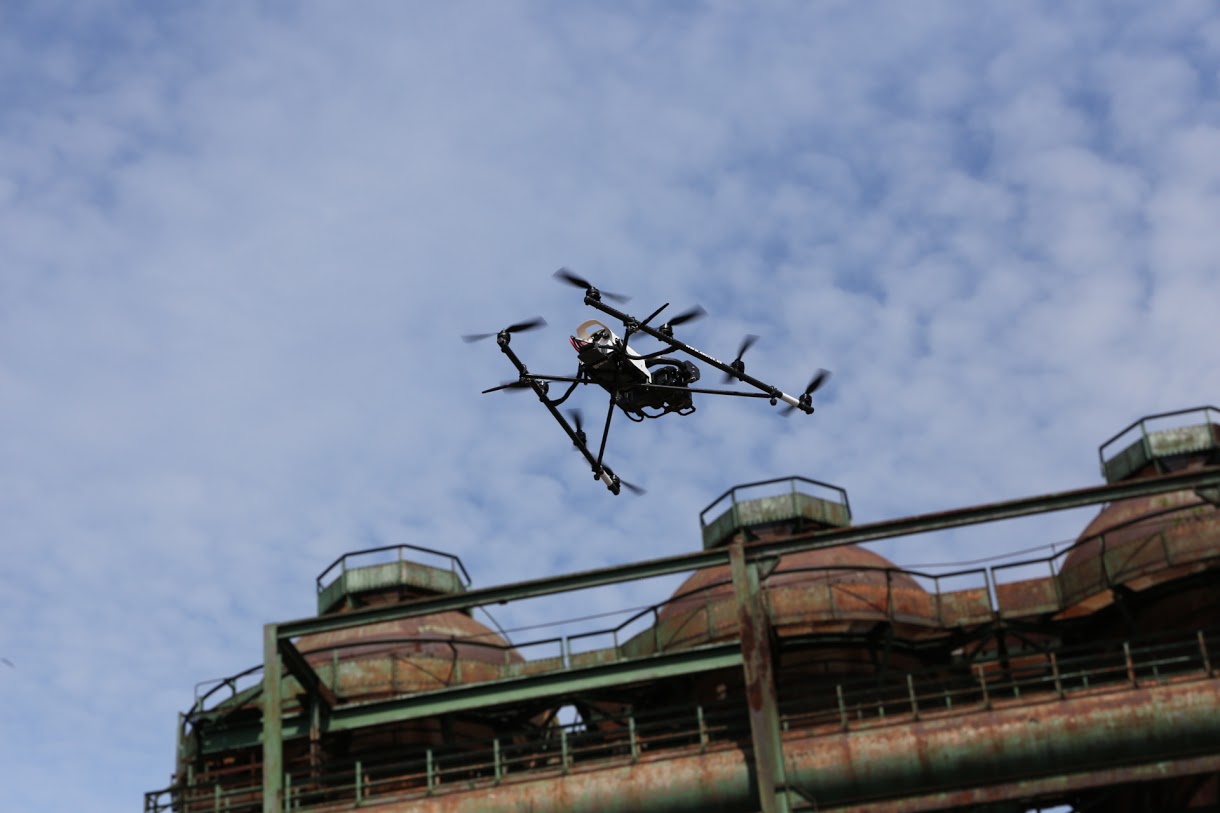
UAV developed by Ascending Technologies. Photo credits: TRADR
The University of Oulu will host a summer school on heterogeneity in Robotic Systems this August in Oulu, Finland, where the latest advances and developments in the field of European research within this area will be presented.
The euRathlon/TRADR summer school 2016 will take place from 22-26 August and will provide participants with both theoretical and practical insight in multi-domain (ground, marine and aerial) real robotic systems for deployment in disaster response scenarios. The trend in this area is towards multi-robot systems with different platforms, processing powers and operational spaces (ground, water, air) that will be deployed over long periods and several sorties. This raises many challenges including multi-modal heterogeneous mapping, semantic analysis and reasoning, collaborative planning under uncertainty, and the integration of mapping and planning.
The summer school programme has been designed to provide attendees with hands-on experience; they will work on practical tasks using several robots with different sensory equipment.
Three invited speakers will give master classes. The keynote speakers confirmed are:
- Jan Peters from the Technische Universitaet Darmstadt and Max-Planck Institute for Intelligent Systems (Germany),
- Cesar Dario Cadena Lerma from ETH Zurich (Switzerland), and
- Matthijs Spann from TU Delf (The Netherlands).
The intended audience of the summer school is undergraduate students, Master students, PhD students, postdoc students, researchers from universities/organisations and engineers from industry companies around the world. The summer school will provide an opportunity for attendees to deepen their understanding of heterogeneous robotics systems and share ideas and experiences. Participants can optionally present a paper/poster during the summer school.
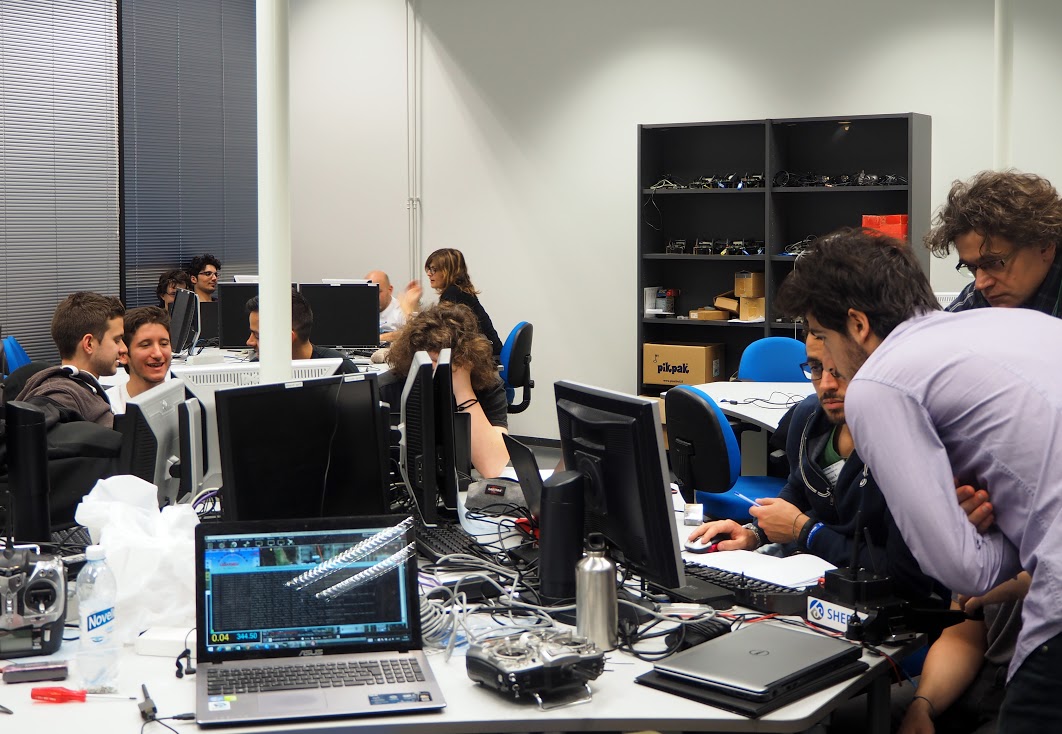
Participants of euRathlon/SHERPA 2015 summer school during the hands-on experience with domain-specific simulators. Photo credits: euRathlon
During their stay in Oulu, participants will extend their knowledge by learning about the latest advances in multi-domain real robotic systems for deployment in disaster response scenarios.
In addition to improving their knowledge in field robotics, the event constitutes a great opportunity to meet professionals and specialists with common interests and can serve to create new teams willing to participate in the ERL Emergency competition in 2017.
The call for participation in the summer school is now open and full information is available on http://www.eurathlon.eu/index.php/workshop/summerschool2016/
The summer school is jointly organised by EURATHLON and TRADR research projects funded by the Seventh Framework Programme and the Horizon 2020 Programme of the European Commission, respectively.
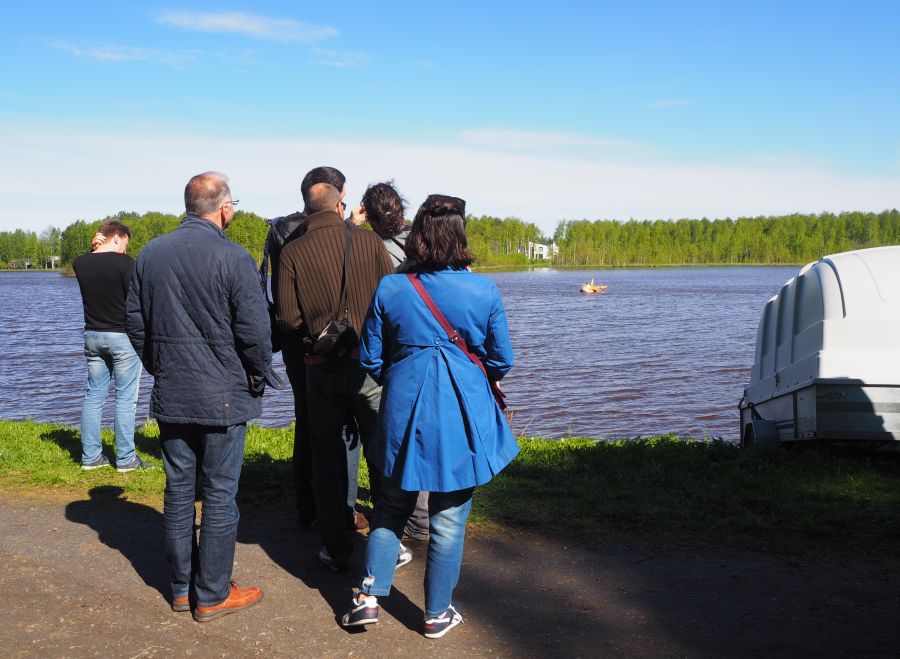
Participants of euRathlon/SHERPA 2015 summer school test the USV on the lake in Oulu. Photo credits: euRathlon
euRathlon is an outdoor multi-domain robotic competition inspired by the 2011 Fukushima accident. The euRathlon Challenges requires teams of land, underwater and flying robots to work together to survey the scene, collect environmental data, and identify critical hazards. After three successful years, euRathlon takes a step further under the RockEU2 EU-Horizon 2020 project. RockEU2 builds on the success of the RockEU FP7 coordination action, together with the expertise in robotics competitions generated within euRathlon, RoCKIn and EuRoC EU-FP7 projects. The approach to robot competitions will be transitional and experimental. RockEU2 traces the first steps of a novel model for competitions: the European Robotics League (ERL). The ERL model will be tested for viability alongside its implementation during the next two years, in which euRathlon will become ERL Emergency Robots.
Watch the video resume of the euRathlon 2015 Grand Challenge:
TRADR is a research project. It focuses on long-term human-robot teaming for robot-assisted disaster response and addresses the scientific challenges arising from making the experience of a human-robot disaster response team persistent over multiple sorties during a prolonged mission. Using a proven-in-practice user-centric design methodology, TRADR develops novel science and technology for human-robot emergency teams.
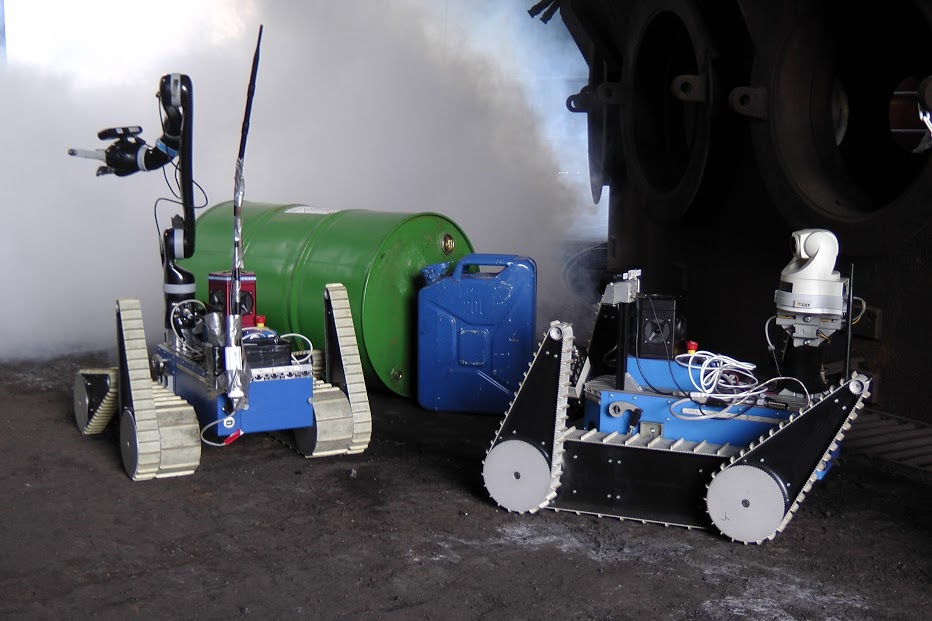
Ground robots used in survey and rescue missions by TRADR. Photo credit: TRADR.
Different types of robots collaborate with human team members to explore the environment, and gather physical samples. Throughout this collaborative effort, TRADR enables the team to gradually develop its understanding of the disaster area over multiple synchronous and asynchronous sorties (persistent environment models), to improve team members’ understanding of how to work in the area (persistent multi-robot action models), and to improve team-work (persistent human-robot teaming).
Watch the video of TRADR Joint exercise in Dortmund, Germany:
tags: c-Events, ETH Zurich, euRathlon

AUAI is supported by:









