
Robohub.org
3Q: Daron Acemoglu on technology and the future of work
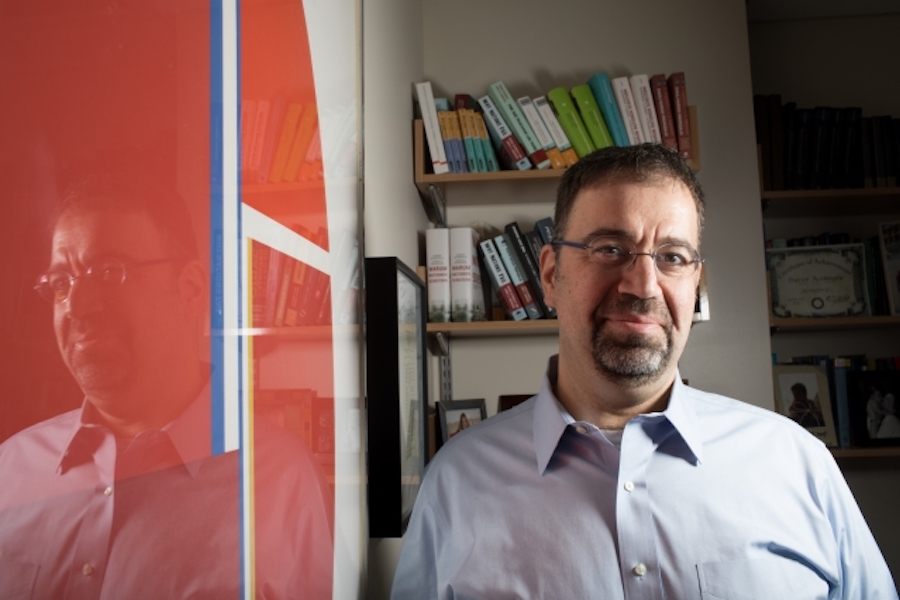
K. Daron Acemoglu, the Elizabeth and James Killian Professor of Economics at MIT, is a leading thinker on the labor market implications of artificial intelligence, robotics, automation, and new technologies.
Photo: Jared Charney
By Meg Murphy
K. Daron Acemoglu, the Elizabeth and James Killian Professor of Economics at MIT, is a leading thinker on the labor market implications of artificial intelligence, robotics, automation, and new technologies. His innovative work challenges the way people think about these technologies intersect with the world of work. In 2005, he won the John Bates Clark Medal, an honor shared by a number of Nobel Prize recipients and luminaries in the field of economics.
Acemoglu holds a bachelor’s degree in economics from University of York. His master’s degree in mathematical economics and econometrics and doctorate in economics are from the London School of Economics. With political scientist James Robinson, Acemoglu co-authored the much discussed book “Why Nations Fail” (Crown Business, 2012) and “Economic Origins of Dictatorship and Democracy” (Cambridge University Press, 2006). He also wrote the book, “Introduction to Modern Economic Growth” (Princeton University Press, 2008). Acemoglu recently answered a few questions about technology and work.
Q: How do we begin to understand the rise of artificial intelligence and its future impact on society?
A: We need to look to the past in the face of modern innovations in machine learning, robotics, artificial intelligence, big data, and beyond. The process of machines replacing labor in the production process is not a new one. It’s been going on pretty much continuously since the Industrial Revolution. Spinning and weaving machines took jobs away from spinners and weavers. One innovation would follow another, and people would be thrown out of work by a machine performing the job in a cheaper way.
But at the end of the day, the Industrial Revolution and its aftermath created much better opportunities for people. For much of the 20th century in the U.S., workers’ wages and employment kept growing. New occupations and new tasks and new jobs were generated within the framework of new technological knowledge. A huge number of occupations in the American economy today did not exist 50 years ago — radiologists, management consultants, software developers, and so on. Go back a century and most of the white-collar jobs today did not exist.
Q: Do you think public fears about the future of work are just?
A: The way we live continuously changes in significant ways — how we learn, how we acquire food, what we emphasize, our social organizations.
Our adjustments to technology — especially transformative technologies — are not a walk in the park. It is not going to be easy and seamless and just sort itself out. A lot of historical evidence shows the process is a painful one. The mechanization of agriculture is one of the greatest achievement of the American economy but it was hugely disruptive for millions of people who suffered joblessness.
At the same time, we are capable technologically and socially of creating many new jobs that will take people to new horizons in terms of productivity and freedom from the hardest types of manual labor. There are great opportunities with artificial intelligence but whether or not we exploit them is a different question. I think you should never be too optimistic but neither should you be too pessimistic.
Q: How do you suggest people prepare for the future job market?
A: We are very much in the midst of understanding what sort of process we are going through. We don’t even necessarily know what skills are needed for the jobs of the future.
Imagine one scenario. Artificial intelligence removes the need for seasoned accountants to fulfill numeracy-related tasks. But we need tax professionals, for instance, to inform clients about their choices and options in some sort of emphatic human way. They will have to become the interface between the machines and the customers. The jobs of the future, in this instance and many others, would require communications, flexibility, and social skills.
However, I don’t know if my hypothesis is true because we haven’t tested it. We haven’t lived through it. I see the biggest void in our knowledge. People at institutions like MIT must learn more about what’s is going on so that we are better prepared to understand the future.
tags: politics

AUAI is supported by:









