
Robohub.org
Algorithm enables robots to discern between humans and rubble | Gizmag
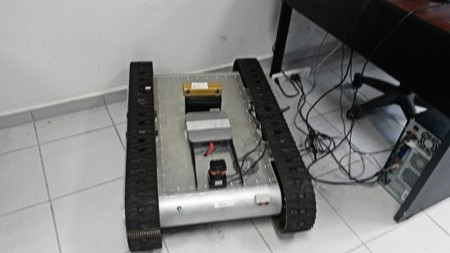
“Researchers from Mexico’s University of Guadalajara (UDG) have developed an algorithm that could come in handy in such situations by allowing robots to differentiate between people and debris.”
Source: www.gizmag.com
See on Scoop.it – Cultibotics

John Payne
AUAI is supported by:








Related posts :
Powered by muscle cells, a paper-thin robot swims through watery maze
MIT News
19 Oct 2026
MIT engineers’ new aquabot offers a way to design small, efficient “biohybrid” robots.
Robot Talk Episode 166 – Evolving robot bodies and brains, with Rika Antonova
Robot Talk
16 Oct 2026
In the latest episode of the Robot Talk podcast, Claire chatted to Rika Antonova from the University of Cambridge about using artificial intelligence to develop complimentary robot hardware and algorithms.
Neurosymbolic planning using natural language communication for cooperative autonomous vehicles
Read about work that was nominated for the AAMAS 2026 best paper award.
Humanoid robots can sprint and box – but the real test is doing the laundry
The Conversation
12 Oct 2026
No robot system can yet reliably handle the whole laundry process. Even folding remains a challenge.
Robot Talk Episode 165 – Robots behind the research, with Kushant Patel
Robot Talk
09 Oct 2026
In the latest episode of the Robot Talk podcast, Claire chatted to Kushant Patel from Brookhaven National Laboratory about robots that work in scientific facilities, such as particle accelerators.
What three days building a robot taught me
Devashish Tambade and UK RAS STEPS
07 Oct 2026
The brief sounded simple: build a small autonomous robot, then make it survive increasingly difficult mazes. Simple... right? Until you actually have to build one.
Research could guide the future design of social robots
the University of Glasgow
05 Oct 2026
Giving robot companions animal-like or anime-style faces and voices could maximise their emotional appeal to users, according to new research which could help guide the growing field of social robotics.
Robot Talk Episode 164 – Accelerating robot learning, with Michelle Lu
Robot Talk
02 Oct 2026
In the latest episode of the Robot Talk podcast, Claire chatted to Michelle Lu from Vsim Technology about using simulation and artificial intelligence to teach robots new skills.

