
Robohub.org
 

Federal regulations pass next hurdle

by
21 July 2017


share this:

This week’s news is preliminary, but a U.S. house committee panel passed some new federal regulations which suggest sweeping change in the US regulatory approach to robocars.

Today, all cars sold must comply with the Federal Motor Vehicles Safety Standards (FMVSS). This is a huge set of standards, and it’s full of things written with human driven cars in mind, and making a radically different vehicle, like the Zoox, or the Waymo Firefly, or a delivery robot, is simply not going to happen under those standards. There is a provision where NHTSA can offer exemptions but it’s in small volumes, for prototype and testing vehicles mostly. The new rules would allow a vendor to get an exemption to make 100,000 vehicles per year, which should be enough for the early years of robocar deployment.

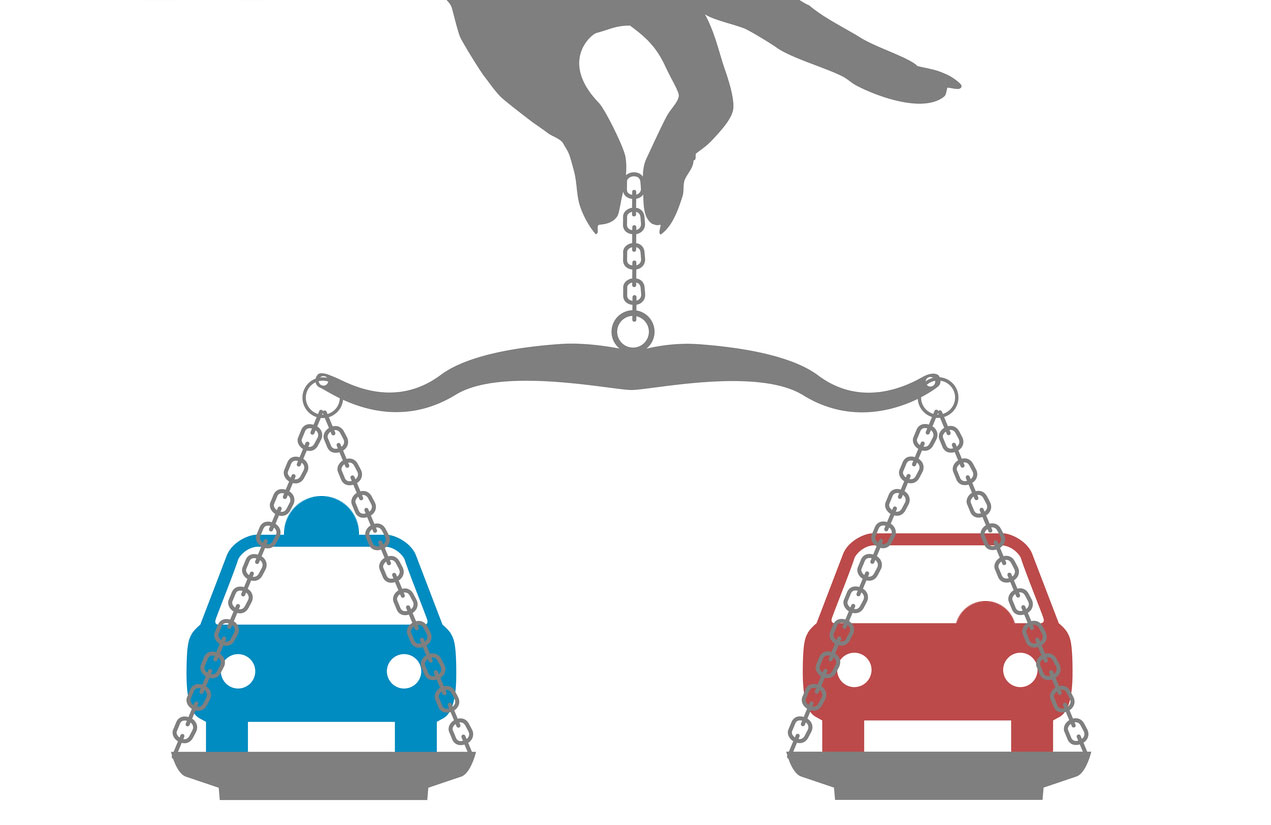
Secondly, these and other new regulations would preempt state regulations. Most players (except some states) have pushed for this. Many states don’t want the burden of regulating robocar design, since they don’t have the resources to do so, and most vendors don’t want what they call a “patchwork” of 50 regulations in the USA. My take is different. I agree the cost of a patchwork is not to be ignored, but the benefits of having jurisdictional competition may be much greater. When California proposed to ban vehicles like the Google Firefly, Texas immediately said, “Come to Texas, we won’t get in your way.” That pushed California to rethink. Having one regulation is good — but it has to be the right regulation, and we’re much too early in the game to know what the right regulation is.

This is just a committee in the house, and there is lots more distance to go, including the Senate and all the other usual hurdles. Whatever people thought about how much regulation there should be, everybody has known that the FMVSS needs a difficult and complex revision to work in the world of robocars, and a temporary exemption can be a solution to that.


tags: ,


Brad Templeton, Robocars.com is an EFF board member, Singularity U faculty, a self-driving car consultant, and entrepreneur.


Subscribe to Robohub newsletter on substack


Related posts :

AI system learns to keep warehouse robot traffic running smoothly

  20 Apr 2026
This new approach adapts to decide which robots should get the right of way at every moment, avoiding congestion and increasing throughput.

Robot Talk Episode 152 – Dexterous robot hands, with Rich Walker

  17 Apr 2026
In the latest episode of the Robot Talk podcast, Claire chatted to Rich Walker from Shadow Robot Company about their advanced robotic hands for research and industry.

What I’ve learned from 25 years of automated science, and what the future holds: an interview with Ross King

and   14 Apr 2026
Ross King created the first robot scientist back in 2009. He spoke to us about the nature of scientific discovery, the role AI has to play, and his recent work in DNA computing.

Robot Talk Episode 151 – Robots to study the ocean, with Simona Aracri

  10 Apr 2026
In the latest episode of the Robot Talk podcast, Claire chatted to Simona Aracri from National Research Council of Italy about innovative robot designs for oceanography and environmental monitoring.

Generative AI improves a wireless vision system that sees through obstructions

  08 Apr 2026
With this new technique, a robot could more accurately detect hidden objects or understand an indoor scene using reflected Wi-Fi signals.

Resource-constrained image generation and visual understanding: an interview with Aniket Roy

  07 Apr 2026
Aniket tells us about his research exploring how modern generative models can be adapted to operate efficiently while maintaining strong performance.

Back to school: robots learn from factory workers

  02 Apr 2026
A Czech startup is making factory automation easier by letting workers teach robots new tasks through simple demonstrations instead of complex coding.

Resource-sharing boosts robotic resilience

  31 Mar 2026
When a modular robot shares power, sensing, and communication resources among its individual units, it is significantly more resistant to failure than traditional robotic systems.


Robohub is supported by:


Subscribe to Robohub newsletter on substack


©2026.02 - Association for the Understanding of Artificial Intelligence









