Robohub.org
 

Global majority want autonomous weapons banned: New report

by
11 November 2015


share this:
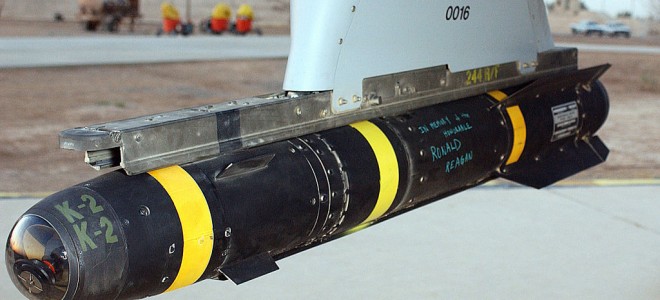
1024px-AGM-114_Hellfire_hung_on_a_Predator_drone-660x300

The majority of people are against the use of autonomous weapons capable of identifying and destroying targets without human input, according to a new survey by researchers at the University of British Columbia. 

This year, the Open Roboethics initiative conducted an international survey to engage members of the public in the discussion about lethal autonomous weapons systems — where the system makes the decision to use lethal force without requiring human intervention — and remotely operated weapons systems — those where a person in a remote location makes the decision.

With the help of numerous volunteer translators, we surveyed people’s opinions  in 14 different languages, and received responses from over a 1000 participants from 54 different countries. Although we did not collect a representative number of responses from all 54 countries, the aggregated results of our survey show that our respondents are reluctant to endorse the development and use of lethal autonomous weapons.

Find out about this year’s results on our summary report, The Ethics and Governance of Lethal Autonomous Weapons Systems.

You can also take a detailed look at the results and translations of our survey with our interactive web report.

Public opinion on this topic is important, and can change over time. Therefore, we want to continue to engage you in our discussions on this topic by keeping the survey open. Help us to continue the discussion by completing our multi-lingual survey and sharing the link with others:


tags: ,


Open Roboethics Initiative is a roboethics thinktank concerned with studying robotics-related design and policy issues.

            AUAI is supported by:


Subscribe to Robohub newsletter on substack


Related posts :

How to teach the same skill to different robots

  11 May 2026
A new framework to teach a skill to robots with different mechanical designs, allowing them to carry out the same task without rewriting code for each.

Robot Talk Episode 155 – Making aerial robots smarter, with Melissa Greeff

  08 May 2026
In the latest episode of the Robot Talk podcast, Claire chatted to Melissa Greeff from Queen's University about autonomous navigation and learning for drones.

New understanding of insect flight points way to stable flapping-wing robots

  07 May 2026
The way bugs and birds flap their wings may look effortless, but the dynamics that keep them aloft are dizzyingly complex and difficult to quantify.

Robotically assembled building blocks could make construction more efficient and sustainable

  05 May 2026
Research suggests constructing a simple building from interlocking subunits should be mechanically feasible and have a much smaller carbon footprint.

Robot Talk Episode 154 – Visual navigation in insects and robots, with Andrew Philippides

  01 May 2026
In the latest episode of the Robot Talk podcast, Claire chatted to Andrew Philippides from the University of Sussex about what we can learn from ants and bees to improve robot navigation.

Ultralightweight sonar plus AI lets tiny drones navigate like bats

  29 Apr 2026
Researchers develop ultrasound-based perception system inspired by bat echolocation.

Gradient-based planning for world models at longer horizons

  28 Apr 2026
What were the problems that motivated this project and what was the approach to address them?

Robot Talk Episode 153 – Origami-inspired robots, with Chenying Liu

  24 Apr 2026
In the latest episode of the Robot Talk podcast, Claire chatted to Chenying Liu from University of Oxford about how a robot's physical form can actively contribute to sensing, processing, decision-making, and movement.


AUAI is supported by:


Subscribe to Robohub newsletter on substack


©2026.02 - Association for the Understanding of Artificial Intelligence