Robohub.org
Key take-aways from the DroneApps Forum
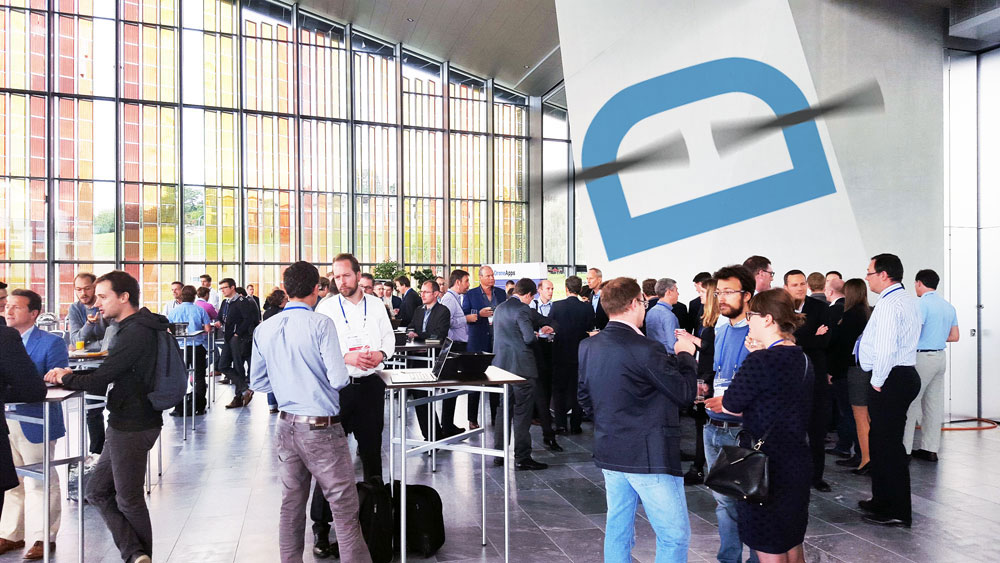 The first DroneApps Forum in Lausanne, Switzerland, recently assembled 150 drone professionals from Europe, the US, Japan, and Australia for a two-day exchange of ideas. What set the event apart was its focus on reporting from commercial drone makers and commercial drone users — a more-than-welcome change from the orchestrated corporate news releases, crowdfunding (over-)promises, and CGI marketing stunts we’ve become accustomed to.
European, Japanese, and US drone manufacturers were in attendance, with many reporting on the number of flight hours logged by their customers and their market shares. They pointed out current challenges, including the urgent need for more situational awareness for inspection tasks with multicopters, and the need for higher endurance and higher payload for monitoring with small fixed wing planes.
Operators, including Robin Murphy (Roboticists Without Borders, Center for Robot-Assisted Search and Rescue), Cyberhawk, COWI, and the SNCF (French national railway company), presented case studies that highlighted the benefits and downsides of using drones to replace existing solutions.
Regulators and legal professionals discussed the current state of legislation in the UK, France, Switzerland, the US, and Canada. They openly shared their concerns related to privacy, criminal activity, and liability — but also pointed out the importance to stay level-headed in spite of anxieties and fears.
“Not every new technology has to result in a hectic activity of regulators.”
– Peter Müller
Discussions also covered software providers, including those providing aerial image processing such as Pix4d, Acute3D, and Agisoft.
A number of the presentations are available here.
The picture emerging from this particular 2-day snapshot of the state of the industry showed what’s working today (e.g., fixed wing drones for surveying in the mining industry) and what isn’t (e.g., multicopters for autonomous inspection). Autonomous flight through airspace without obstacles seems to be well understood and operators have logged thousands of hours. Similarly, autonomous takeoff and landing of small fixed wing planes seems to be working remarkably well. However, autonomous flight near obstacles, such as that required for most inspection tasks, remains a challenge without adequate solution across all platforms.
One key take-away from the forum was the stark contrast between doers, who constantly fly, and talkers, who stage drone flights for marketing and PR to help sell their vision. (Don’t get me wrong — I think both are valid ways to boot-strap a new business, each with its own risks.)
Some other key take-aways from this particular event:
- Innovation is led by startups, some of which have already accumulated significant operational experience. Major established players like Lufthansa or Swiss WorldCargo are lagging far behind.
- Most hardware and electronics seem to be coming out of Europe. Most high-level software, apps, and cloud applications seem to be coming out of the US.
- Drones are used much more to improve current solutions than to pioneer new application areas.
- In spite of all the media hype, it’s still very early days for commercial drones.
tags: c-Events, cx-Aerial, drones, Switzerland, UAVs