
Robohub.org
NTSB overturns Pirker case: Drones are aircraft
The Pirker case was a landmark case in UAV legislation development. In 2011, Raphael Pirker used his Ritewing Zephyr UAV to make some aerial footage over the University of Virginia campus, and for that he was fined $10.000.
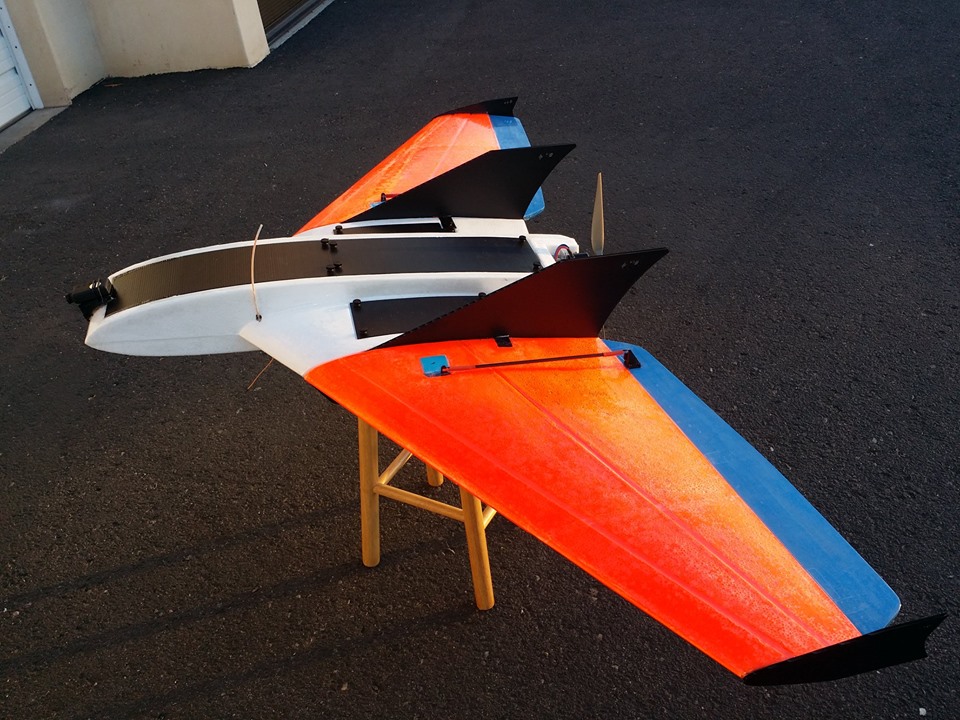
Ritewing Zephir – evidence in Pirker Case.
The FAA said Pirker had recklessly flown the small, unmanned aircraft “directly towards an individual standing on a … sidewalk, causing the individual to take immediate evasive maneuvers so as to avoid being struck.”
With the help of Mr. Brendan Schulman, a prominent ‘pro-drone’ lawyer, Mr. Pirker challenged the FAA fine, based on the fact that while the FAA can regulate “aircraft,” it has repeatedly excluded model aircraft from that definition. Judge Patrick Geraghty of the National Transportation Safety Board (NTSB) dismissed the $10,000 fine, agreeing that the FAA “has not issued an enforceable Federal Acquisition Regulation regulatory rule governing model aircraft operation; has historically exempted model aircraft from the statutory FAR definitions of ‘aircraft’ by relegating model aircraft operations to voluntary compliance with the guidance expressed in [the 2007 policy notice], Respondent’s model aircraft operation was not subject to FAR regulation and enforcement.”
On November 18th of this year the NTSB issued a decision saying that the current federal regulations applying to manned aircraft also apply to UAV or drones. Also, NTSB ruled that the FAA definition of aircraft as “any device … used for flight in the air” applies to “any aircraft, manned or unmanned, large or small.” In essence, this could mean that the flight in the air of a paper plane or a toy wood balsa glider could subject the operator to FAA penalties.
Although the FAA granted commercial drone licenses to oil giant BP and six Hollywood production companies, everyone else trying to make a living using drones for aerial filming could face fines.
As for the Pirker case, Mr. Pirker can appeal to the Court of Appeals. However, since the likelihood of the FAA publishing rules for drones in the foreseeable future is slim, it seems that it is Congress that will have to make the decision if it wants every model aircraft regardless of size to be regulated by the FAA’s rules for manned aircraft.
After the initial blow delivered by Mr. Pirker and Mr. Schulman, the FAA came back to win a major legal battle. The war for democratization of drone use is still on, however, and it is now up to drone community to mobilize and try to influence the decision-making of the administrative behemoth.
For further reading, check out the Forbes article and the FAA statement.
Image courtesy of Ritewing RC LLC.
If you liked this article, you may also be interested in:
- Small UAV Coalition urges FAA to focus on regulations that enable domestic UAV innovation
- Citing concerns about overreach, drone journalists comment on FAA model aircraft rule interpretation
- Does the Small UAV industry need its own coalition?
- While the cat’s away, the mice play: What the drone delivery biz is doing while FAA ruling is under appeal
- American news media coalition files brief in support of Pirker, First Amendment rights
- Commercial drone use legal in USA? Who’s willing to make bail?
See all the latest robotics news on Robohub, or sign up for our weekly newsletter.
tags: drone regulations, FAA regulation of UAS, politics, UAVs & drones
AUAI is supported by:









