
Robohub.org
Robots that act collectively: when, and how? – #ICRA2022 Day 4 interview with K. Petersen, M. A. Olivares Mendez, and T. Kaiser (+ video digest)
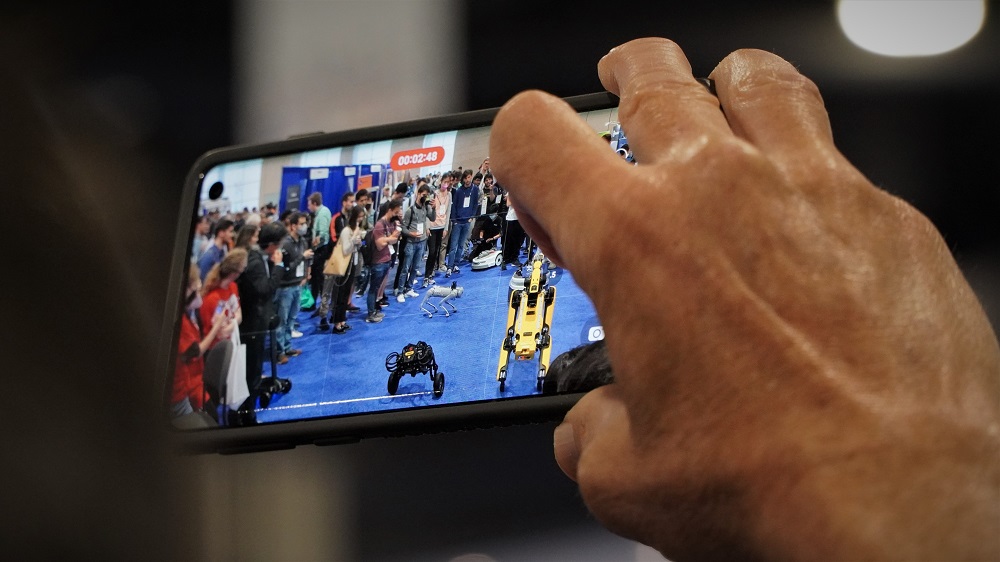
Attending ICRA is a great opportunity to see many state-of-the-art (and famous?) robots in a single venue. Indeed, a quick trip to the exhibitors’ booths is enough to get introduced to the large and diverse group of commercial robots we have today. Everything ranging from drones, manipulators, humanoid robots, small rovers, and probably, among the favorites of the public, the quadrupeds.
Yet, one can easily notice that these amazing state-of-the-art robots do not interact with each other. At least they do not do it without human mediation. Although in the exhibitions one can find two or three robots that appear to be joyfully playing together, the reality is that their operators are creating these inter-robot interactions. In fact, since neither the robots nor their operators know how to behave in the presence of many unfamiliar robots, the participation in the joint exhibitions presented in ICRA — like the robot parades — appeared to be a challenging task for the operators.
So, what are we missing? Why is it that those commercial robots are not cooperative off-the-shelf? How close are we to having truly collectives of robots? There is a large community of researchers working on collective robotics. ICRA 2022 had two sessions dedicated to multi-robot systems and swarm robotics on May 25. Besides, the workshop Collective Robot Construction held on May 27 sketched the potential of robot cooperation for addressing relevant problems such as robot construction. However, commercialization of collectives of robots still appears to be unexplored in the consumer robotics market.
To discuss these ideas, I met three researchers that are working to advance collective robotics. Prof. Kirstine Hagelskjaer Petersen, Head of the Collective Embodied Intelligence Lab at Cornell University, and one of the organizers of ICRA 2022´s Collective Robot Construction workshop. Prof. Miguel Angel Olivares Mendez, Head of the Space Robotics Research Group (SpaceR) at Université du Luxembourg, and one of the principal investigators in the project FiReSpARX — designing market mechanisms, incentives, and governance frameworks for economic interaction between robots in space. Tanja Katharina Kaiser, research assistant in the Service Robotics Group at Universität zu Lübeck and presenter of ROS2swarm — a ROS 2 package intended to simplify and promote the use of ROS 2 in swarm robotics.
I ask them about the current state and the future of collective robotics. Below some excerpts from their answers.
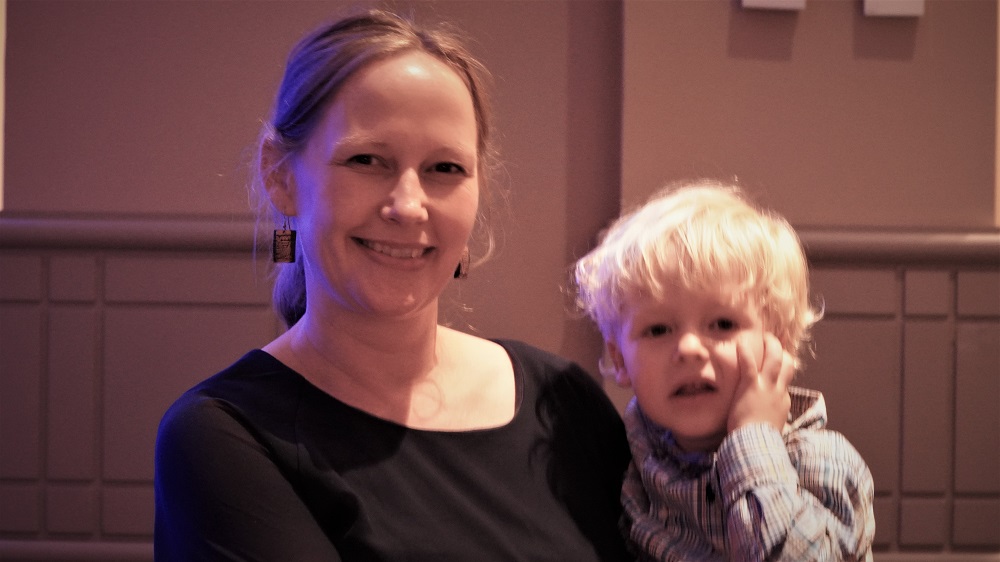
Prof. Kirstine Hagelskjaer Petersen
Q1. We certainly see many amazing state-of-the-art robots in ICRA. However, we do not see them interacting without human-mediation. What is preventing us from having truly interactions between commercial robots?
The community is slowly working towards cooperative robots, but the focus now is on how we can have robots supporting humans, and therefore the design caters to that. It is hard to have multiple robots working together. To do that, the robots require sensors, actuators, and sophisticated control that allows them to interact and to manipulate their shared environment. It is an interesting challenge in robotics that requires a lot of interdisciplinary research.
Q2. Do you think we will eventually see societies of robot collectives? If so, how do you envision them?
Certainly, we hope. I think they might look different from what we have imagined. I believe we will have robot collectives helping us. There are many advantages to having maybe more simple robots working together. They could be fault-tolerant and more adaptable in a way that it would not be possible with a single robot.
Q3. What does it mean for you to be in ICRA 2022?
It means the world. The pandemic has been long, hard, and isolated. Our community thrives on interdisciplinary interactions. The fact we are all here talking to each other and see what other people are working on is a tremendous boost for research.
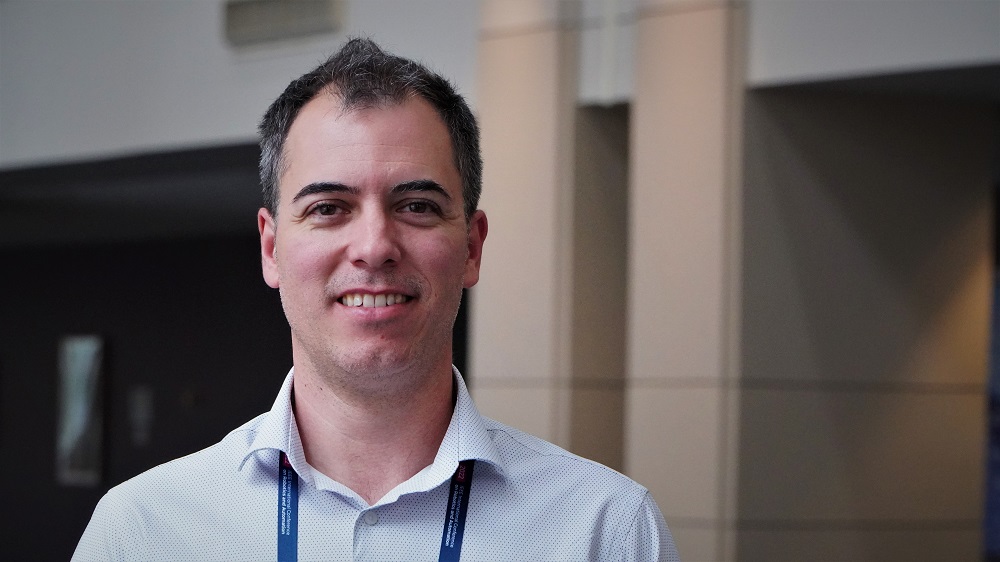
Prof. Miguel Angel Olivares Mendez
Q1. We certainly see many amazing state-of-the-art robots in ICRA. However, we do not see them interacting without human-mediation. What is preventing us from having truly interactions between commercial robots?
We need to reach first a high level of autonomy on individual robots, and afterwards we need to work on the cooperation between robots. This is a problem we address in my research group. The reason for which we see little cooperation is because it is difficult. There are challenges and problems to be addressed, such as communications, task allocation, and how robots effectively interact.
Q2. Do you think we will eventually see societies of robot collectives? If so, how do you envision them?
I already relate to this idea. We conduct the project FiReSpARX, in which we use blockchain to enable multi-robot cooperation. Specifically, the cooperation between multi-robot systems from different companies. In planetary robotics, we consider that there will be many companies conducting planetary tasks. The workforce in space will not be primarily humans but robots. That is why in the FiReSpARX we create mechanisms to exchange, commercialize, and distribute information between robot collectives.
Q3. What does it mean for you to be in ICRA 2022?
ICRA is a really important conference. It is great to see these many plenaries, talks, paper presentations, and poster sessions. Due to the pandemic, we really missed the chance to discuss with the top researchers in the world.
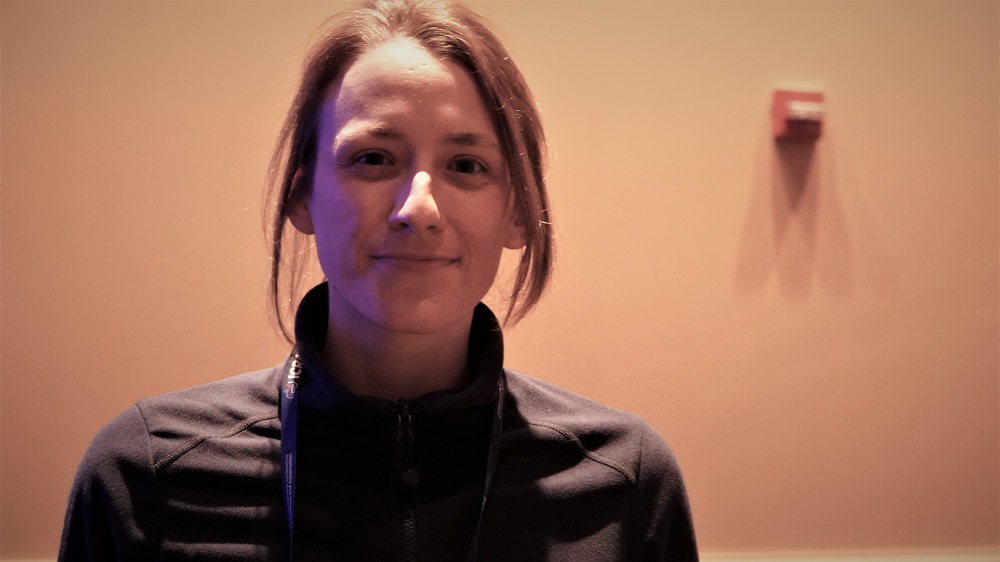
Tanja Katharina Kaiser
Q1. We certainly see many amazing state-of-the-art robots in ICRA. However, we do not see them interacting without human-mediation. What is preventing us from having truly interactions between commercial robots?
It is very difficult to accomplish it. Robots need to know what other robots are doing, they need to perceive each other and identify members of their team. It is knowledge that one needs to build in and it is not present in the robots. And that is not that easy.
Q2. Do you think we will eventually see societies of robot collectives? If so, how do you envision them?
I really hope so. That is what I am researching in. I think they might be different of what we have in the lab. Instead of fully decentralized systems, what we would hope for it might need some kind of mediation of a human. Having many robots, that also make people feel good, could help us in some many different areas in our lives. They can be very versatile tools.
Q3. What does it mean for you to be in ICRA 2022?
It is an amazing experience. We did not have in-person conferences for so long. It is great to be back and meet people. It is my first time in ICRA. It is amazing to see all these robots, all these amazing research fields and researchers.
Robots scratching in today’s video digest of #ICRA2022.
tags: events, icra2022

AUAI is supported by:









