
Robohub.org
Should robots make life/death decisions? UN to discuss lethal autonomous weapons next week
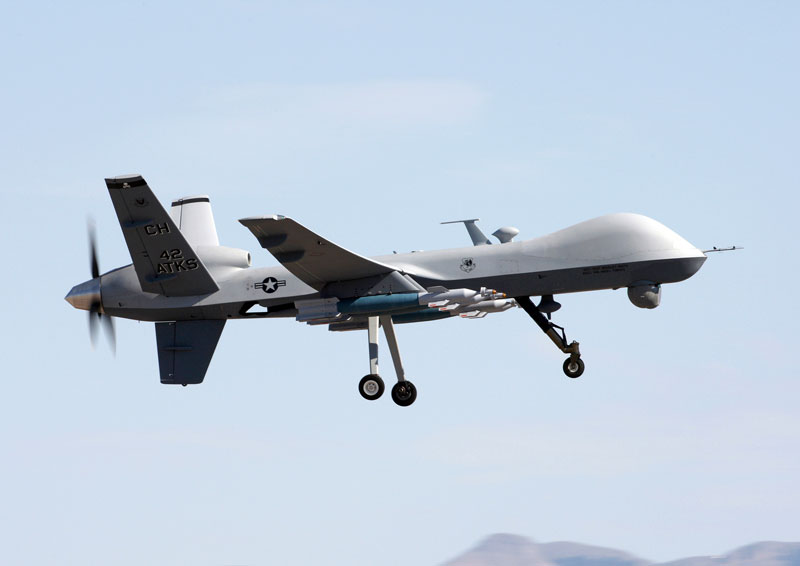
Photo by Paul Ridgeway.
Should robots be allowed to make life and death decisions? This will be the topic of heated debate at the United Nations (UN) Palais des Nations in Geneva next week (April 13-17th, 2015). As part of the Convention on Certain Conventional Weapons (CCW), experts from all over the world will gather to discuss “questions related to emerging technologies in the area of lethal autonomous weapons systems.” Take our public survey on the topic to voice your opinion.
On topics as sensitive as decisions on human life, and the use of autonomous robotic weapons in war, we believe it is important to engage the public and understand what the public thinks about the issues. International law includes something called the Martens Clause, which explicitly gives room for the public to have a say in what should be deemed permissible internationally:
“Recalling that, in cases not covered by the law in force, the human person remains under the protection of the principles of humanity and the dictates of the public conscience.” (Additional Protocol II to the Geneva Conventions)
We believe it is critical that public opinion is heard by experts and decision makers as part of the international debate. That is why ORi will be attending the CCW meeting this year to present what the public thinks about this topic. That is also why we’ve put together a multi-lingual survey to better understand the latest public opinion.
Help us inform the discussion with your voice by participating in and distributing our multi-lingual survey (available in English, Français / French, Español / Spanish, with more to come):
The survey will remain open after the meeting as well, so please feel free to share it with people all over the world.
For those of you who’d like to follow the discussion throughout next week, there will be livetweets via the hashtag #CCWUN.
If you liked this article, you may also be interested in:
- Robots Podcast: Autonomous lethal weapons
- US DoD report: Preparing for war in the robotic age
- Clearpath’s public stance on Killer Robots sets precedence in corporate responsibility
- Losing Humanity: The case against killer robots
- DARPA’s Gill Pratt on Google’s robotics investments
- Robots Podcast: Autonomous lethal weapons
- How will robots shape the future of warfare?
- Robots, soldiers and cyborgs: The future of warfare
- Robohub focus: Robots and warfare
See all the latest robotics news on Robohub, or sign up for our weekly newsletter.
tags: c-Events, cx-Military-Defense, cx-Politics-Law-Society, lethal autonomous weapons, UN

AUAI is supported by:









