
Robohub.org
Talking Machines: Generative art and Hamiltonian Monte Carlo, with Doug Eck
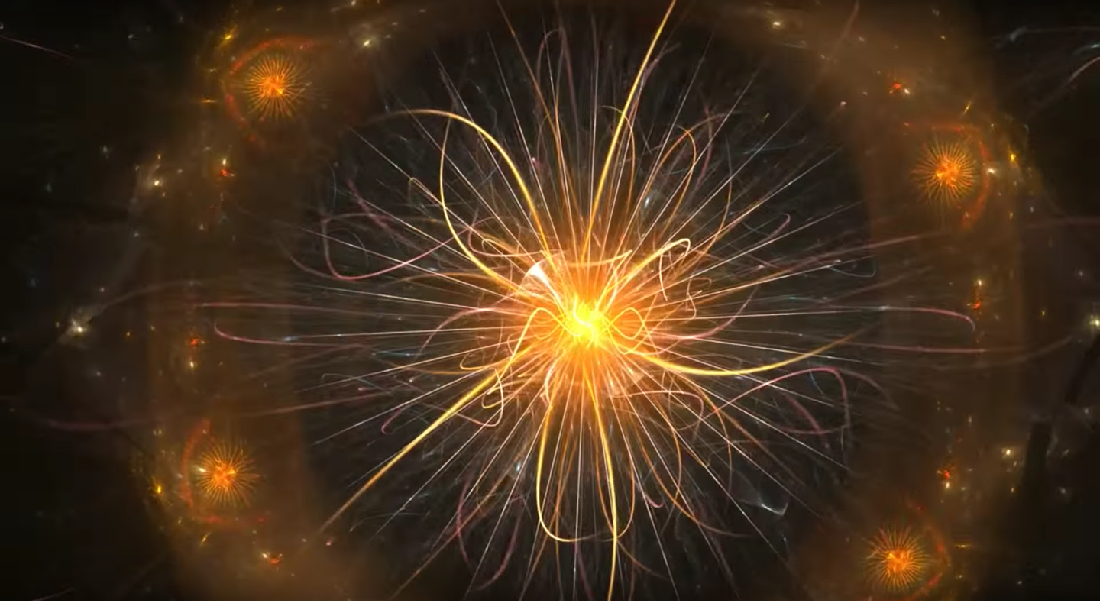
Generative Art on PBS/YouTube
In episode fifteen of season two, we talk about Hamiltonian Monte Carlo, take a listener question about unbalanced data, plus, speak with Doug Eck of Google’s Magenta project.
If you enjoyed this article, you may also want to read:
- Talking Machines: Automatic Translation and t-SNE, with Hal Daume
- Talking Machines: Machine learning and the Flint water crisis, with Jake Abernethy
- Talking Machines: Fantasizing cats and data numbers, with Iain Murray
- Talking Machines: Gaussian processes and OpenAI, with IIya Sutskever
- Talking Machines: Robotics and machine learning music videos, with Michael Littman
See all the latest robotics news on Robohub, or sign up for our weekly newsletter.
tags: Talking Machines
Talking Machines
is your window into the world of machine learning.
Talking Machines
is your window into the world of machine learning.
AUAI is supported by:








Related posts :
Intermittent swimming promotes the energy efficiency of fish-like robot movements
How zebrafish-inspired robots save energy by swimming in bursts.
What does it take for a robot to hold a conversation with a room, not just a person?
Umar Farooq and UK RAS STEPS
14 Aug 2026
Find out about a summer school held at Imperial College London.
Robotics roadmaps from around the world
IEEE Robotics and Automation Society (RAS)
12 Aug 2026
We embark on a tour into some of the recent and prominent robotics roadmaps from around the world.
A ‘5-in-1’ seed-sized surgical robot
Nanyang Technological University, Singapore
10 Aug 2026
Mini robot can move, cut tissue, release drugs, grip and store samples, and generate heat wirelessly
AI agents create virtual playgrounds to help robots get crucial training data
MIT News
07 Aug 2026
“SceneSmith” system uses collaborative AI agents to create realistic 3D environments of places like kitchens, hotels, and living rooms, where robots can simulate everyday chores.
Robots in society, business and culture: July 2026
IEEE Robotics and Automation Society (RAS)
06 Aug 2026
A round up of robotics stories in a new monthly series from IEEE RAS.
Simulated zebrafish and a vision-equipped robotic fish reveal how the body shapes brain circuits
Researchers look to the fish brain to create a robotic zebrafish that can autonomously swim upstream.
Researchers develop modular nanorobot
University of Basel
31 Jul 2026
A team at the University of Basel has developed a versatile nanorobot with propulsion and payload modules.

