
Robohub.org
The Robot Economy: Interview with Alan Manning
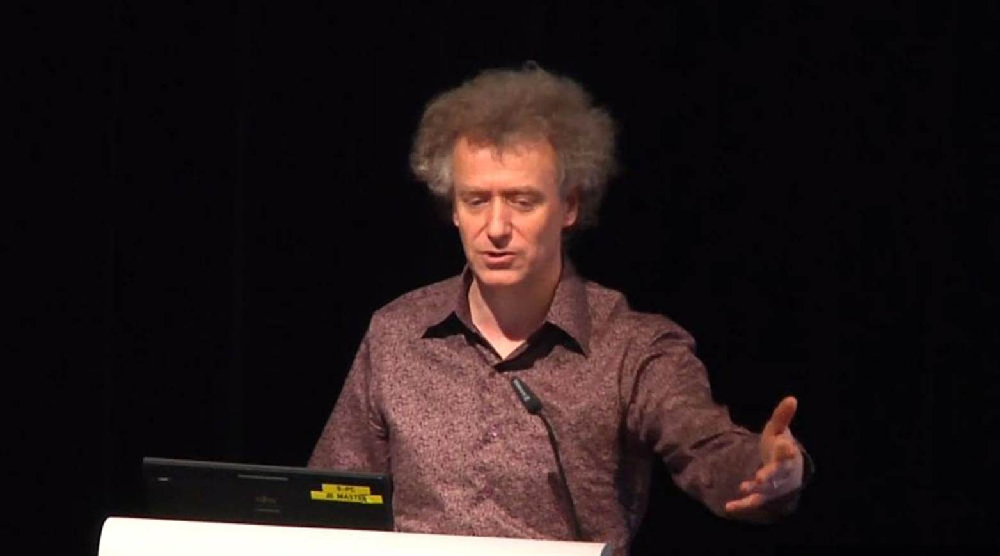
In today’s interview, we sat down with Alan Manning, Professor of Labour Economics at the London School of Economics. He is a leading author in his field, particularly in understanding the imperfections of labour markets.
How do you think robots will impact the economy?
Like any new technology, there will be winners and losers. On the whole, however, I believe there will be more winners.
Who will the winners be?
The winners will mostly be two groups: First robots will be used by firms to make production cheaper, which will in turn lower prices, and benefit the consumer. Second, because consumers are getting products cheaper, they will have more money to spend, which will boost the economy as a whole.
There have been discussions about robotics increasing inequality, and a tax on automation as a way to counter this. What do you think?
Don’t tax automation, let automation happen and then correct its effects. Redistribution of wealth should be done amongst the workers by taxing high wage workers more, and redistributing these earnings to low-wage workers. Overall, I don’t think robots will necessarily raise inequality but if it does, we have well-established ways to respond to that.
Are there differences in the way Europe, the US, Japan or China perceive the robot economy?
There has been a very long history of people worrying about new technology lowering wages and bringing upon the end of work. I think those fears are exaggerated.
Perception is broadly similar across the different regions – but problems in the labour market are slightly different from one country to the other. In the US they worry about stagnation and a jobless recovery. In the UK, we haven’t had stagnation, but we worry about the quality of jobs and the lowering of living standards. In Europe, the worry is about joblessness. Right now there is a tendency to blame robots for all of these problems, and it plays into the general lack of optimism.
Could robots be a solution to the perceived slouch in the economy?
More investment in modern technology, including robotics, would help increase productivity. Historically, rising productivity has improved everyone’s living standards. If optimism about the opportunities that new technology offers could suffuse the economy that would do something to off-set the pessimism that has taken hold.
Yet the media are constantly reporting on the high percentage of jobs that may be “replaced” by robots. Do you have a number to give us?
If I had to give a number, I would say that the impact of new technology on jobs is zero. Meaning that the net percentage of people employed will stay the same overall.
Numbers reported on in mainstream media are often misinterpreted as being predictions, the simplistic conclusion is read as “40 % of jobs will disappear”. I don’t think that’s the right interpretation even if 40% of occupations are affected by robots. The main problem is that this approach looks directly at specific jobs that are affected instead of looking at jobs overall. It is clear that there will be occupations where opportunities will fall because of robots. Other opportunities will also be created due to an increase in spending power. These will not necessarily be new jobs, just more old jobs as consumers spend the extra spending money that comes from the falling prices caused by new technology.
What should we be thinking about regarding regulation to make the most of the robot economy?
One issue is whether people will feel comfortable having a job a done by a robot, that was previously done by a human. Will they be happy with autonomous cars, or autonomous doctors? Regulation can ensure that technology is really better at these tasks before they are deployed, and can help reassure those who show resistance to the technology.
Another issue is intellectual property (IP). Robotics is the source of new knowledge, knowledge can be spread freely across everyone. However, if we are aggressive with IP, we will limit the extent of use of this technology, which would reduce competition in the market. It would help to think a bit more about the consequences of our IP laws and how they are going to help.
Ideally, we would want to have as many people as possible who can understand, have access to, and use this technology. Obviously, you have to strike a balance by providing incentives to motivate people to improve knowledge, but without allowing them to entirely keep that knowledge for themselves.
This is the second in a series of three interviews about the robot economy. Read part one, here.
Read the previous articles in the European Robotics series here.
This series is published on the SPARC website and Robohub. Funding for the series was provided by RockEU – a Coordination and Support Action funded under FP7 by the European Commission, Grant Agreement Number 611247.
tags: Automation, c-Politics-Law-Society, EU Robotics, European Robotics, jobs, robohub focus on european robotics, robot economy, robots and jobs, SPARC

AUAI is supported by:









