
Robohub.org
The unmanned wingman | Foreign Policy
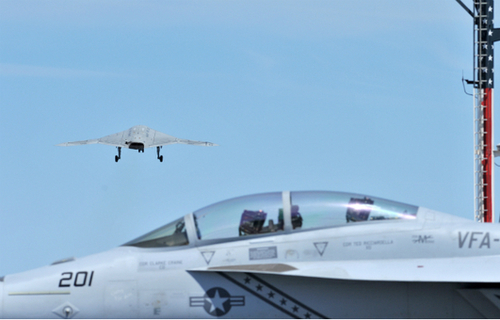
(Free registration required.) “What was once the stuff of science fiction is now only years away from reality. And the increasing capabilities of unmanned aerial vehicles are undeniably awe-inspiring. The historic achievements of recent months clearly indicate that unmanned fighter aircraft will play a major role in the future of air combat.”
John Payne‘s insight:
Like it or not, most of the work being done on the development of autonomous systems is being paid for by the military. One advantage of this is they are furiously disciplined about acknowledging the limitations of the systems they develop, and it strikes me as hopeful that this discipline should act to keep a human being in the loop, even in the heat of aerial combat.
See on www.foreignpolicy.com

John Payne
AUAI is supported by:








Related posts :
Watch the ICRA keynote and plenary talks
Lucy Smith
16 Sep 2026
If you missed the conference you can catch up on IEEE TV.
Robots in society, business and culture: August 2026
IEEE Robotics and Automation Society (RAS)
14 Sep 2026
A round up of robotics stories from IEEE RAS.
Building and programming autonomous robots at the York Micromaze Hackathon
Folasayo Ogundipe and UK RAS STEPS
11 Sep 2026
From 25–27 August, UK RAS STEPS members came together for a three-day Micromaze Robot Hackathon.
Robotics roadmaps from around the world spotlight of the month: United States of America
IEEE Robotics and Automation Society (RAS)
09 Sep 2026
US robotics researchers and industry are looking for a cohesive national robotics strategy.
Could robots help tackle loneliness? BBC’s Ann Droid raises questions about the future of care
The Conversation
07 Sep 2026
While the series exaggerates what robots can currently do, some of the technology it depicts is already being tested.
Exploring the Moon will require rovers that can think for themselves – an upcoming NASA mission will test whether they can
The Conversation
04 Sep 2026
NASA is planning to send three small rovers to the Moon to autonomously compute how to best explore a patch of ground.
Surviving the paper deluge: Notes from an ICRA panel on publishing, LLMs, and the future of peer review
IEEE Robotics and Automation Society (RAS)
02 Sep 2026
Experts discuss peer-review challenges and possibilities for reshaping the process.
When expressive humanoid robots are awkward, people become wary – new brain study
The Conversation
31 Aug 2026
People become more suspicious of a humanoid robot that makes errors, especially when the robot is an expressive conversation partner.

