
Robohub.org
Will robocars vastly increase battery life?
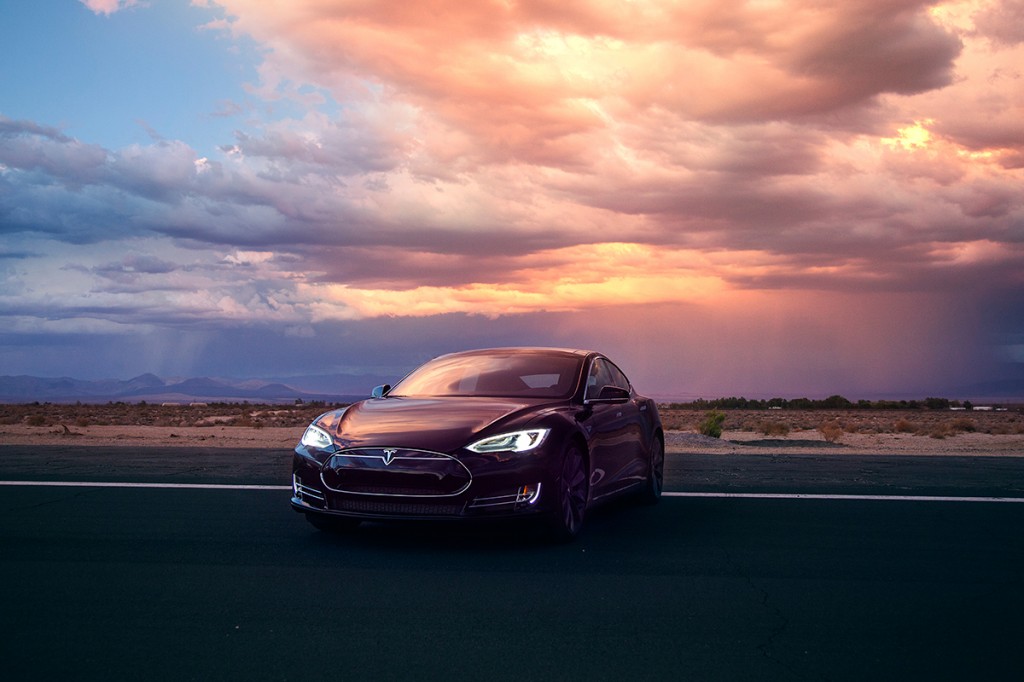 We know electric cars are getting better and likely to get popular even when driven by humans. Tesla, at its core, is a battery technology company as much as it’s a car company, and it is sometimes joked that the $85,000 Telsa with a $40,000 battery is like buying a battery with a car wrapped around it. (It’s also said that it’s a computer with a car wrapped around it, but that’s a better description of a robocar.)
Tesla did a lot of work on building cooling systems for standard cylinder Lithium-Ion cells and was able to make a high performance vehicle. The Model S also by default charges to only 80% of capacity because battery life is hurt by charging all the way to full. In fact, charging to 3.92 volts (about 60%) capacity is the sweet spot. Some of the other things that reduce battery life include:
- Discharging too close to empty
- Getting too warm while discharging
- Getting too warm while charging, and in particular causing thermal expansion, which creates physical damage
- Even ordinary warmth, where the vehicle is stored for long periods, particularly at high charge, is dangerous. The closer to freezing the better, and even above 25 degrees centigrade causes some loss.
The important, but little reported statistic for a battery is the total watt-hours you will be able to get out of it during its usable lifetime. This tells you the lifetime of the battery in miles, and the cost tells you the cost per mile. How important is this? If the Tesla $40,000 battery lasts you 150,000 miles and sells for $10,000 when done, the straight-line cost per mile is 20 cents/mile — more than the cost of gasoline in most cars, and much more than the 3 cent/mile or less cost of electricity.
Humans will drive as humans want to drive, and it’s hard to change that. They will accelerate for both fun and to get ahead of other cars. They will take mixes of short trips and long trips. They don’t know how long their trips will be and demand a flexible vehicle that is always ready for anything.
Electric robotaxis change that game. They will drive predictably, rarely ever demanding quick acceleration. A driver likes zippy fun, a passenger wants a gentle ride. They can go even further, and set their driving pattern based on the temperature of their batteries. Are we making the batteries too warm? Then “cool off,” literally. This applies both to fast starts and also slowing down. Regenerative braking conserves energy and increases range, but doing it too hard heats the batteries. Start slowing down sooner — especially if you have data on what traffic lights and traffic are doing and it can make a big difference.
Robotaxis can always use the sweet spot of the battery charge duty cycle
- You will rarely be sent a robotaxi that, in order to get you, needs to dig deep into its maximum range.
- Often demand is predictable, so if need be, vehicles can be charged above 60% only when such demand is expected or is arising.
- While robotaxis will prefer to charge at night when power is cheapest, they can charge any time to get back up to the optimal level.
- As I’ve noted before, battery swap doesn’t work well for humans, but robots don’t mind making an appointment or driving out of their way for a swap. This makes it easy to use batteries only in the sweet spot, and to charge them only at night on cheap power.
- If battery swap is not an option, there are many options to supplement range during peak demand. Vehicles can go to depots to pick up trunk batteries, battery trailers, or even slot-in units with small motorcycle engines and liquid fuel tanks. If this is cheaper than the alternatives, it’s an option.
- When it gets hot, robotaxis can seek out the shade, or even places with cooling, to keep the batteries from being too warm.
Robotaxis don’t mind the loss of range all that much
As a battery ages, its capacity drops. Humans hate that — having bought a car with a 100 mile range they won’t accept it can now only do 60. For a human, that means time to replace the battery. For a robotaxi, that just means you have a shorter range, and you don’t get sent on long range trips. Or you may decide that while before, you only charged to 60% to get maximum battery life, now you charge more, knowing it will eat the remaining life, but getting the most out of the battery.
Of course, as the range drops, now you run into another problem. You’re carrying around the extra weight of battery for half the range, and it’s costing you energy to do that, especially in an ultralight car where the battery is the biggest component of the weight. (This also enters into the math of whether it makes sense to charge only to 60%.) Eventually the time comes that the battery is not practical. This is the time to sell it. Tesla and others are working to produce a home and grid storage market for used car batteries. In those applications, the weight doesn’t matter, just the cost for the remaining lifetime watt-hours. You care about the capacity, but you pay a market price for it.
Eventually, even this is not practical and you scrap to recycle the materials.
Typical predictions for Lithium-Ion run from 500 to 1,000 cycles. Tesla’s techniques seem to be beating that. With robotaxis, who knows just how many lifetime kwh we’ll be able to get out of these batteries, or perhaps even other chemistries. Turns out that human drivers like a chemistry that keeps its life as long as possible then falls off a cliff. Slow decline is harder to sell — but slow decline chemistries, like Lithium Iron Phosphate and others could make more sense for the robots that don’t care.
Grid storage?
It’s often suggested that electric cars could be used as grid storage. Problem is, with car batteries today, it costs around 15 cents to put a kwh into a battery and get it out. That means to be grid storage, you need to have the spot price on the grid be the price you bought at, plus 15 cents, plus a margin to make it worth this. Night power can get as low as 6 cents, so this does happen, but not as much as one might hope. The problem is that the grid’s peak demand is around 4 to 7pm, which is also a peak time for driving. That’s the last time most car owners will want to drain off their batteries to make a bit of money on the power. You will only do that if you know you won’t be using the car. For a robotaxi fleet, that might be the case. Of course, selling power to the grid you will do it only at a rate that does not harm your battery or warm it up too much.
When the grid gets to a super peak, the price can really spike to attractive numbers. That’s because building extra power plant capacity just for those rare days is expensive, and so almost any price is better. Here we could talk about cars as storage, when we know their batteries are not going to be used. That’s even more true of batteries sitting in a battery swap facility.
tags: automotive, Tesla

AUAI is supported by:









