
Robohub.org
Artificial intelligence: Europe needs a “human in command approach,” says EESC
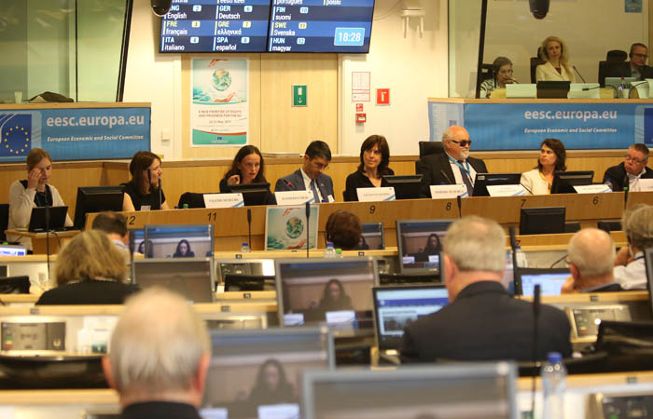
Credit: EESC
The EU must pursue a policy that ensures the development, deployment and use of artificial intelligence (AI) in Europe in favor, and not conducive to the detriment, acts of society and social welfare, the Committee said in an initiative opinion on the social impact of AI which 11 fields are identified for action.
“We have a human need in-command approach to artificial intelligence, with machines remain machines and people always maintain control of these machines” said rapporteur Catelijne Muller (NL – Workers’ Group). She was not just about technical check: “People can and must decide whether, when and how AI is used in our daily lives, what tasks we entrust to AI and how transparent and ethical is all. Eventually, we decide whether we want that certain activities are carried out, care or medical decisions are made by AI, and whether we want to accept that our AI security, privacy and autonomy might be jeopardized,” said Mrs. Muller.
Artificial intelligence has recently undergone rapid growth. The size of the market for AI is approximately USD 664 million and is expected to increase to 38.8 billion USD in 2025. It is virtually undisputed that artificial intelligence can have great social benefits: consider applications for sustainable agriculture, environmentally friendly production, safer traffic safety work, a safer financial system, better medicine and more. Artificial intelligence can even possibly contribute to the eradication of disease and poverty.
But the benefits of AI can only be realized as well as the challenges to be addressed related to it. The Committee has identified 11 areas in which AI ensures social challenges, ranging from ethics, security, transparency, privacy and standards, employment, education, (in) equality and inclusiveness, legislation, governance and democracy, besides warfare and super intelligence.
These challenges can not be filed with the industry, this is a matter for governments, social partners, scientists and companies together. The EESC believes that the EU should adopt policy frameworks herein and should play a global leadership role. “We have pan-European norms and standards required for AI, as we now have for food and household appliances. We need a pan-European code of ethics to ensure that remain compatible AI systems with the principles of dignity, integrity, freedom and cultural and gender diversity, as well as basic human rights, “said Catelijne Muller,” and we have employment strategies are needed to maintain or create jobs and ensure that employees remain autonomous and take pleasure in their work. “
The issue of the impact of AI on employment is indeed central to the debate on AI in Europe, where unemployment is still high because of the crisis. Although predictions about the number of jobs over the next 20 years will be lost due to the use of AI vary from a small 5% to a disastrous 100%, resulting in a society without jobs, the rapporteur believes, based on a recent report McKinsey that it is more likely that parts or parts of jobs, and not a complete job, will be taken over by AI. In this case, it comes down to education, lifelong learning and training, to ensure that workers benefit from these developments and not be victimized.
The EESC opinion also calls for a European AI infrastructure with open source privacy-respecting and learning environments, real-life test environments and high-quality data sets for training and development of AI systems. Artificial intelligence has been mainly developed by the “big five” (Amazon, Facebook, Apple, Google and Microsoft). Although these companies are in favor of the open development of AI, and some of their AI development platforms and offer open source, full accessibility this is not guaranteed. AI infrastructure for the EU, possibly even with a European AI certification or labeling, can not only help promote the development of responsible and sustainable AI but also the EU competitive advantage.
tags: EU, politics

AUAI is supported by:









