
Robohub.org
Foxconn and Alibaba invest in SoftBank Robotics as Pepper goes on sale in Japan
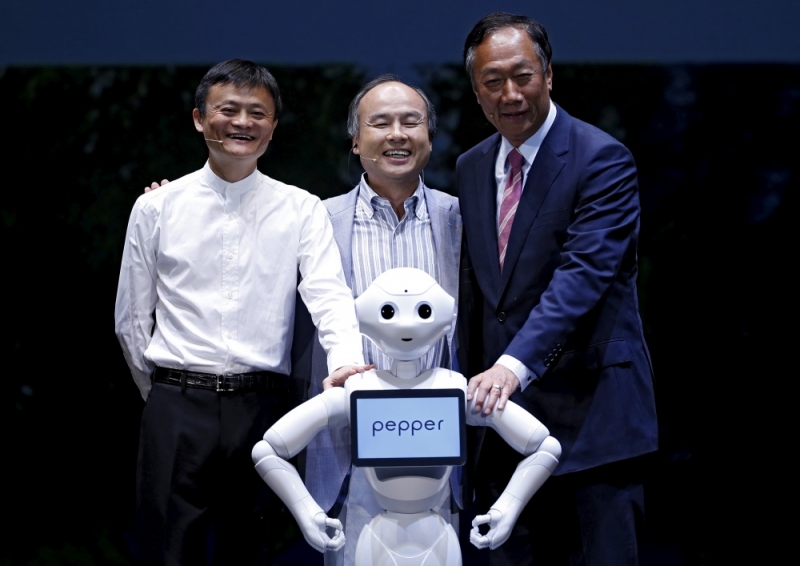
In a strategic move sure to have long-term ramifications, Foxconn and Alibaba each invested $118 million for a combined 40% share of the new SoftBank Robotic Holdings Group, an entity which holds Aldebaran, Pepper and the Pepper SDK software group. Starting June 20, Pepper robots will go on sale to businesses and consumers in Japan.
For $1,600 plus a monthly Internet connection fee of $120 and a monthly maintenance contract of $80, you too can have a Pepper and access to over 200 apps to help make it useful.
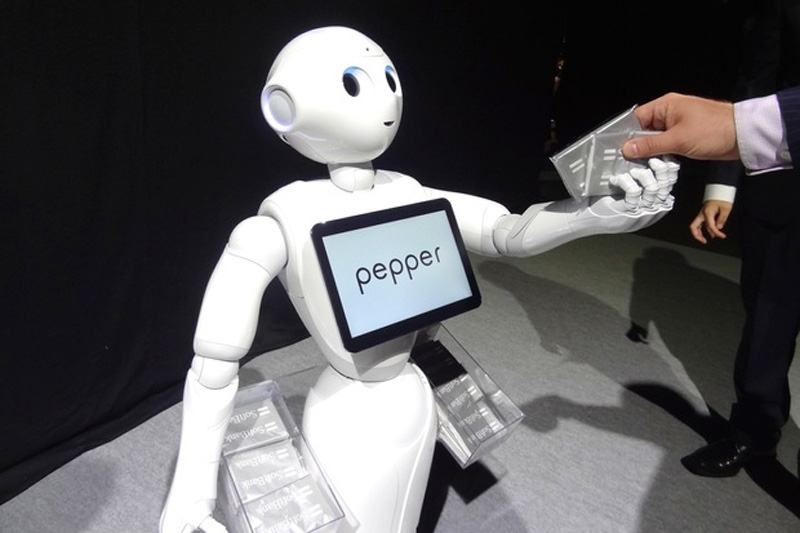
According to Tim Hornyak of IDG News Service:
Pepper has rudimentary hand function and can grasp light objects. In a recent demo, the robot was handing out packets of tissues, grabbing them from containers attached to its waist and proffering them to people nearby.
That’s actually something done by countless human workers in Japan. Karaoke parlors and other establishments trying to grab commuters’ attention print ads on tissue packets and pay people to hand them out at subway stations.
Years ago I talked with Joe Engelberger, considered to be the founder of American robotics, about his thesis that he could build a robot to assist seniors for $750K. Bottom line: he didn’t want money from investors or VC funds; he wanted money from deep-pocket players who were in the business. He wanted Johnson & Johnson, Siemens, GE and Medtronic — companies that already had penetrated the marketing chain and the manufacturing of healthcare devices AND that had deep-pockets for the long haul of bringing the product to market and then supporting it and growing the product line.
In a move that mimics Engelberger’s sentiment, SoftBank just sold 40% of its SoftBank Robotics Holding Group (SRH) to Foxconn and Alibaba (20% to each) in return for $118 million from each. SRH is the entity containing SoftBank’s robotic assets: Aldebaran, Pepper and the Pepper SDK software effort. It is also possible that SoftBank’s recent investment in Fetch Robotics might be included in SRH.
Foxconn is already ramping up to do the manufacturing for the Pepper robot. SoftBank earlier announced that Nestle purchased 1,000 Peppers for their Japanese stores and that SoftBank’s retail stores were also getting 1,000. Once Pepper expands beyond Japan, the next most likely target is China — and Alibaba is the biggest name in marketing in China.
Alibaba invented Singles Day, a day like Mother’s Day but for people who are single — a big group in China. It turned out to be a very successful marketing ploy that caught on with consumers. Proving the power of Alibaba’s marketing might, last November 11th, on Singles Day, ECOVACS sold over 70,000 robotic vacuum cleaners online exclusively through Alibaba!
The $236 million in investment funds are certainly enough to scale up manufacturing, software and marketing if not for this year’s Singles Day, then certainly for 2016.
This effort by SoftBank and its new partners into consumer robotics is massive in forethought and a welcome confirmation that social robots will be a big thing in the near future.
tags: Alibaba, FOXCONN, Pepper, SoftBank

AUAI is supported by:









