Robohub.org
 

Into the heart of a glacier — with a drone

by and
20 January 2016


share this:
Photo credit: Pierre-Yves Guernier

Photo credit: Pierre-Yves Guernier

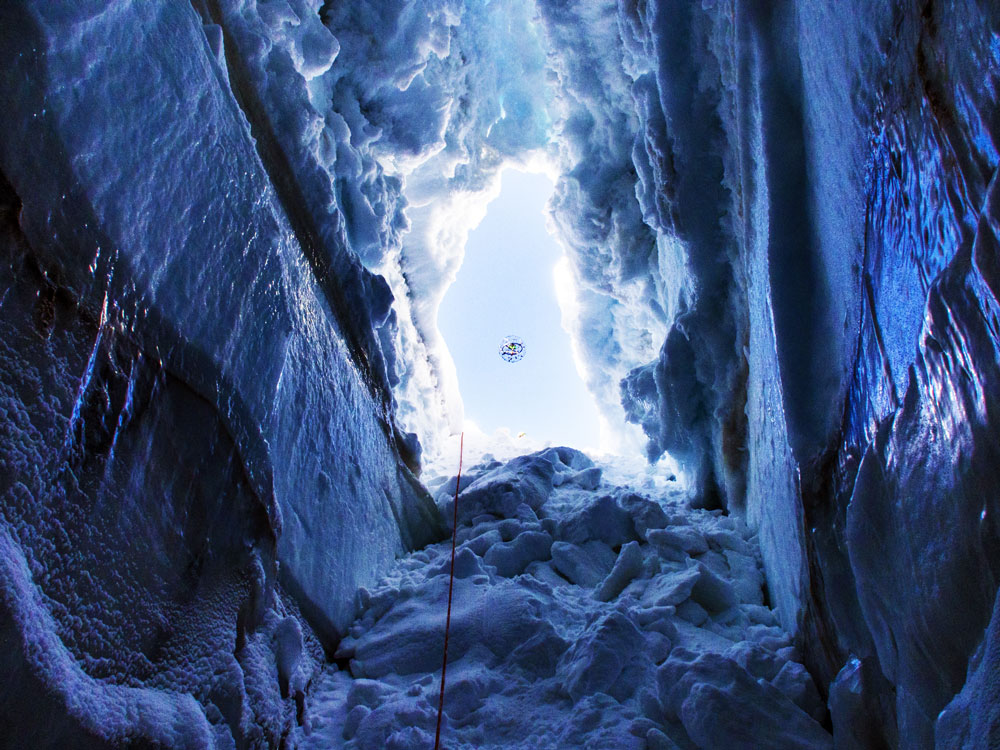
With their near-vertical walls and deep fractures, glacier crevasses are dangerously narrow ice caves that present a huge risk to search and rescue teams. In a partnership between Flyability (Winner of the 2015 UAE Drones for Good Award) and the Zermatt Glacier mountain rescue team, drones were used to explore a remote crevasse in the Swiss Alps. The goal is to one day use the drones to help locate injured parties before dispatching a rescue team into dangerous territory, and also to help refine rescue techniques related to crevasse fall emergencies.
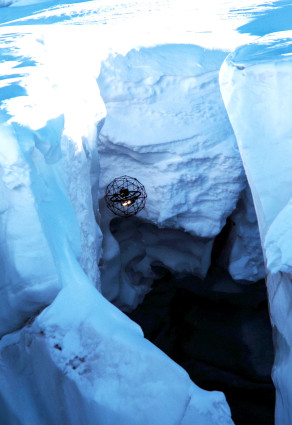
Photo credit: Pierre-Yves Guernier

Photo credit: Pierre-Yves Guernier

Until now, crevasses have been largely inaccessible (both to people and to robotic technologies) because their uneven narrow walls make them extremely difficult to navigate. The Flyability drone, however, turned this to advantage by using its spherical, freely rotating protective cage — called a gimbal — to bump its way safely down into the crevasse and back up to the surface, capturing a rare view of the landscape along the way. The embedded full HD camera, digital live video transmission, and powerful lighting system allowed the drone to operate in the heart of the mountain glacier, tens of meters below the surface.

The gimbal also makes the drone safe to fly close to humans, even while being remotely operated by an untrained pilot — another feature of critical importance in search and rescue operations.

Flyability SA develops collision-resistant drones for the inspection and exploration of inaccessible and confined environments such as those found in industrial inspection and search and rescue scenarios, in order to quickly and cost effectively provide crucial image and thermal information needed to locate damage or victims.
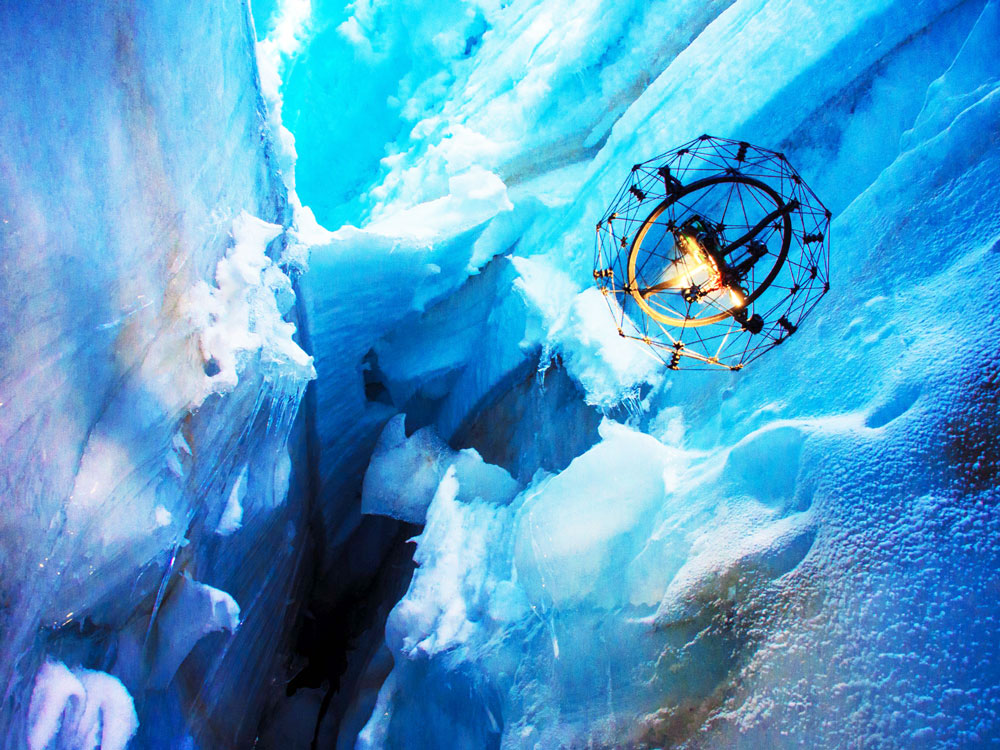
Photo credit: Pierre-Yves Guernier
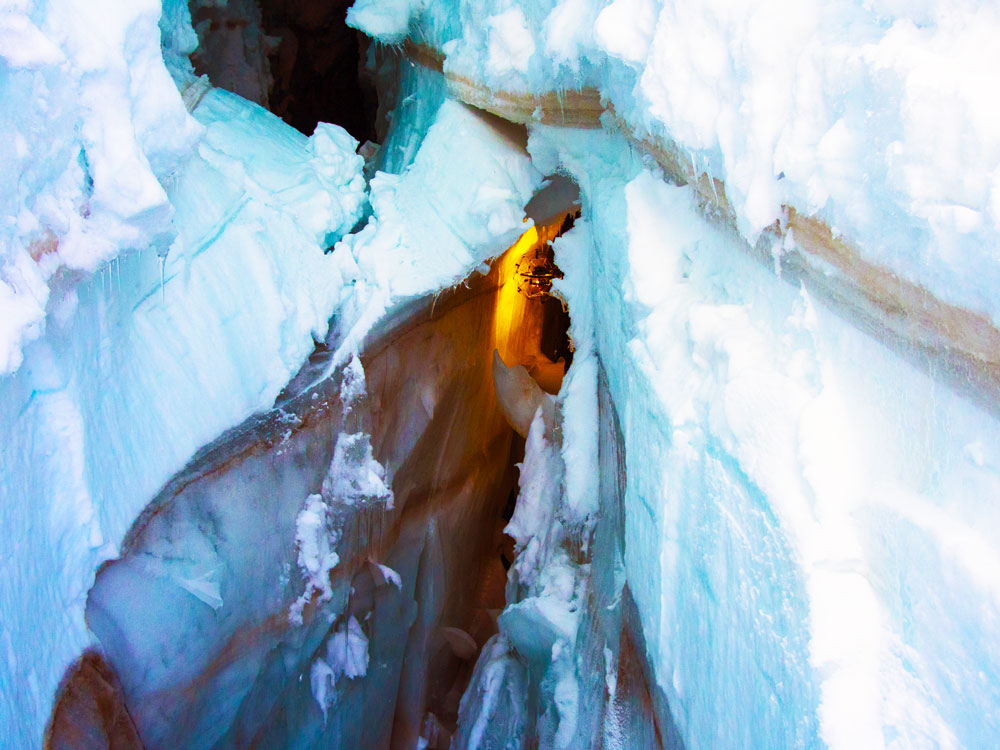
Photo credit: Pierre-Yves Guernier
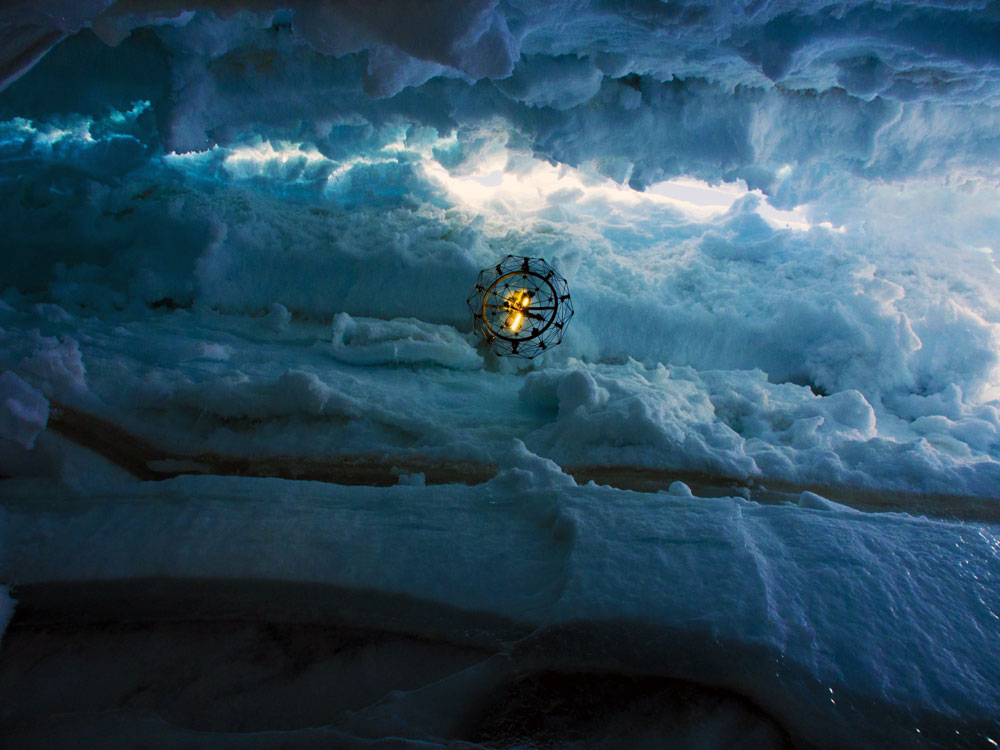
Photo credit: Pierre-Yves Guernier
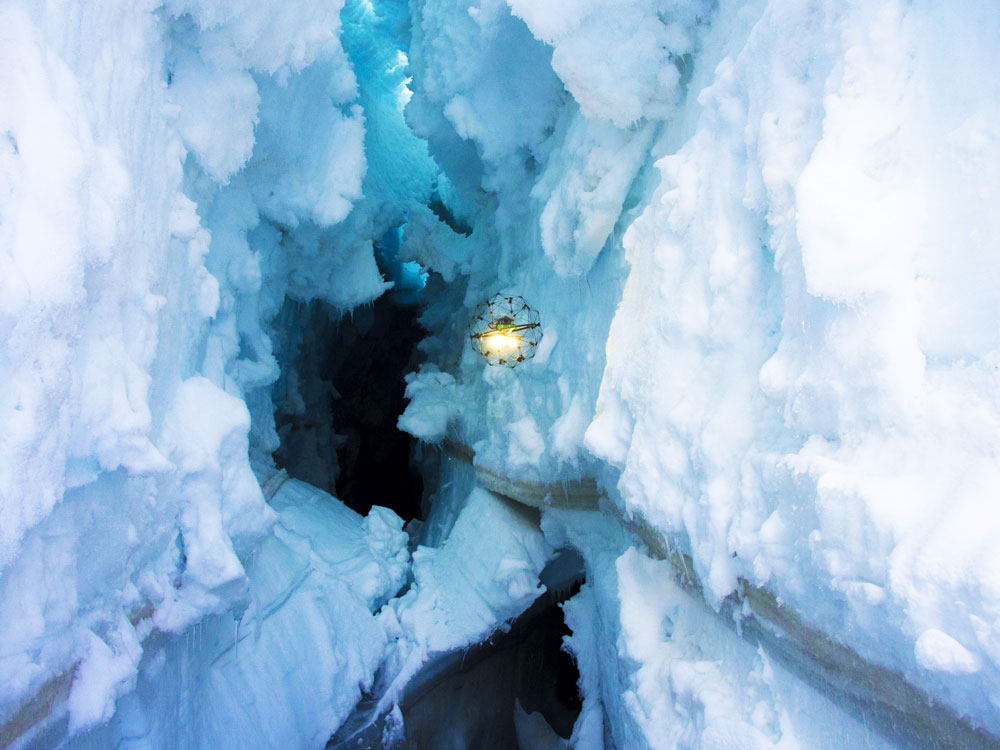
Photo credit: Pierre-Yves Guernier

Photo credit: Pierre-Yves Guernie

Photo credit: Pierre-Yves Guernier

Photo credit: Pierre-Yves Guernie

Photo credit: Pierre-Yves Guernier


tags: , , , ,


Adrien Briod is co-founder and CTO of Flyability.

Hallie Siegel robotics editor-at-large

            AUAI is supported by:


Subscribe to Robohub newsletter on substack


Related posts :

Surviving the paper deluge: Notes from an ICRA panel on publishing, LLMs, and the future of peer review

Experts discuss peer-review challenges and possibilities for reshaping the process.

When expressive humanoid robots are awkward, people become wary – new brain study

  31 Aug 2026
People become more suspicious of a humanoid robot that makes errors, especially when the robot is an expressive conversation partner.

First 11 vs 11 humanoid soccer game played at RoboCup 2026

  28 Aug 2026
Watch highlights from this historic match.

How green is your robot? And other awkward questions

Robots clean rivers and sort waste, monitor ecosystems, and inspect renewable-energy infrastructure. But even the greenest robot has an environmental footprint.

These tiny drones are powered by sound

  24 Aug 2026
EPFL engineers have designed acoustic cavities that convert sound waves into thrust, propelling small robots and ultralight aerial vehicles without on-board actuators or electronics.

#AAMAS2026 blue sky award winner: Foundation world models for agents in changing environments

and   21 Aug 2026
Hear from the AAMAS 2026 Best Blue Sky Paper Award winner.

Robotics roadmaps from around the world spotlight of the month: Japan

Robots have been a prolific theme in Japanese pop culture and media since the 1950s

Intermittent swimming promotes the energy efficiency of fish-like robot movements

How zebrafish-inspired robots save energy by swimming in bursts.


AUAI is supported by:


Subscribe to Robohub newsletter on substack


©2026.05 - Association for the Understanding of Artificial Intelligence