
Robohub.org
The latest in ultra-affordable robots: AFRON competition announces winners
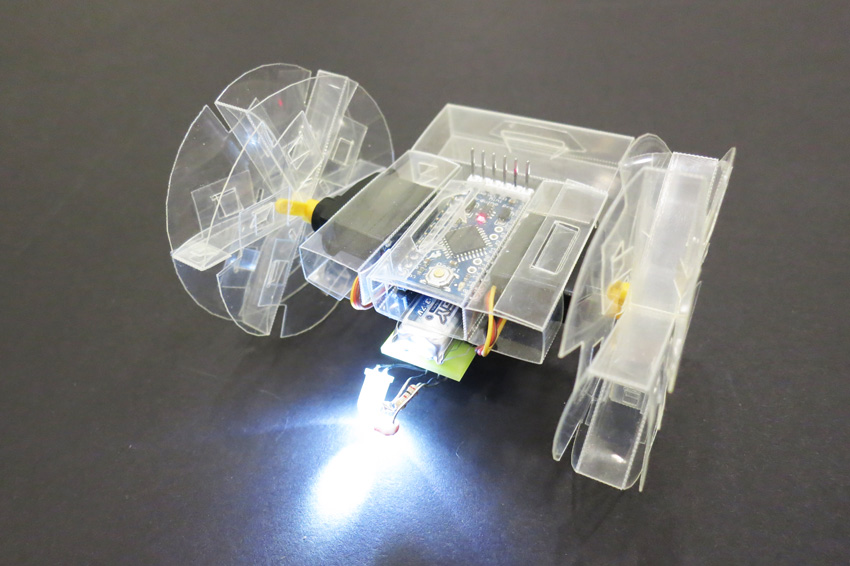
In 2012, the African Robotics Network (AFRON) challenged the robotics community to design a $10 educational robot that could inspire kids worldwide about Science, Technology, Engineering, and Math. With so many expensive products on the market, the goal was to create a class of robots that are “an order of magnitude less expensive than existing products”. The latest iteration of the competition challenged teams to enhance upon the winning 2012 designs, and to develop easy-to-use software and curricula to go with them. AFRON announced the winners earlier this week.
The big winner for the competition was the print-and-fold robot from MIT, which won first place in the Hardware and Curriculum categories, and second place in the software category. This robot is made from a “patterned 2D sheet, which is folded and then equipped with actuation mechanisms and electronics,” allowing for quick, low-cost assembly. The AERobot from Harvard followed close behind with first place in Software, and two second place spots, in the Hardware and Curriculum categories. The PANYABOT from iHub in Kenya also caught the judge’s attention, earning first place in the Community Challenge category and honourable mentions in the Software and Curriculum categories.
Creating affordable robots for STEM education was AFRON’s mission, but education is not the only area where ultra low-cost robots are desirable. Swarm robotics (where large numbers of robots might work together to perform collective tasks) is another area where robustness, simplicity and affordability reign high.
Says Mike Rubenstein, team member behind the AERobot, “In my research I have created swarm robots, which have many properties that are also desirable in education robots. After seeing the contest requirements, I realized that with some minor modifications, my swarm robots could make useful education robots.” The AERobot is in fact a modified version of the Kilobot robot, with Kilobot’s swarm capabilities removed, the charging and programming simplified, and with some additional sensors.
Despite Rubenstein’s previous experience developing low-cost robots, he says that creating an $11 robot with features like sensing, thinking and locomotion was a challenge, especially when considering that one of the assessment criteria for the competition was the ability of the robot to engage with students and teach them about robotics.
“The software and planned curriculum drove the robot design, so it was critical to understand how the design choices for the robot impacted the possible curriculum for the robot,” says Rubenstein. “For example, we wanted to use software that allowed the robot to be programmed over USB without any additional hardware, which impacted the robot shape, and choice of micro-controller.”
Jury members Dr. Sam Cubero (The Petroleum Institute, UAE), Dr. M. Bernardine Dias (Robotics Institute, Carnegie Mellon University, USA), and James Manyika (Mckinsey Global Institute) evaluated each of the submissions along several criteria, including robustness, cost, versatility, ease of use/assembly, documentation, and the ability to engage students and help them learn.
Here are the winners and runners up in each category:
Hardware category
| First Place: MIT Printable Robot (MIT, USA) |
Ankur Mehta Joseph DelPreto Benjamin Shaya Lindsay Sanneman Daniela Rus |
 |
| Second Place: AERobot (Harvard, USA) |
Michael Rubenstein Bo Cimino Radhika Nagpal |
 |
| Honorable Mention: Tiny CNC Drawing Robot (PlotterBot, USA) |
Jay Shergill | 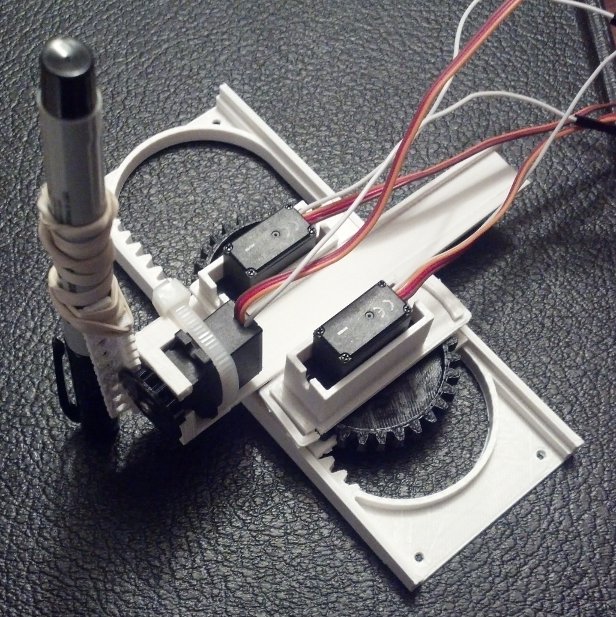 |
Software Category
| First Place: AERobot (Harvard, USA) |
Michael Rubenstein Bo Cimino Radhika Nagpal |
 |
| Second Place: MIT Printable Robot (MIT, USA) |
Ankur Mehta Joseph DelPreto Benjamin Shaya Lindsay Sanneman Daniela Rus |
|
| Honorable Mention: PANYABOT (iHub, Kenya) |
Jessica Colaco Wachira Ndaiga Muuo Wambua Elizabeth Ondula James Kinyanjui Brian Bosire |
 |
Curriculum Category
| First Place: MIT Printable Robot (MIT, USA) |
Ankur Mehta Joseph DelPreto Benjamin Shaya Lindsay Sanneman Daniela Rus |
|
| Second Place: AERobot (Harvard, USA) |
Michael Rubenstein Bo Cimino Radhika Nagpal |
 |
| Honorable Mention: PANYABOT (iHub, Kenya) |
Jessica Colaco Wachira Ndaiga Muuo Wambua Elizabeth Ondula James Kinyanjui Brian Bosire |
 |
Community Challenge Category
| First Place: PANYABOT (iHub, Kenya) |
Jessica Colaco Wachira Ndaiga Muuo Wambua Elizabeth Ondula James Kinyanjui Brian Bosire |
 |
| Second Place: ARX LollyBot Workshop (Ashesi, Ghana) |
Wumpini Alhassan Hussein | 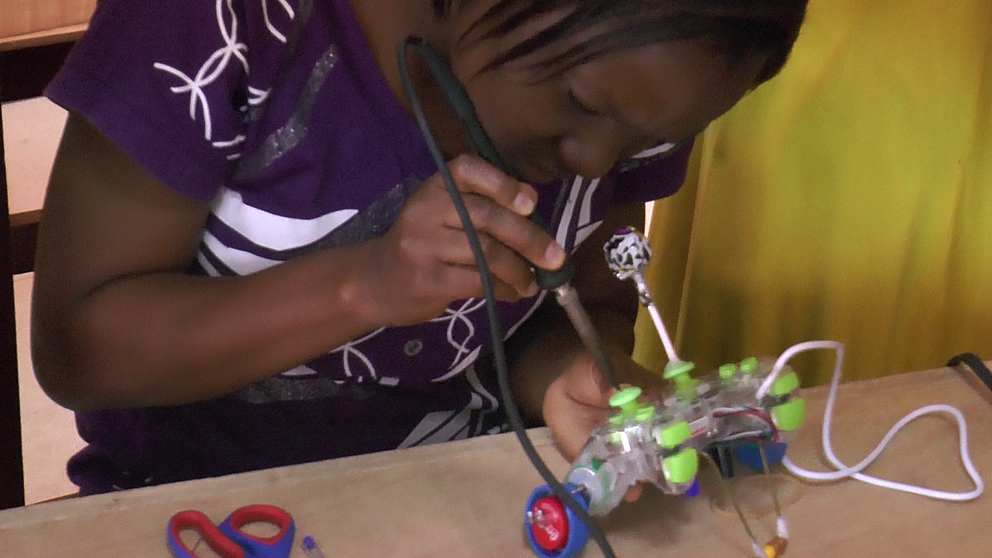 |
| Honorable Mention: Tiny CNC Drawing Robot (PlotterBot, USA) |
Jay Shergill | 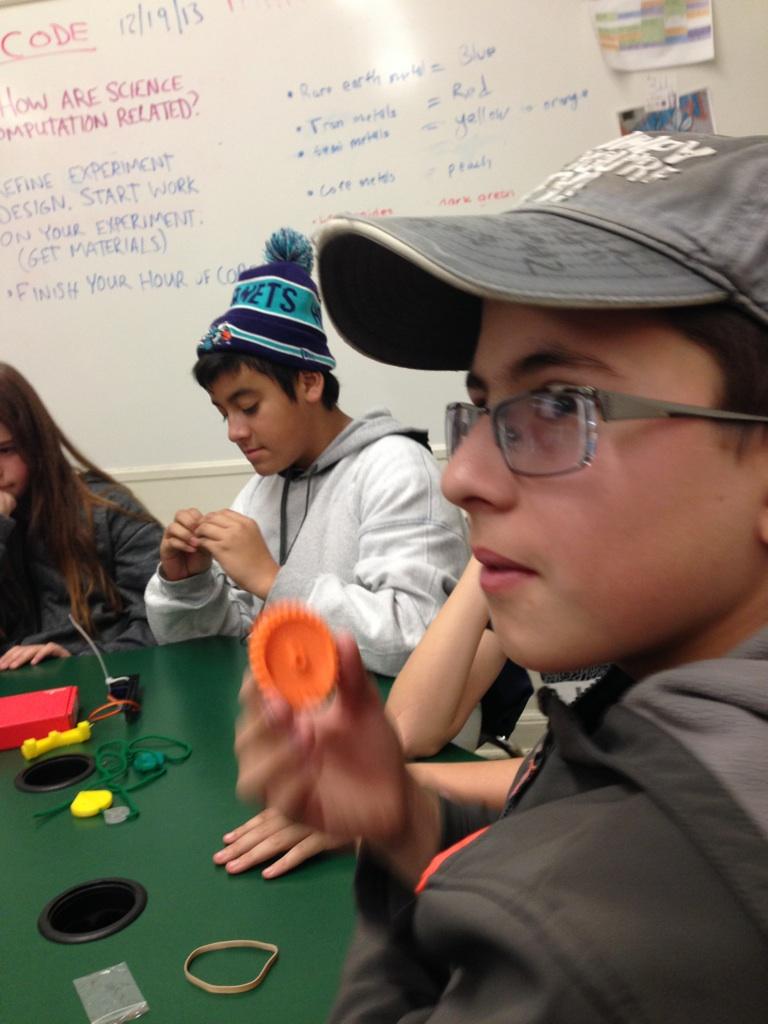 |
If you liked this article, you may also be interested in:
- FIRST 2013 photo essay: Girls of Steel in the trenches at the FRC championship finals
- Introducing the Cybathlon
- ROS 101: Intro to the Robot Operating System
- Robots Podcast: Origami robots
- Getting started in robotics, an educational concern
See all the latest robotics news on Robohub, or sign up for our weekly newsletter.
tags: afron, competitions, robohub focus on diversity, swarm

AUAI is supported by:









