Robohub.org
Top Robocar news of 2017
Credit:Waymo
Here are the biggest Robocar stories of 2017.
Waymo starts pilot with no safety driver behind the wheel
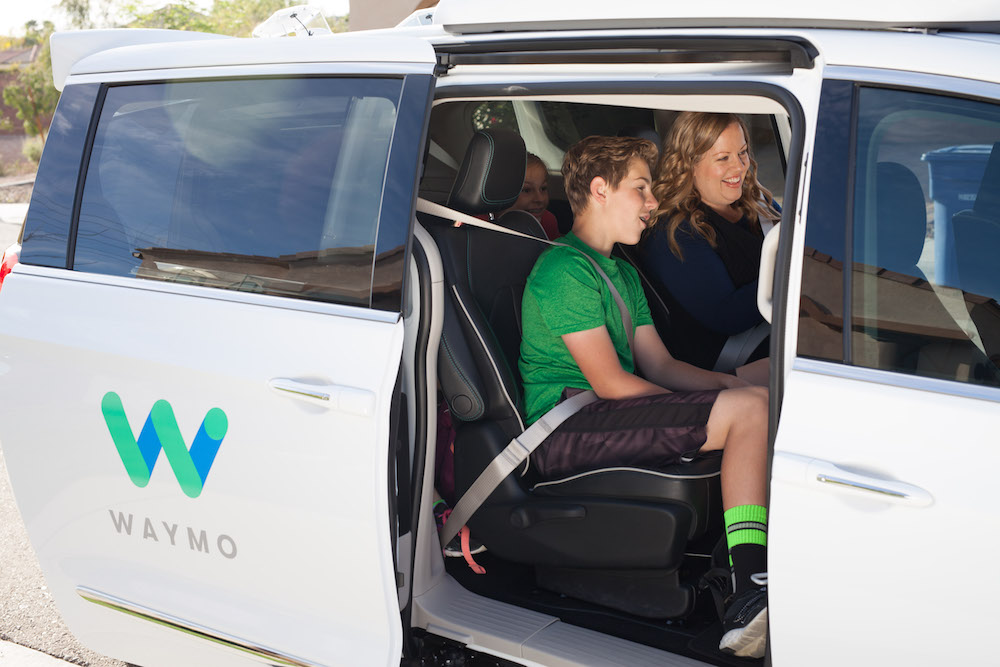
By far, the biggest milestone of 2017 was the announcement by Waymo of their Phoenix Pilot which will feature cars with no safety driver behind the wheel, and the hints at making this pilot open to the public.
The huge deal is that Waymo’s lawyers and top executives signed off on the risk of running cars with no safety driver to take over in emergencies. There is still an employee in the back who can do an emergency shutdown but they can’t grab the traditional controls. A common mistake in coverage of robocars is to not understand that it’s “easy” to make a car that can do a demo, but vastly harder to make one that has this level of reliability. That Waymo is declaring this level puts them very, very far ahead of other teams.
Many new LIDAR and other sensor companies enter the market
The key sensor for the first several years of robocars will almost surely be LIDAR. At some point in the future, vision may get good enough but that date is quite uncertain. Cost is not a big issue for the first few years, safety is. So almost everybody is gearing up to use LIDAR, and many big companies and startups have announced new LIDAR sensors and lower prices.
News includes Quanergy (I am an advisor) going into production on a $250 8-line solid state unit, several other similar units in development from many companies, and several new technologies including 1.5 micron LIDARs from Luminar and Princeton Lightwave, 128 plane LIDARs from Velodyne and radical alternate technologies from Oryx in Israel and others. In addition, several big players have acquired LIDAR companies, indicating they feel it is an important competitive advantage.
At the same time, Waymo (which created its own special long range LIDAR) has been involved in a giant lawsuit against Uber, alleging that the Otto team appropriated Waymo secrets to build their own.
Here is some coverage I had on LIDAR deals.
In more recent news, today Velodyne cut the price of their 16 laser puck to $4,000. 16 planes is on the low side as a solo sensor but this price is quite reasonable for anybody building a taxi.
Regulations get reversed.
In 2016 NHTSA published 116 pages of robocar regulations. Under the new administration, they reversed this and published some surprisingly light handed replacements. States have also been promoting local operations, with Arizona coming out as one of the new winners.
Intel buys MobilEye
There were many big acquisitions with huge numbers, including NuTonomy (by Delphi) but the biggest ever deal was the $16B purchase of MobilEye by Intel.
MobilEye of course has a large business in the ADAS world but Intel wants the self-driving car part and paid a multi billion dollar premium for it.
Uber orders 24,000 Volvos
It’s not a real order quite yet but this intent to buy $1B of cars to put Uber software on shows how serious things are getting, and should remove from people’s minds the idea that Uber doesn’t intend to own a fleet.
Flying cars get a tiny bit more real
They aren’t here yet, but there’s a lot more action on Flying Cars, or in particular, multirotor drone-style vehicles able to carry a person. It looks like these are going to happen, and they are the other big change in the works for personal transportation. It remains uncertain if society will tolerate noisy helicopters filling the skies over our cities, but they certainly will be used for police, ambulance, fire and other such purposes, as well as over water and out in the country.
A little more uncertain is the Hyperloop. While the science seems to work, the real question is one of engineering and cost. Can you actually do evacuated tubes reliably and at a cost that works?
tags: Automotive