
Robohub.org
What’s new in robotics this week? Robotic spacecraft riding the solar wind
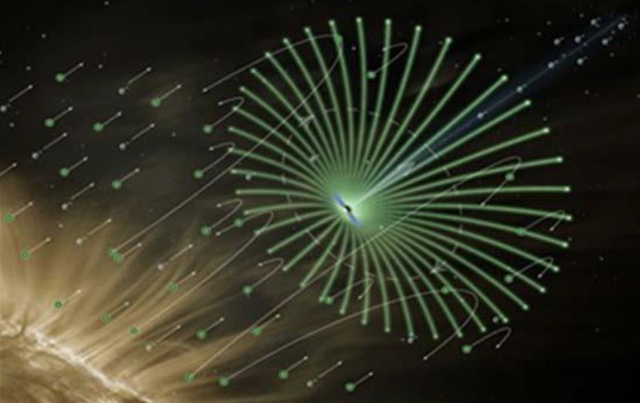
Credit: Alexandre Szames, Antigravite, Paris, France
Solar wind for robotic spacecraft, AI in fiction ranked by evilness, the drone with no flight time limit and 10 drones you won’t need to register.
‘ELECTRIC SAILS’ COULD PROPEL SUPERFAST SPACECRAFT BY 2025 (SPACE.COM)
Robotic spacecraft riding the solar wind by 2025?
That’s what a NASA-funded team is hoping to achieve.
Researchers are developing an “electric sail” (e-sail) propulsion system that would harness the solar wind, the stream of protons, electrons and other charged particles that flows outward from the sun at more than 1 million mph.
“It looks really, really promising for ultra-deep-space exploration,” [said] Les Johnson, of NASA’s Marshall Space Flight Center in Huntsville, Alabama.
Johnson is part of the Heliopause Electrostatic Rapid Transit System (HERTS) team, an e-sail development project funded by NASA’s Innovative Advanced Concepts (NIAC) program.
The idea of using solar sails has been around a while and this approach was originally developed by Pekka Janhunen, one of the HERTS team, back in 2006. Here’s one from the archives.
MOST PEOPLE WANT FULLY AUTONOMOUS WEAPONS BANNED: UBC SURVEY (UNIVERSITY OF BRITISH COLUMBIA, PRESS RELEASE)
A survey of more than 1,000 people from 54 different countries reveals that “more than eight out of every 10 individuals surveyed said such robots should not be used for aggression, and 67 per cent said they should be banned across the planet”.
“It has been said that future wars will be fought with completely automated systems,” said AJung Moon, [Open Roboethics initiative] ORi spokesperson and a PhD candidate in mechanical engineering at UBC. “The survey results clearly show that more public discussion is necessary so that we can make intelligent decisions about robotic weapon technologies.”
If pressed to make a choice, most people (71 per cent) said they would prefer that their country use remotely operated weapons—such as the military drones already being used by a few armies—instead of fully autonomous weapons.
PARC DRONE HAS NO LIMIT ON FLIGHT TIME (PHYSORG)

The Persistent Aerial Reconnaissance and Communications (PARC) device, developed by CyPhy Works, is a drone that can stay aloft indefinitely. What’s the secret of its endurance?
A microfilament that transmits power and data and is strong enough to reel the drone in if needs be.
While small cables normally mean low power and poor communications, CyPhy Works said that their patented system “flips that dynamic.” They get high power and they get high-definition communications through a tiny cable, thanks to “novel electronics”.
The PARC vehicle can operate at altitudes of up to 500 feet above ground level, or 10,000 feet density altitude.
The company’s site said their microfilament is impervious to jamming and unaffected by water, power lines, and other possible interferences. The microfilament connects the robot to its Ground Control Station (GCS), so communications can’t be intercepted, spoofed, or otherwise compromised, it added.
CyPhy Works founder Helen Greiner says we will have drone delivery by 2020. “Technically we could do it earlier, but if you’ve been involved in the struggle with the FAA since the ’90s you would not place a bet that they would allow larger, non-line-of-sight vehicles to fly over populated cities.”
10 Drones You Don’t Need To Register (Robotics Trends)
The FAA has a lot of work ahead of it over the next few months. The agency estimates that one million drones will be sold this holiday season in the United States alone.
The agency is expected to require all drones above 9 oz in weight to be registered and the entire system needs to be in place before the holiday season.
Of course, the registration requirement doesn’t apply to small drones and Robotics Trends‘ Steve Crowe is wondering whether this loophole might lead to a spike in sales for micro- and nano-drones.
For the growing number of anti-registration folks out there, we’ve compiled some of the top nano-sized drones you can buy today and won’t have to register – if the FAA adheres to the task force’s recommendations. Again, they come with limitations, but they’ll certainly help you get your drone fix.
And what about nano-sized drones? They certainly don’t have the capabilities of a DJI or 3DR drone, but for someone who just wants to fly around for 10 minutes, this could be a potential solution. Will we see a boon in nano drones due to registration for larger drones?
IMPORTANT NOTE: no matter what type of drone you choose to fly, always fly safely and with courtesy towards other sky users and people on the ground.
If you’re one of the million people that’s thinking of buying a drone in the United States this holiday season, this website is a great place to start learning about responsible flying. For those outside the United States, here‘s a good place to start looking for the regulations specific to your country.
THE MOST MEMORABLE AI IN FICTION RANKED BY EVILNESS (FAST COMPANY)
 Robopocalypse Now! #2 The robot takeover will never happen without hordes of evil artificial intelligences hell bent on our destruction, will it? Well … No! To whet our appetite, this lovely infographic lists ten of the most evil AIs.
P.S. All the AIs listed here are fictional. For now.
Notable mention: Artificial intelligence: ‘Homo sapiens will be split into a handful of gods and the rest of us’ (The Guardian).
THIS GERMAN MACHINE IS HITTING PEOPLE TO MAKE TOMORROW’S ROBOTS SAFER (BLOOMBERG)
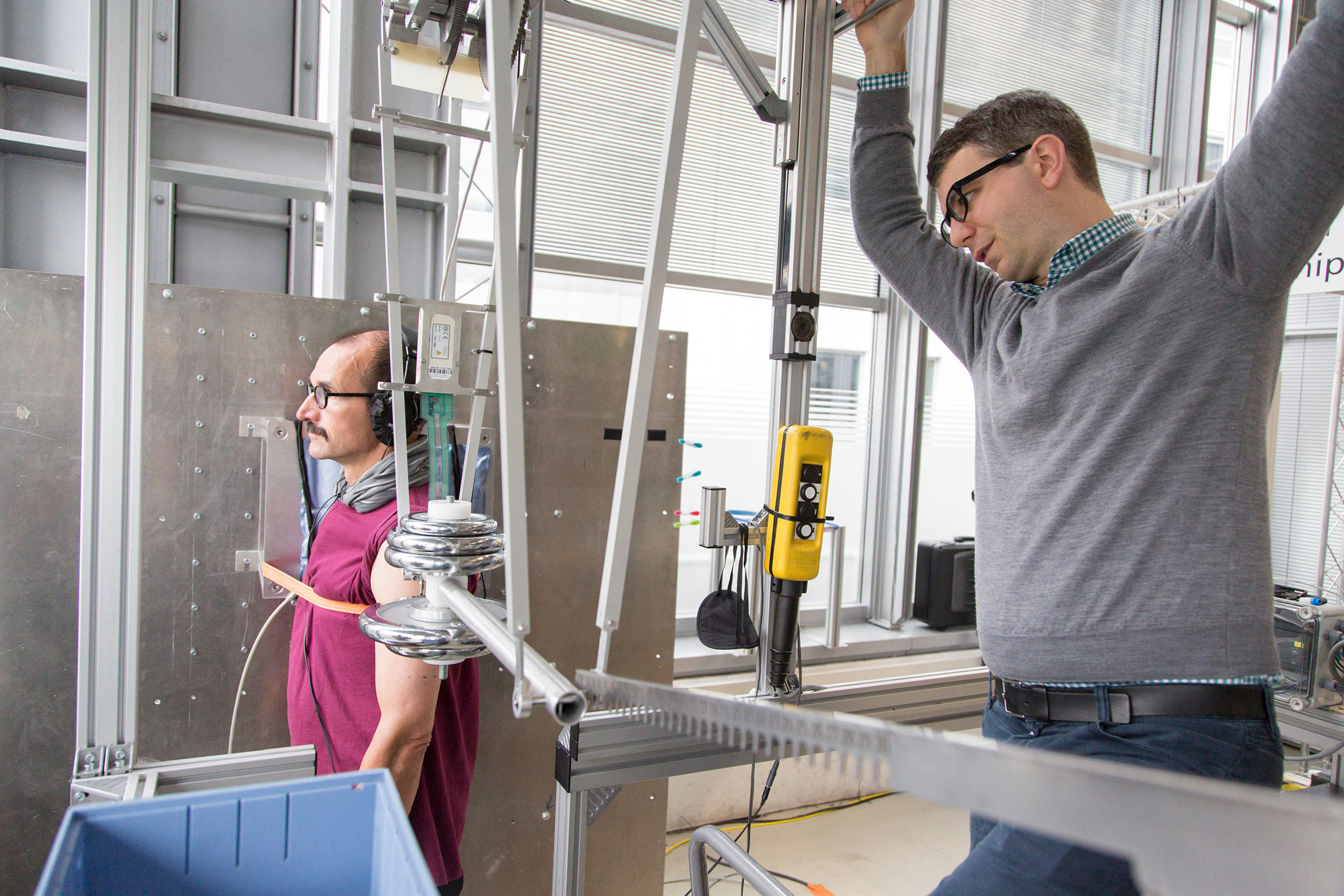
Meanwhile, back in the real world, safety is a hugely important issue for roboticists, especially those working on industrial robots designed to work in close proximity to humans:
Collaborative robots — or cobots — need to be configured so they’re aware of their fleshy colleagues and slow or stop after an unexpected collision to avoid stabbing skin or slicing limbs. But how hard can a robot hit a human before causing damage? And how does that change when the robot has a sharper attachment on its arm or makes contact with a sensitive part of the body? Those are questions Roland Behrens, a scientist working with volunteers including Bernstein, wants answered.
To give another example, I recently spoke with Heni Ben Amor, an Arizona State University-based roboticist that’s researching human-robot collaboration in industrial environments.
Ben Amor is trying to develop a system that allows robots to predict the behavior of human co-workers — and safety is a huge component of (and motivation for) his research. Check out the podcast with Ben Amor here.
And finally…
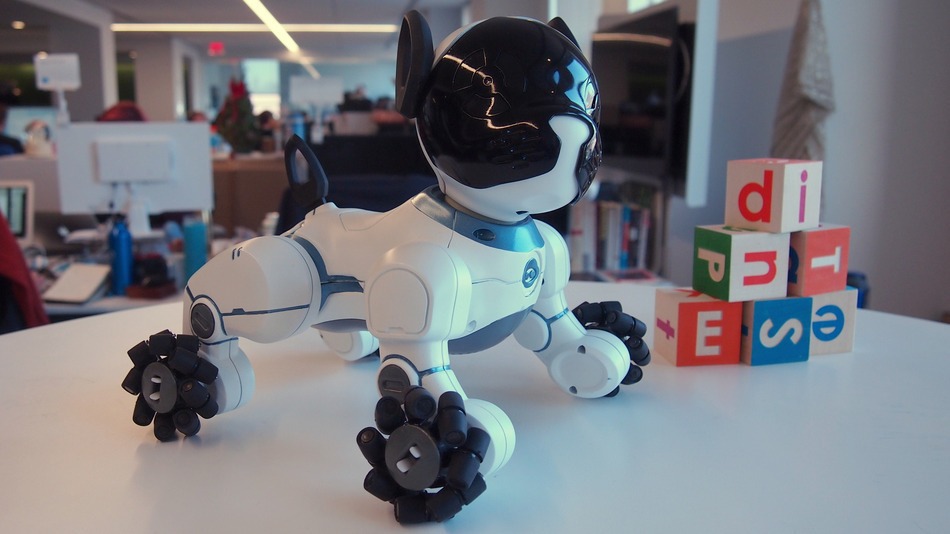
CHiP is the latest robot dog looking to leash your heart (Mashable)
Starship robot delivers packages locally (TechCrunch)
Drone Hackers Could Provide Way of Countering Hostile Attacks (NBC News); Human-Like Neural Networks Make Computers Better Conversationalists (Discovery); Compressorhead rocks the crowd to find new robot band member (GizMag); Toyota Invests $1 Billion in Artificial Intelligence in U.S. (New York Times); Origami-inspired folding robot (Science Advances); Legal Questions Could Leave Self-Driving Cars In Slow Lane (Nikkei Asian Review).

tags: What's new in robotics this week


AUAI is supported by:









