
Robohub.org
 

Wearable technology that feels like skin | Wall Street Journal

by
14 October 2014


share this:
MC10

When it comes to the future of computing, there is one major known and a principal unknown.

The known, with almost guaranteed certainty, is that the next era of computing will be wearables. The unknown, with commensurate guaranteed uncertainty, is what these wearables will be and where on your body they will live.

Apple and Samsung, for example, are betting on the wrist; Google, the face. A slew of tech companies believe clothing will simply become electronic. Yet there’s a whole new segment of start-ups that believe all of the above are destined for failure and that we humans will become the actual computers, or at least the place where the technology will reside.

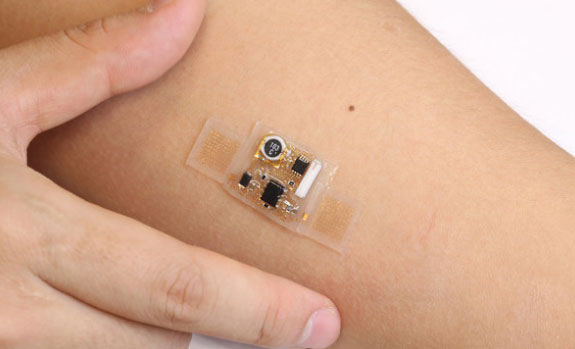
Their enthusiasm is on an emerging class of wearable computers that adhere to the skin like temporary tattoos, or attach to the body like an old-fashioned Band-Aid.

Read more on WSJ


tags: ,


Hallie Siegel robotics editor-at-large

            AUAI is supported by:


Subscribe to Robohub newsletter on substack


Related posts :

Watch the ICRA keynote and plenary talks

  16 Sep 2026
If you missed the conference you can catch up on IEEE TV.

Building and programming autonomous robots at the York Micromaze Hackathon

and   11 Sep 2026
From 25–27 August, UK RAS STEPS members came together for a three-day Micromaze Robot Hackathon.

Robotics roadmaps from around the world spotlight of the month: United States of America

US robotics researchers and industry are looking for a cohesive national robotics strategy.

Could robots help tackle loneliness? BBC’s Ann Droid raises questions about the future of care

  07 Sep 2026
While the series exaggerates what robots can currently do, some of the technology it depicts is already being tested.

Exploring the Moon will require rovers that can think for themselves – an upcoming NASA mission will test whether they can

  04 Sep 2026
NASA is planning to send three small rovers to the Moon to autonomously compute how to best explore a patch of ground.

Surviving the paper deluge: Notes from an ICRA panel on publishing, LLMs, and the future of peer review

Experts discuss peer-review challenges and possibilities for reshaping the process.

When expressive humanoid robots are awkward, people become wary – new brain study

  31 Aug 2026
People become more suspicious of a humanoid robot that makes errors, especially when the robot is an expressive conversation partner.


AUAI is supported by:


Subscribe to Robohub newsletter on substack


©2026.05 - Association for the Understanding of Artificial Intelligence









