
Robohub.org
Humanoid robot with open electronics
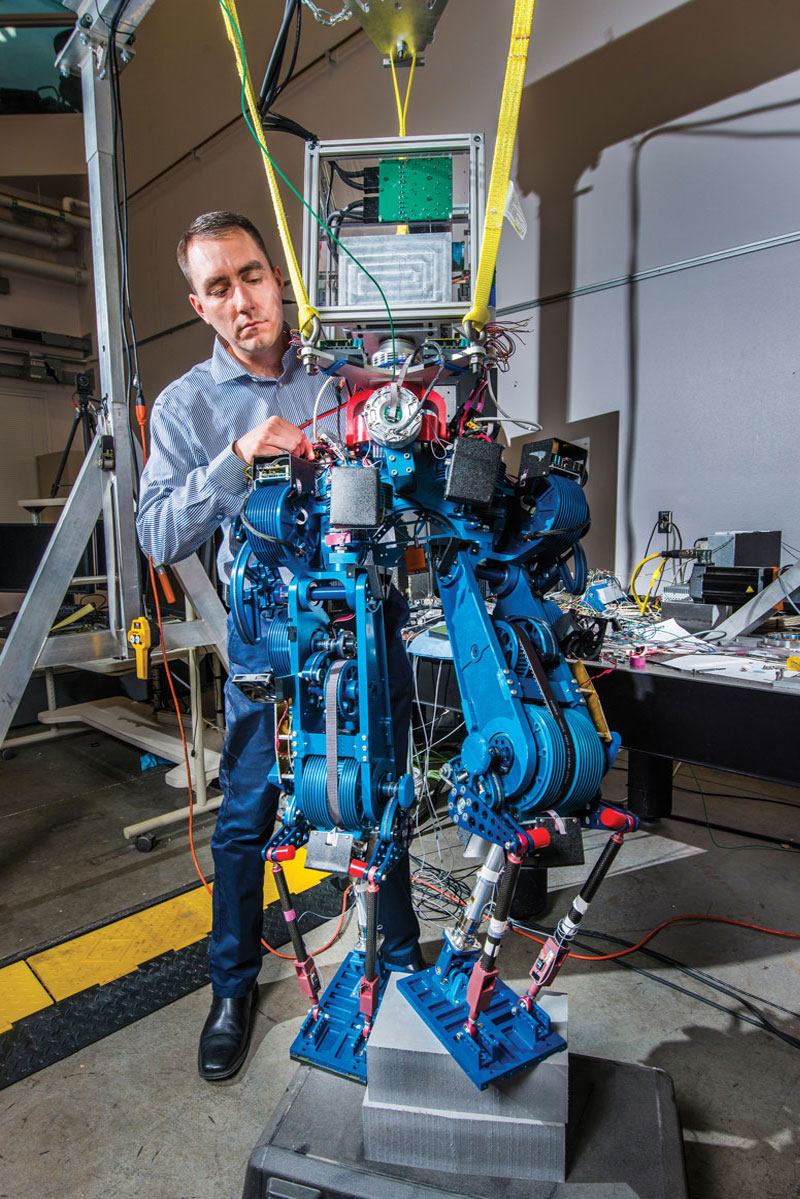 We’re pleased to announce the public release of information on a long-standing collaboration between OSRF and Sandia National Labs. The Intelligent Systems Control Department at Sandia is developing a humanoid robot intended for energy-efficient walking. We’re participating in the project by developing an electrical system capable of driving its numerous large motors and interfacing with higher-level software systems. Naturally, our contributions will be released as open-source hardware and firmware. Today’s press release from Sandia provides more details, and includes this introductory video:
(You might recall that we also recently built the open electronics and firmware for a new robot hand.)
tags: humanoids, open source, OSRF, research, walking

Open Source Robotics Foundation
supports the development, distribution, and adoption of open source software for use in robotics research, education, and product development.
Open Source Robotics Foundation
supports the development, distribution, and adoption of open source software for use in robotics research, education, and product development.
AUAI is supported by:








Related posts :
Robot Talk Episode 167 – Automating construction, with Jan Petrš
Robot Talk
23 Oct 2026
In the latest episode of the Robot Talk podcast, Claire chatted to Jan Petrš from École Polytechnique Fédérale de Lausanne about novel robot designs for construction and architecture.
ACM SIGAI Autonomous Agents Award 2027 open for nominations
ACM SIGAI
20 Oct 2026
Nominations are solicited for the 2027 ACM SIGAI Autonomous Agents Research Award.
Powered by muscle cells, a paper-thin robot swims through watery maze
MIT News
19 Oct 2026
MIT engineers’ new aquabot offers a way to design small, efficient “biohybrid” robots.
Robot Talk Episode 166 – Evolving robot bodies and brains, with Rika Antonova
Robot Talk
16 Oct 2026
In the latest episode of the Robot Talk podcast, Claire chatted to Rika Antonova from the University of Cambridge about using artificial intelligence to develop complimentary robot hardware and algorithms.
Neurosymbolic planning using natural language communication for cooperative autonomous vehicles
Read about work that was nominated for the AAMAS 2026 best paper award.
Humanoid robots can sprint and box – but the real test is doing the laundry
The Conversation
12 Oct 2026
No robot system can yet reliably handle the whole laundry process. Even folding remains a challenge.
Robot Talk Episode 165 – Robots behind the research, with Kushant Patel
Robot Talk
09 Oct 2026
In the latest episode of the Robot Talk podcast, Claire chatted to Kushant Patel from Brookhaven National Laboratory about robots that work in scientific facilities, such as particle accelerators.
What three days building a robot taught me
Devashish Tambade and UK RAS STEPS
07 Oct 2026
The brief sounded simple: build a small autonomous robot, then make it survive increasingly difficult mazes. Simple... right? Until you actually have to build one.

