Robohub.org
 

Enter the abyss with OpenROV, the $899 open source kit

by
26 December 2014


share this:
OpenRov

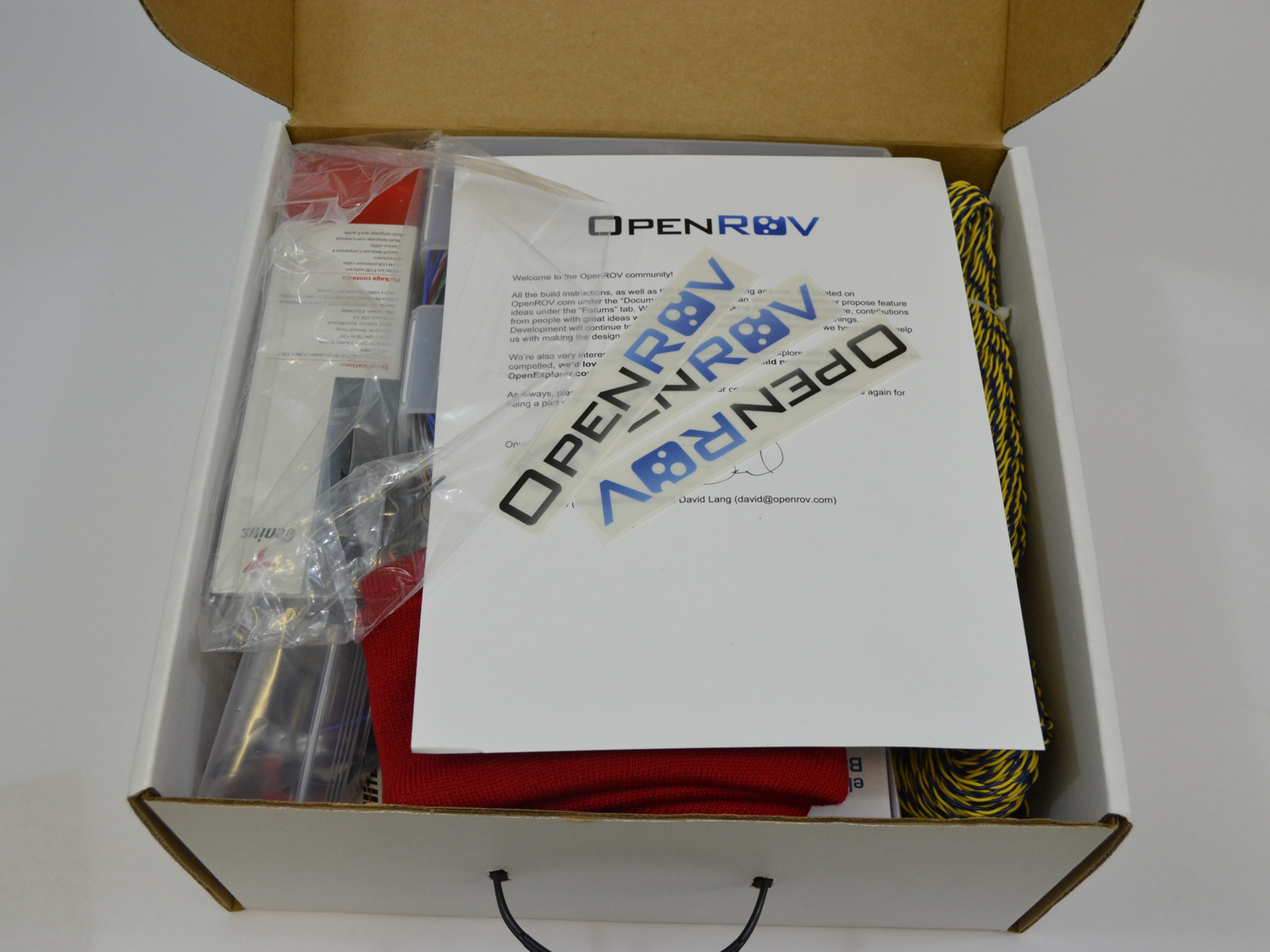
The OpenROV submersible is a low cost and open source kit designed for exploration and education. Originally launched on Kickstarter in 2012 it has now grown into a dedicated global community launching missions everywhere from Hawaii to the UK. The project raised $111,662 from 484 backers and has now reached version 2.7. Today the kit costs $899 with a fully assembled version coming in at $1,450 which you can purchase from the online store. Units weigh in at 2.6kg and normal battery life is expected to last between 2-3 hours depending on use.

Features include:

  • Live HD video with wide-angle lens and tilt function
  • LED lighting for low-light environments
  • Easy-to-use web browser user interface
  • Beaglebone Black AND Arduino MEGA microprocessors for a flexible and powerful developer platform with dozens of input/output channels and plenty of computing power for user-designed features and experiments
  • Rechargeable lithium batteries (sold separately)
  • 100-meter lightweight 2-wire tether
  • Compact and lightweight–backpack or carry-on ready
  • Payload area for additional hardware or equipment
  • Join our open source, ocean-loving community–find all the software and hardware files online as well as a vibrant and enthusiastic community to share adventures, ask questions, and meet other people with passion for exploration

With this piece of kit and your laptop you really can start exploring the oceans, lakes and rivers around you without getting your hair wet. The maker community around 3d printers, drones and robotics is the step we usually see just before the commercial applications – so watch this space.

To find out more on what’s going on with the OpenROV take a look at the community website called Open Explorer.

Here is a great video of a trial run with Nasa’s Astronaut underwater training facility NEEMO-16 back in 2012.


tags: ,


Ben Fisher is the co-founder and CEO of Bookadrone. Ben comes from a background in marketing and digital product development.

            AUAI is supported by:


Subscribe to Robohub newsletter on substack


Related posts :

Robotics Café brings together autonomous robot practitioners

  20 May 2026
Recently launched series for researchers, students and industry practitioners aims to provide a platform for students to present their work.

Table tennis robot defeats some of world’s best players – why this has major implications for robotics

  18 May 2026
Ace, from Sony AI, is the first robot to beat elite human players in competitive physical sport.

Robot Talk Episode 156 – Rugged robots for dangerous missions, with Gavin Kenneally

  15 May 2026
In the latest episode of the Robot Talk podcast, Claire chatted to Gavin Kenneally from Ghost Robotics about robot dogs for defence, security, and public safety.

Developing active and flexible microrobots

  13 May 2026
This class of robots opens up possibilities for biomedical applications.

How to teach the same skill to different robots

  11 May 2026
A new framework to teach a skill to robots with different mechanical designs, allowing them to carry out the same task without rewriting code for each.

Robot Talk Episode 155 – Making aerial robots smarter, with Melissa Greeff

  08 May 2026
In the latest episode of the Robot Talk podcast, Claire chatted to Melissa Greeff from Queen's University about autonomous navigation and learning for drones.

New understanding of insect flight points way to stable flapping-wing robots

  07 May 2026
The way bugs and birds flap their wings may look effortless, but the dynamics that keep them aloft are dizzyingly complex and difficult to quantify.

Robotically assembled building blocks could make construction more efficient and sustainable

  05 May 2026
Research suggests constructing a simple building from interlocking subunits should be mechanically feasible and have a much smaller carbon footprint.


AUAI is supported by:


Subscribe to Robohub newsletter on substack


©2026.02 - Association for the Understanding of Artificial Intelligence