
Robohub.org
 

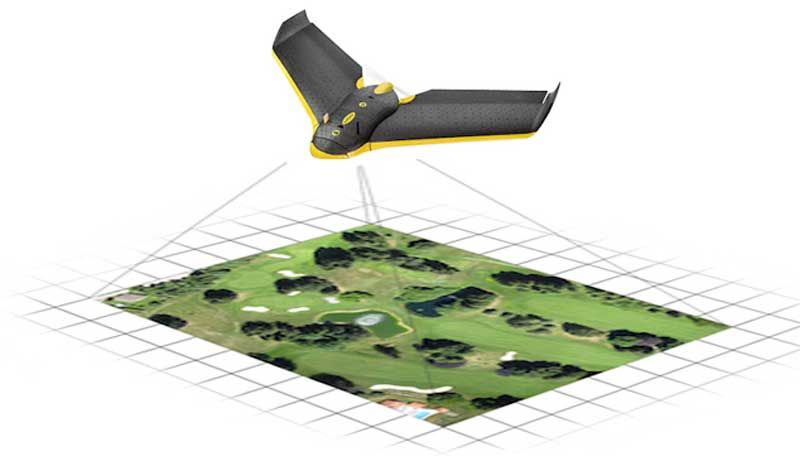
FAA issues waivers for real estate and agricultural UAVs

by
14 January 2015


share this:
FAA-issues-waivers_800_456_80

The FAA granted two exemptions for commercial use of unmanned aircraft systems in U.S. airspace for real estate and agricultural crop scouting. But all is not as rosy as it appears.
faa-logo_300_133_80Both exemptions require the operator to maintain line of sight with the aircraft at all times during operations using an observer and a pilot who has an FAA private Pilot certificate and a current medical certificate.

Scott Kesselman, writing for AUVSI News, and responding to my query about whether a real estate agent or farmer will want to hire a pilot/observer to abide by the line of sight and licensed pilot limitations. Or whether these waivers are ones that the ag and real estate industries can hold up and wave enthusiastically? Or are they meaningless? Kesselman responded as follows:

The way legislation is currently set up this is the company’s best action to take to operate commercially. Otherwise they wouldn’t legally be allowed to operate for profit at all.

The FAA is not currently giving waivers for beyond line of sight because they feel the technology isn’t there yet for reliable sense and avoid, flight planning, and UAS air traffic management to ensure safety.

All of the Section 333 petitions will require operations to be conducted in line of sight with an observer and that is the best they can do for now in this particular regulatory and technological environment.

With these restrictions, the FAA feels if something does go wrong, the pilot in command and observer are in a position to mitigate damages when the aircraft is in visible range.


tags: , , ,


Frank Tobe is the owner and publisher of The Robot Report, and is also a panel member for Robohub's Robotics by Invitation series.

            AUAI is supported by:


Subscribe to Robohub newsletter on substack


Related posts :

Developing active and flexible microrobots

  13 May 2026
This class of robots opens up possibilities for biomedical applications.

How to teach the same skill to different robots

  11 May 2026
A new framework to teach a skill to robots with different mechanical designs, allowing them to carry out the same task without rewriting code for each.

Robot Talk Episode 155 – Making aerial robots smarter, with Melissa Greeff

  08 May 2026
In the latest episode of the Robot Talk podcast, Claire chatted to Melissa Greeff from Queen's University about autonomous navigation and learning for drones.

New understanding of insect flight points way to stable flapping-wing robots

  07 May 2026
The way bugs and birds flap their wings may look effortless, but the dynamics that keep them aloft are dizzyingly complex and difficult to quantify.

Robotically assembled building blocks could make construction more efficient and sustainable

  05 May 2026
Research suggests constructing a simple building from interlocking subunits should be mechanically feasible and have a much smaller carbon footprint.

Robot Talk Episode 154 – Visual navigation in insects and robots, with Andrew Philippides

  01 May 2026
In the latest episode of the Robot Talk podcast, Claire chatted to Andrew Philippides from the University of Sussex about what we can learn from ants and bees to improve robot navigation.

Ultralightweight sonar plus AI lets tiny drones navigate like bats

  29 Apr 2026
Researchers develop ultrasound-based perception system inspired by bat echolocation.

Gradient-based planning for world models at longer horizons

  28 Apr 2026
What were the problems that motivated this project and what was the approach to address them?


AUAI is supported by:


Subscribe to Robohub newsletter on substack


©2026.02 - Association for the Understanding of Artificial Intelligence









