
Robohub.org
RoboBusiness Summit: Workshops feature experts in manufacturing, assistive robotics
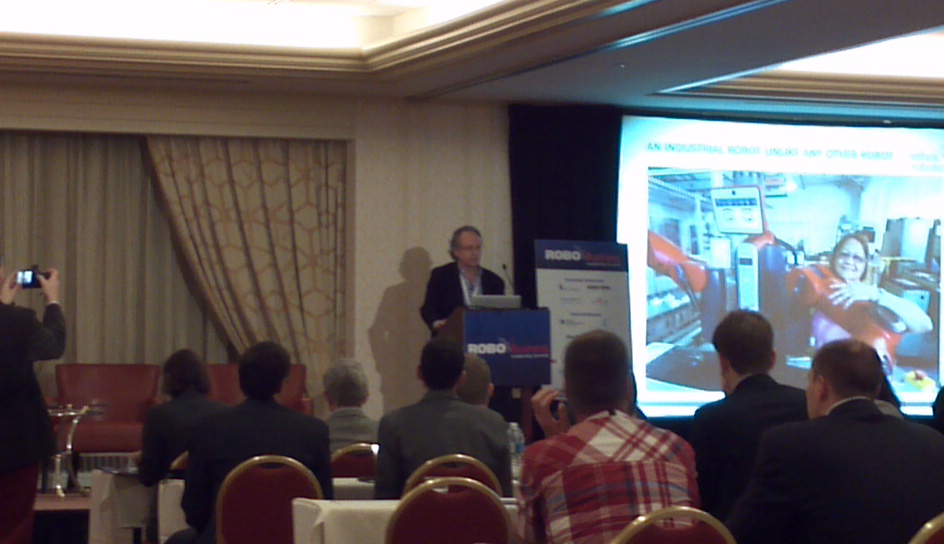 Robots In DC made the trip from Washington and we’re ready to kick off our coverage of the unique and exciting RoboBusiness event, which is bringing together leaders from robotics businesses, research & development, and investment. As the official festivities kick off here on Tuesday, Monday’s sessions brought together researchers, business owners, and engineers developing cutting-edge robots for quality of life technology as well as manufacturing. In fact, we also saw the first public demonstration of Baxter, the inexpensive manufacturing robot from Rethink Robotics, which garnered quite a bit of mainstream press coverage when it debuted back in September.
The new robot targets the thousands of small manufacturers that rely on simple, repetitive tasks in their assembly line. Baxter aims to augment the tasks human workers perform in product assembly and packaging. As Chairman and CTO Rodney Brooks discussed the company’s and product’s philosophy and features, product manager Mike Bugda removed a white sheet to unveil the red and gray robot with two (right) arms and a moving LCD screen with varying facial expressions.
In the Quality of Life Technology (QoLT) symposium, researchers from Carnegie Mellon, Rehabilitation Institute of Chicago, University of Texas at Arlington, Denmark, and Sweden discussed robotic technologies in the areas of assistive care, rehabilitation, therapy, and activities of daily life assistance. We’ll have a longer write-up later in the week, but here are some talking points:
- The QoLT center at CMU has produced 10 technologies, with several entering commercialization: VibeAttire, FPV/Whozat, SleepMedia, Distant Architect, Virtual Valet, Romibo, MemExerciser, PT Coach, Health Kiosk, Ergonomic Lift Chair
- Robotdalen in Sweden is partnering between academia, industry, and the public to accelerate prototype commercialization, which has proven very successful. One demonstrated product was a robotic sleeve that helps individuals with weak grips by augmenting them.
- Similarly, in Denmark, academic-industry partnerships are helping get robots into homes and assistive care centers. An assistive device for eating is changing the lives of hundreds of people (and going for a modest $4,000), and the Paro robot, imported from Japan, has been hugely successful in care centers to help improve positive emotions.
tags: RoboBusiness

AUAI is supported by:









