
Robohub.org
Skolkovo conference seeks to jumpstart new areas of expertise for Russian robotics
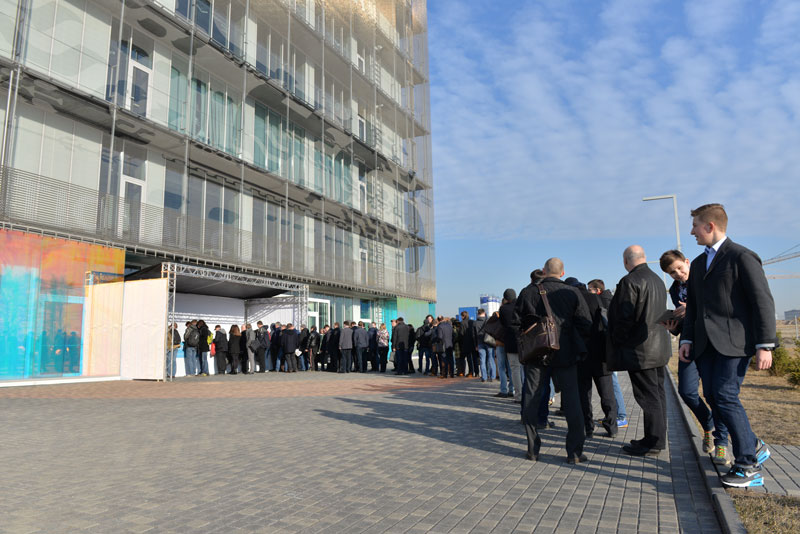
Participants line up early to register for the 2015 Skolkovo International Robotics Conference. Photo credit: Skolkovo.
Part startup/investor mixer, part public showcase, part industry/academic workshop, part hackathon, the Skolkovo International Robotics Conference has its sights on becoming the largest robotics gathering in Europe. Held March 20-22 at the Hypercube on the Skolkovo campus outside Moscow, the event drew over one thousand visitors – this despite the campus largely being a construction site in the middle of a semi-forested area a 40 minute drive from Moscow city centre.
“Our goal is not to be a scientific conference, but to bring talent, money and startup companies together to search for a new generation of ideas,” says Skolkovo Chief Roboticist Albert Efimov, who brought more than 50 speakers from six countries to the event.
Skolkovo Robotics is part of the Skolkovo Innvoation Center, a state-financed tech incubator that is currently home to about 1K startups spread across several tech clusters including IT, biomed, space, nuclear and energy efficient technologies. The Innovation Center is the entrepreneurial-facing branch of the Skolkovo Foundation, a double-sided institution that also administers Skoltech University.
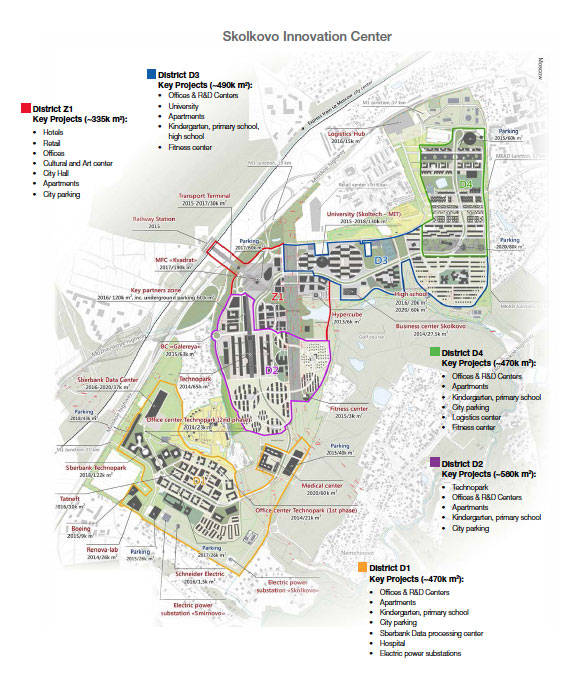
“We are building a city,” says Skolkovo Vice President of Public Relations Alexandra Barschevskaya. Building plans for the technopark include social infrastructure like housing, hotels, shopping, and even onsite schools for the children of Skolkovo’s faculty, students and entrepreneurs. “Participants of Skolkovo (SK) will have access to housing and facilities for a period of ten years, to give them time to organize their science and their business, and then they will move on to make room for the next generation.” The grand vision, which is the brainchild Russian Prime Minister Dmitry Medvedev and has support from the highest levels of government, is to jumpstart the Russian economy by nurturing technology that will create export opportunities at an international level.
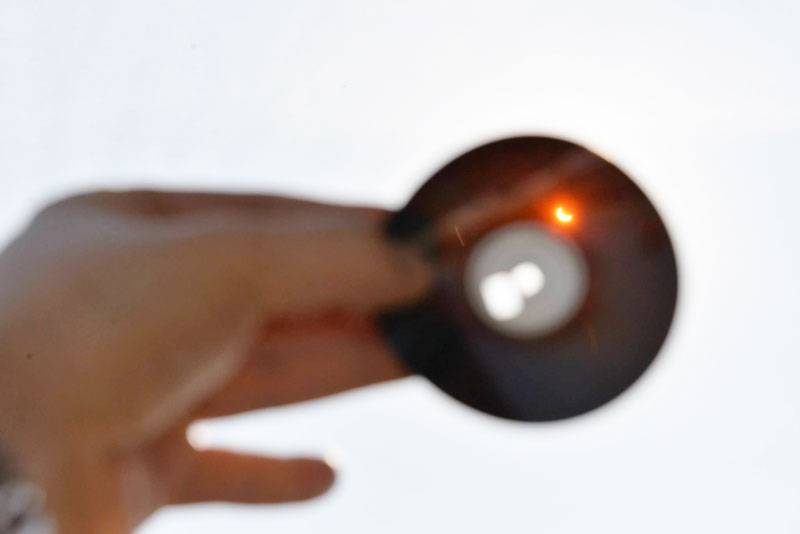
Speakers were treated to a rare sighting of a solar eclipse from the roof of the Hypercube on the first day of the conference. Photo credit: Skolkovo.
Russia has a long history developing military robotics – according to Efimov, its first military application was during the Soviet-Finnish war in the 1940s delivering explosions to the enemy’s heavily fortified points of defence – and its current fleet of firefighting robots is a testament to its ongoing efforts to remain a global leader in this area. “But how many firefighting robots can you sell?” asks Efimov.
Efimov points out that unlike the American DARPA programs, which have a track record for spinning off defence research into commercial civilian applications, the Russian military doesn’t really invest in or open up new fields for startups.
“There are about 120 government-funded research institutions that are engaged in robotics at the moment, and they are all trying to get through the same small bottleneck of the military budget,” said Efimov, who believes this is the reason why Russia lags behind the US in commercialization despite its military robotics expertise.
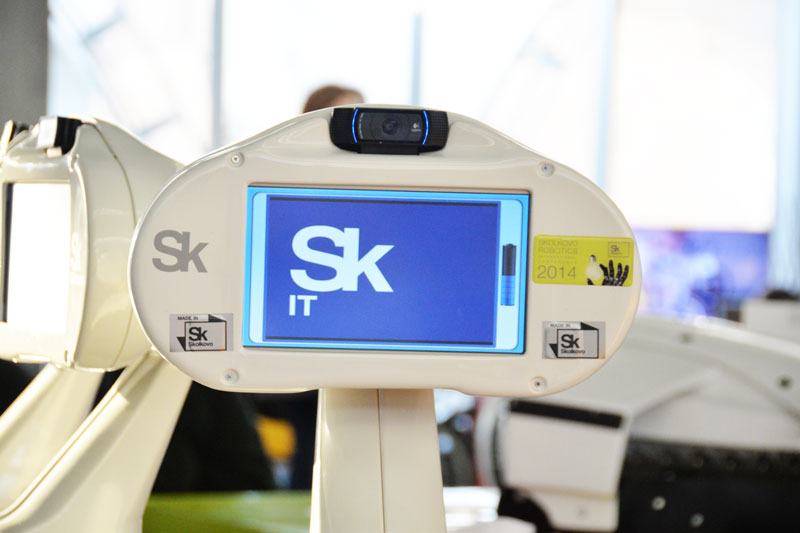
Webot telepresence robot by Wicron, at the 2015 Skolkovo International Robotics Conference. Photo credit: Skolkovo.
So if not military robotics, then what? Efimov would like to see Russia playing to its strengths in recognition, artificial intelligence and mechatronics, and suggests that a good niche for the nation could be in telepresence, promotional robotics and personal assistants because the risks are lower in these areas, and the commercial opportunities are growing quickly. But he also points out that falling back on traditional areas of strength, such as AI, is not enough. To create commercial products that can compete in a global consumer marketplace, Russia needs to step up its game in design.
“We want to sell thousands of intelligent assistants and we believe we are as good at AI as Jibo,” said Efimov. “But Jibo has got better design.” These sentiments explain why Efimov’s conference program included a design hackathon and multiple sessions on human-robot interaction (HRI). “Designers and engineers never talk to each other, so Skolvovo needs to be a meeting place where they can get together.”
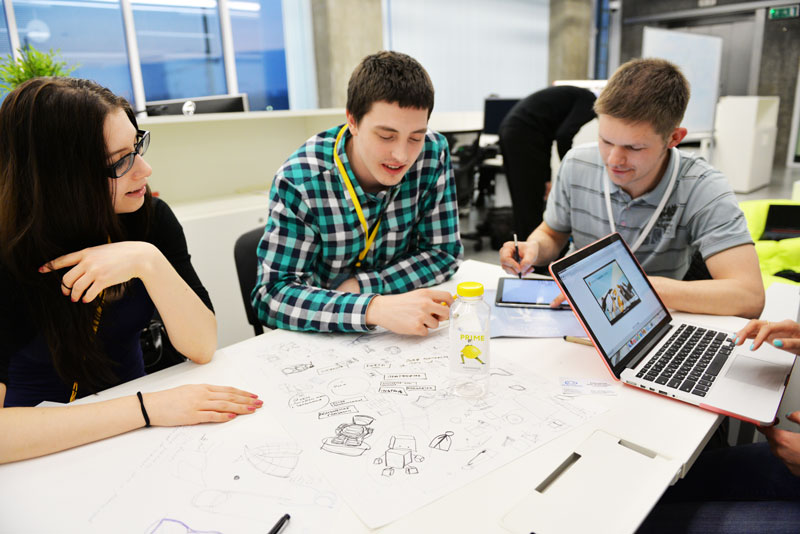
Students brainstorming for the design hackathon at the 2015 Skolkovo International Robotics Conference. Photo credit: Skolkovo.
In a panel discussion titled “Robotics and its role in the revival of Russia,” representatives from the Russian government said that they are currently in the process of writing the nation’s roadmap for developing robotics. Though they were not yet able to release specific details, a comprehensive plan is being cross-coordinated across various branches of government, from the military to the Ministries of Health, Communications and Education, suggesting a shift in spending priorities to include application areas beyond military. “We have good potential on the global level, and so robotics will be included in the list of priority areas for investing in technology,” said Nikolai Kuteev, from the Ministry of Industry and Trade.
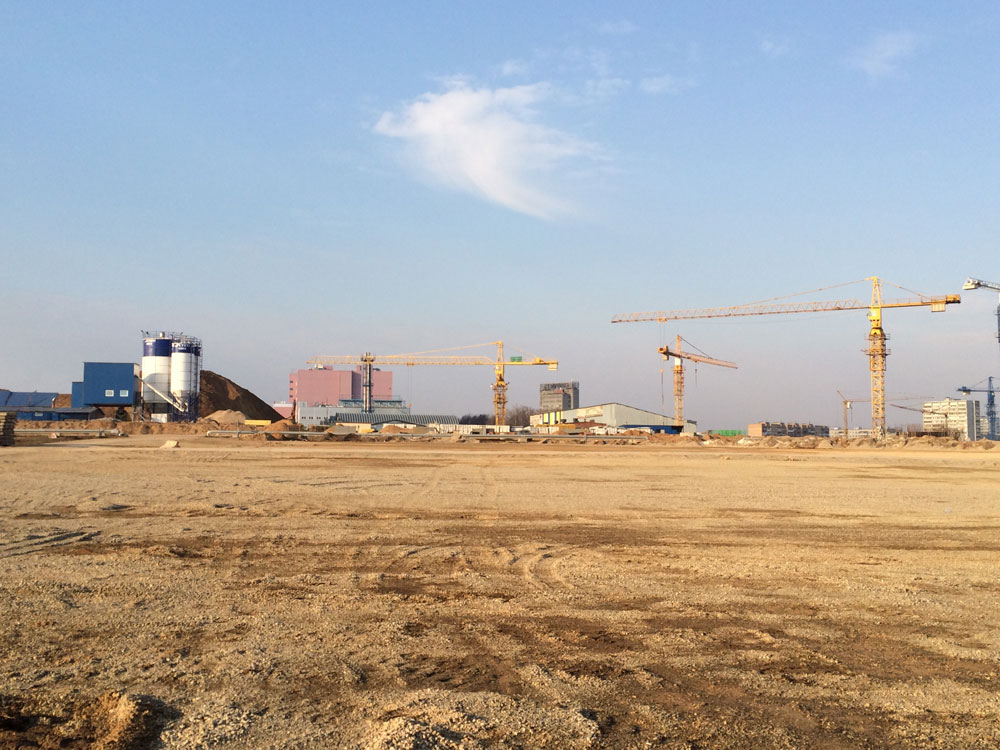
Cranes at work on the Skolkovo campus. March 2015. Photo credit: Hallie Siegel.
Whatever path to innovation the robotics roadmap eventually suggests, it is clear Skolkovo will play a role in it. But as evidenced by the cranes and earth-moving equipment that surround Hypercube, Skolkovo’s biggest problem right now is that it doesn’t have enough physical infrastructure.
“We were expecting that the construction would be finished between 2017 and 2020 but the economy is so difficult – we know that there will be a transformation here but we don’t know exactly when it will be finished,” said Barschevskaya. The falling ruble, which has impacted building costs, has been a factor in the construction slow down.
Still, the energy at Skolkovo is high, and Efimov isn’t afraid to do the heavy lifting required to keep things moving in the right direction. I look forward to visiting Skolkovo Robotics again soon to see just how far he can take it.
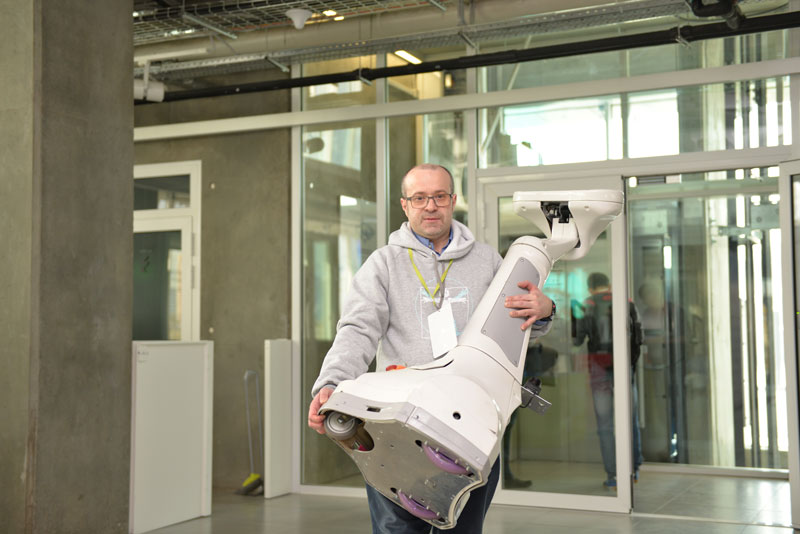
Chief Roboticist Albert Efimov carries a robot at the 2015 Skolkovo International Robotics Conference. Photo credit: Skolkovo.
tags: events, Russia, Skolkovo

AUAI is supported by:









