
Robohub.org
 

J&J, Alphabet aim for smarter, smaller, cheaper surgical robot | Reuters

by
11 December 2015


share this:

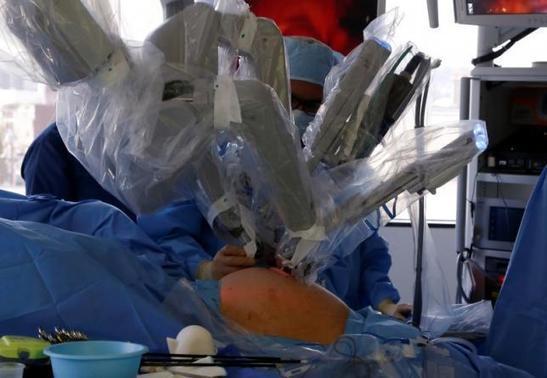
Creation of the new company, Verb Surgical Inc, follows an announcement in March by J&J and Google Inc of their plans to pool their technologies and expertise to create robotics for the operating room. Google has since changed its name to Alphabet, and its life sciences unit is now called Verily.

J&J’s Ethicon division, world leader in equipment for general surgery, designed a basic prototype of the robot last year and expects it to be a “disruptive” alternative to existing products, Gary Pruden, global chairman of J&J’s medical devices group, said in an interview.

Current robotic systems, including those sold by market leader Intuitive Surgical Inc, are the size of a compact car and require the surgeon to sit at a control panel about 10 feet from the patient, Pruden said.

Verb’s robot will be about 20 percent the size, allow the surgeon to work closer to the patient and likely be considerably less expensive than current systems, which can cost $2 million or more, he said.


Hallie Siegel robotics editor-at-large

            AUAI is supported by:


Subscribe to Robohub newsletter on substack


Related posts :

Surviving the paper deluge: Notes from an ICRA panel on publishing, LLMs, and the future of peer review

Experts discuss peer-review challenges and possibilities for reshaping the process.

When expressive humanoid robots are awkward, people become wary – new brain study

  31 Aug 2026
People become more suspicious of a humanoid robot that makes errors, especially when the robot is an expressive conversation partner.

First 11 vs 11 humanoid soccer game played at RoboCup 2026

  28 Aug 2026
Watch highlights from this historic match.

How green is your robot? And other awkward questions

Robots clean rivers and sort waste, monitor ecosystems, and inspect renewable-energy infrastructure. But even the greenest robot has an environmental footprint.

These tiny drones are powered by sound

  24 Aug 2026
EPFL engineers have designed acoustic cavities that convert sound waves into thrust, propelling small robots and ultralight aerial vehicles without on-board actuators or electronics.

#AAMAS2026 blue sky award winner: Foundation world models for agents in changing environments

and   21 Aug 2026
Hear from the AAMAS 2026 Best Blue Sky Paper Award winner.

Robotics roadmaps from around the world spotlight of the month: Japan

Robots have been a prolific theme in Japanese pop culture and media since the 1950s

Intermittent swimming promotes the energy efficiency of fish-like robot movements

How zebrafish-inspired robots save energy by swimming in bursts.


AUAI is supported by:


Subscribe to Robohub newsletter on substack


©2026.05 - Association for the Understanding of Artificial Intelligence









