
Robohub.org
Artificial muscle for soft robotics: Low voltage, high hopes
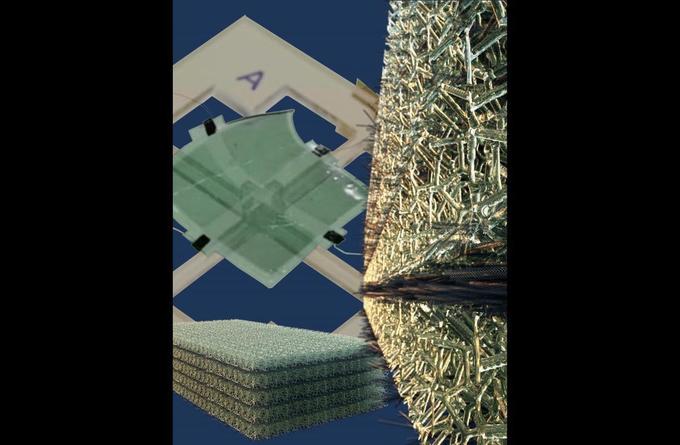
Now, researchers at the Harvard John A. Paulson School of Engineering and Applied Sciences (SEAS) have developed a dielectric elastomer with a broad range of motion that requires relatively low voltage and no rigid components. This type of actuator could be used in everything from wearable devices to soft grippers, laparoscopic surgical tools, entirely soft robots or artificial muscles in more complex robotics.

Kassie Perlongo
Kassie is the Managing Editor at Robohub.
Kassie Perlongo
Kassie is the Managing Editor at Robohub.
AUAI is supported by:








Related posts :
Humanoid robots can sprint and box – but the real test is doing the laundry
The Conversation
12 Oct 2026
No robot system can yet reliably handle the whole laundry process. Even folding remains a challenge.
Robot Talk Episode 165 – Robots behind the research, with Kushant Patel
Robot Talk
09 Oct 2026
In the latest episode of the Robot Talk podcast, Claire chatted to Kushant Patel from Brookhaven National Laboratory about robots that work in scientific facilities, such as particle accelerators.
What three days building a robot taught me
Devashish Tambade and UK RAS STEPS
07 Oct 2026
The brief sounded simple: build a small autonomous robot, then make it survive increasingly difficult mazes. Simple... right? Until you actually have to build one.
Research could guide the future design of social robots
the University of Glasgow
05 Oct 2026
Giving robot companions animal-like or anime-style faces and voices could maximise their emotional appeal to users, according to new research which could help guide the growing field of social robotics.
Robot Talk Episode 164 – Accelerating robot learning, with Michelle Lu
Robot Talk
02 Oct 2026
In the latest episode of the Robot Talk podcast, Claire chatted to Michelle Lu from Vsim Technology about using simulation and artificial intelligence to teach robots new skills.
Robotics and automation? Informal reflections on familiar terms
IEEE Robotics and Automation Society (RAS)
30 Sep 2026
IEEE experts reflect on what is meant by the term "robotics and automation".
Small, medium or large, a robotic fish maintains its swimming ability
EPFL
28 Sep 2026
Researchers at EPFL and New York University have developed a robotic fish that can be made in various sizes for studying shallow creeks to open water.
Robot Talk Episode 163 – Robots helping people, with Aaron Edsinger
Robot Talk
25 Sep 2026
In the first episode of Robot Talk season 7, Claire chatted to Aaron Edsinger from Hello Robot about their Stretch robots that can help people with mobility issues live more independently.

