
Robohub.org
How regenerative agriculture and robotics can benefit each other
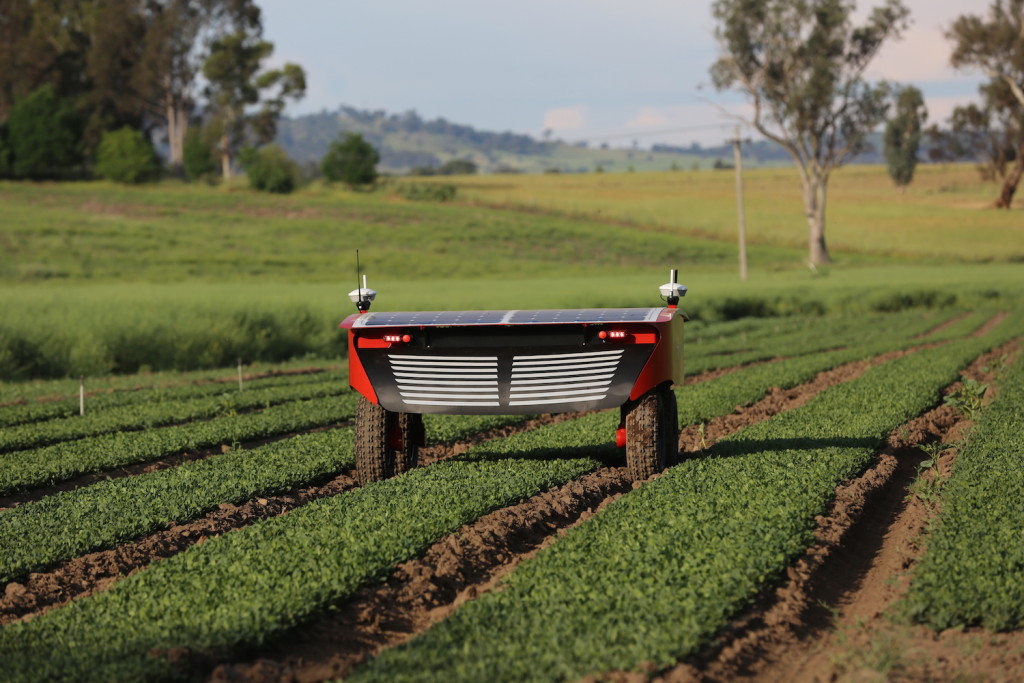
I’ve come around to the view that the best and most inclusive term for high-concept farming which is both sustainably productive and ecologically responsible is Regenerative Agriculture. It implies all that is meant by permaculture, agroecology, carbon farming, and organic farming, but goes beyond these to focus on living matter in the soil, and in this is closely aligned with the term biodynamic. That said, I’m not prepared to argue the point; I only say this by way of explaining why I’ve chosen to use this term here.
These are perilous times, perhaps not quite to the extent portrayed by tabloid journalism, and which might be suggested by a recent abundance of misinformation and misinformed opinion on social media, but perilous nonetheless, and there are plenty of squeaky wheels around all competing for grease. In this political-economic environment, making a case for adequate funding (whether public or private) has become increasingly difficult. The cost-benefit ratio, or ‘bang for the buck’, is again the primary metric driving investment, with benefit usually being measured in terms of potential profit where private investment is concerned.
The synergy of substantive collaboration (or ‘co-leverage’) can be all-important in determining which projects get funded. If you can show that advances in your field are synergistic with advances in another field, such that each furthers the goals of the other, and your proposal crosses those boundaries, you stand a better chance of attracting investment than if you go it alone.
I believe such a synergy exists, or could easily be made to exist, between robotics and regenerative agriculture.
Robotics needs a market into which it can sell a large volume of machinery of many kinds, and from which it can gain abundant experience, without the liability burden presented by autonomous vehicles operating on streets and highways. Agriculture is good for this, in terms of scale, tolerance for beta-ware, and the opportunity for gaining experience with new approaches and new technologies, as well as with operating within complex environments. Regenerative agriculture is particularly ideal, because the need is for small-scale, context-sensitive equipment, which, if it malfunctions, will only cause minimal damage, and the complexity of the environments involved is at least an order of magnitude greater than with conventional agriculture.
Regenerative agriculture needs a way of scaling up its best practices, so they can be deployed across millions of hectares, without resorting to compromises involving heavy equipment and soil compression, or herbicides, and without waiting for millions of people to decide that they want to go back to the land and work it by hand. Because many of those best practices involve attention to detail, that scalability can only be achieved through robotics. On the other hand, given equipment that automates not only the work of regenerative agriculture but data collection, the stage would be set for pushing the state of the art, to evolve even better practices and to further develop crop genomes based on phenotype (how plants actually perform under diverse conditions).
Together, robotics and regenerative agriculture can do much to drive each other’s development, and to improve humankind’s prospects for the future. But, of course, the near-term bottom line is that, together, they can make a more compelling case for adequate funding.
If you enjoyed this article, you may also want to read:
- How AR technology can help farmers stay relevant
- Robohub roundtable: Robotic bee swarms from Black Mirror – what’s hype, what’s real?
- Drought and desertification: How robots might help
- Keeping a robotic eye on pollution
- Swarms of precision agriculture robots could help put food on the table
- Top 10 technologies in precision agriculture
See all the latest robotics news on Robohub, or sign up for our weekly newsletter.
tags: Environment-Agriculture, farming, opinion, robohub focus on agricultural robotics, Service Professional Field Robotics Agriculture

AUAI is supported by:









