Robohub.org
 

Building a robot to combat the invasive lionfish (video)

by
30 August 2016


share this:
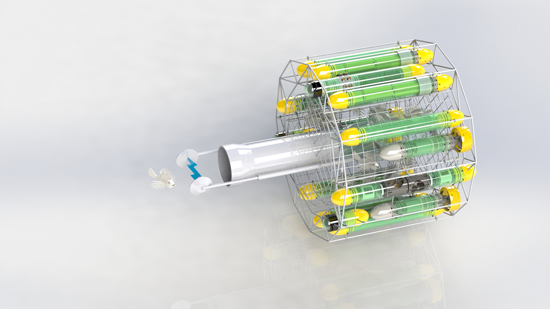
Harvester Prototype Lionfish Hunter side iso photo render — This 3D rendering of a lionfish harvester robot being developed by Robots in Service of the Environment (RISE). The prototype would use a robot arm with two metal electrodes on the end to electrocute invasive lionfish. The stunned fish would then be collected in a central chamber for use as food. Photo by Ed Williams, Robo Nautica (via PBS/YouTube).

Harvester Prototype Lionfish Hunter side iso photo render — This 3D rendering of a lionfish harvester robot being developed by Robots in Service of the Environment (RISE). The prototype would use a robot arm with two metal electrodes on the end to electrocute invasive lionfish. The stunned fish would then be collected in a central chamber for use as food. Photo by Ed Williams, Robo Nautica (via PBS/YouTube).

Lionfish are invasive to the Atlantic Ocean and their voracious appetites are destroying coral reef ecosystems. RISE (Robots in Service of the Environment) is a new non-profit company looking to restore the balance by building a robot to ‘zap’ these predators.

From their website: “The complete robot is a collection of component systems. These include the ROV platform, capture mechanism, control system, vision system, user interface, and more. Luckily each one of these components exists today in some form but they have never been assembled specifically as a device to hunt lionfish, nor designed to be produced in large numbers at low cost and operated by a non-professional. Nonetheless, the experience learned from these existing components and efforts will allow for the rapid development of the RISE robot and gives confidence that it can be done.”

More information about the project and robot can be found on the PBS website.


tags:


Kassie Perlongo Kassie is the Managing Editor at Robohub.


Related posts :


Robot Talk Episode 137 – Getting two-legged robots moving, with Oluwami Dosunmu-Ogunbi

  12 Dec 2025
In the latest episode of the Robot Talk podcast, Claire chatted to Oluwami Dosunmu-Ogunbi from Ohio Northern University about bipedal robots that can walk and even climb stairs.

Radboud chemists are working with companies and robots on the transition from oil-based to bio-based materials

  10 Dec 2025
The search for new materials can be accelerated by using robots and AI models.

Robot Talk Episode 136 – Making driverless vehicles smarter, with Shimon Whiteson

  05 Dec 2025
In the latest episode of the Robot Talk podcast, Claire chatted to Shimon Whiteson from Waymo about machine learning for autonomous vehicles.

Why companies don’t share AV crash data – and how they could

  01 Dec 2025
Researchers have created a roadmap outlining the barriers and opportunities to encourage AV companies to share the data to make AVs safer.

Robot Talk Episode 135 – Robot anatomy and design, with Chapa Sirithunge

  28 Nov 2025
In the latest episode of the Robot Talk podcast, Claire chatted to Chapa Sirithunge from University of Cambridge about what robots can teach us about human anatomy, and vice versa.


Robohub is supported by:


Would you like to learn how to tell impactful stories about your robot or AI system?


scicomm
training the next generation of science communicators in robotics & AI


©2025.05 - Association for the Understanding of Artificial Intelligence