Robohub.org
 

Could we make a moral machine?

by
02 March 2016


share this:


Photo source: Alan Winfield

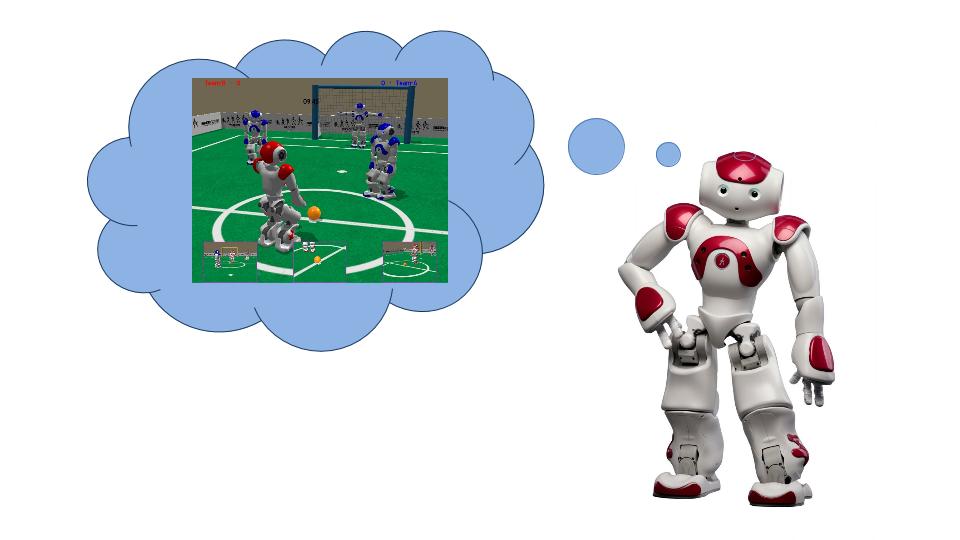
Robot picturing a simulation of itself and its environment and others in the environment. Photo source: Alan Winfield

Could we make a moral machine? A robot capable of choosing or moderating its actions on the basis of ethical rules?

This was how I opened my IdeasLab talk at the World Economic Forum 2016. The format of IdeasLab is 4 five minute (Pecha Kucha) talks, plus discussion and Q&A with the audience. The theme of this Nature IdeasLab was Building an Intelligent Machine, and I was fortunate to have 3 outstanding co-presenters: Vanessa Evers, Maja Pantic and Andrew Moore. You can see all four of our talks on YouTube here.

The IdeasLab variant of Pecha Kucha is pretty challenging for someone used to spending half an hour or more lecturing – 15 slides and 20 seconds per slide.

The biggest lesson – and a surprise to me – is this: robots don’t need to be sentient to be ethical. In other words we don’t need a major breakthrough in artificial intelligence to build an ethical robot.

You can watch the entire IdeasLab video ‘Making an ethical machine’ here:

And since not all of my (ever so carefully chosen) slides are visible in the recording here is the complete deck:

(link to the original file)

And the video clips in slides 11 and 12 are here:

Slide 11: Blue prevents red from reaching danger.
Slide 12: Blue faces an ethical dilemma: our indecisive robot can save them both.


Acknowledgements: I am deeply grateful to colleague Dr Dieter Vanderelst who designed and coded the experiments shown here on slides 10-12. This work is part of the EPSRC funded project Verifiable Autonomy.


tags: , ,


Alan Winfield is Professor in robotics at UWE Bristol. He communicates about science on his personal blog.

            AUAI is supported by:


Subscribe to Robohub newsletter on substack


Related posts :

Mars rovers give scientists a ground-level view of the red planet – peek inside their NASA control room

  21 Sep 2026
NASA created Curiosity to search for evidence of ancient habitable environments.

Reimagining robotics for sustainability

  18 Sep 2026
"Our ambition is not to simply make robots more sustainable; they must actively contribute to solving sustainability challenges."

Watch the ICRA keynote and plenary talks

  16 Sep 2026
If you missed the conference you can catch up on IEEE TV.

Building and programming autonomous robots at the York Micromaze Hackathon

and   11 Sep 2026
From 25–27 August, UK RAS STEPS members came together for a three-day Micromaze Robot Hackathon.

Robotics roadmaps from around the world spotlight of the month: United States of America

US robotics researchers and industry are looking for a cohesive national robotics strategy.

Could robots help tackle loneliness? BBC’s Ann Droid raises questions about the future of care

  07 Sep 2026
While the series exaggerates what robots can currently do, some of the technology it depicts is already being tested.

Exploring the Moon will require rovers that can think for themselves – an upcoming NASA mission will test whether they can

  04 Sep 2026
NASA is planning to send three small rovers to the Moon to autonomously compute how to best explore a patch of ground.


AUAI is supported by:


Subscribe to Robohub newsletter on substack


©2026.05 - Association for the Understanding of Artificial Intelligence