
Robohub.org
Fast Lightweight Autonomy (FLA) program to improve agility of UAVs | DARPA
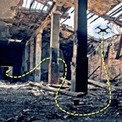
“The program aims to develop and demonstrate autonomous UAVs small enough to fit through an open window and able to fly at speeds up to 20 meters per second (45 miles per hour)—while navigating within complex indoor spaces independent of communication with outside operators or sensors and without reliance on GPS waypoints. … Since the focus of the program is improving perception and reducing dependence on external sources—as opposed to designing new small UAVs—DARPA will provide performers selected for the program with the same small UAV testbed as government-furnished equipment.”
Source: www.darpa.mil
Via Gizmag
http://www.gizmag.com/darpa-agile-uav/35336/
See on Scoop.it – Cultibotics

John Payne
AUAI is supported by:








Related posts :
ACM SIGAI Autonomous Agents Award 2027 open for nominations
ACM SIGAI
20 Oct 2026
Nominations are solicited for the 2027 ACM SIGAI Autonomous Agents Research Award.
Powered by muscle cells, a paper-thin robot swims through watery maze
MIT News
19 Oct 2026
MIT engineers’ new aquabot offers a way to design small, efficient “biohybrid” robots.
Robot Talk Episode 166 – Evolving robot bodies and brains, with Rika Antonova
Robot Talk
16 Oct 2026
In the latest episode of the Robot Talk podcast, Claire chatted to Rika Antonova from the University of Cambridge about using artificial intelligence to develop complimentary robot hardware and algorithms.
Neurosymbolic planning using natural language communication for cooperative autonomous vehicles
Read about work that was nominated for the AAMAS 2026 best paper award.
Humanoid robots can sprint and box – but the real test is doing the laundry
The Conversation
12 Oct 2026
No robot system can yet reliably handle the whole laundry process. Even folding remains a challenge.
Robot Talk Episode 165 – Robots behind the research, with Kushant Patel
Robot Talk
09 Oct 2026
In the latest episode of the Robot Talk podcast, Claire chatted to Kushant Patel from Brookhaven National Laboratory about robots that work in scientific facilities, such as particle accelerators.
What three days building a robot taught me
Devashish Tambade and UK RAS STEPS
07 Oct 2026
The brief sounded simple: build a small autonomous robot, then make it survive increasingly difficult mazes. Simple... right? Until you actually have to build one.
Research could guide the future design of social robots
the University of Glasgow
05 Oct 2026
Giving robot companions animal-like or anime-style faces and voices could maximise their emotional appeal to users, according to new research which could help guide the growing field of social robotics.

