
Robohub.org
Future engineers build their own six-legged autonomous robots at Robot Camp
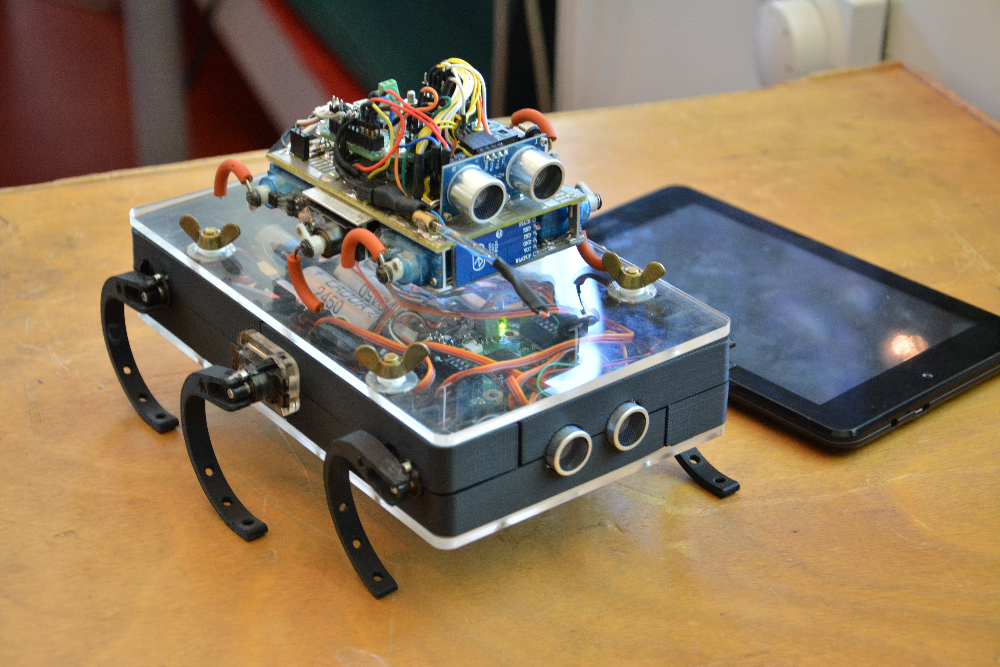
Credit: RoboValley
By: Rob van Dorp
A room full of kids and it’s quiet. The only sound is an occasional question. They’re all deeply concentrated on one task. These kids are participating in the first Robot Camp organised by Science Centre Delft. At the end of the three-day long camp, they will have built their own Zebro, a six-legged autonomous robot inspired by insects.
Robot Camp is an initiative by Science Centre Delft, in cooperation with Delft University of Technology Robotics Institute. Meant for high-school students of VWO-level between the ages of 14 and 16, they build and program their own robot. On day three, their robots compete against each other. The robot is, of course, theirs to keep afterwards.
After receiving initial instructions and some background information about the robot, the kids were left with an instruction manual and the parts to build their very own robot. Helpful personnel from the Science Centre and Delft University of Technology are there to answer questions and assist where needed. Professor Chris Verhoeven was amongst them to help out as well.
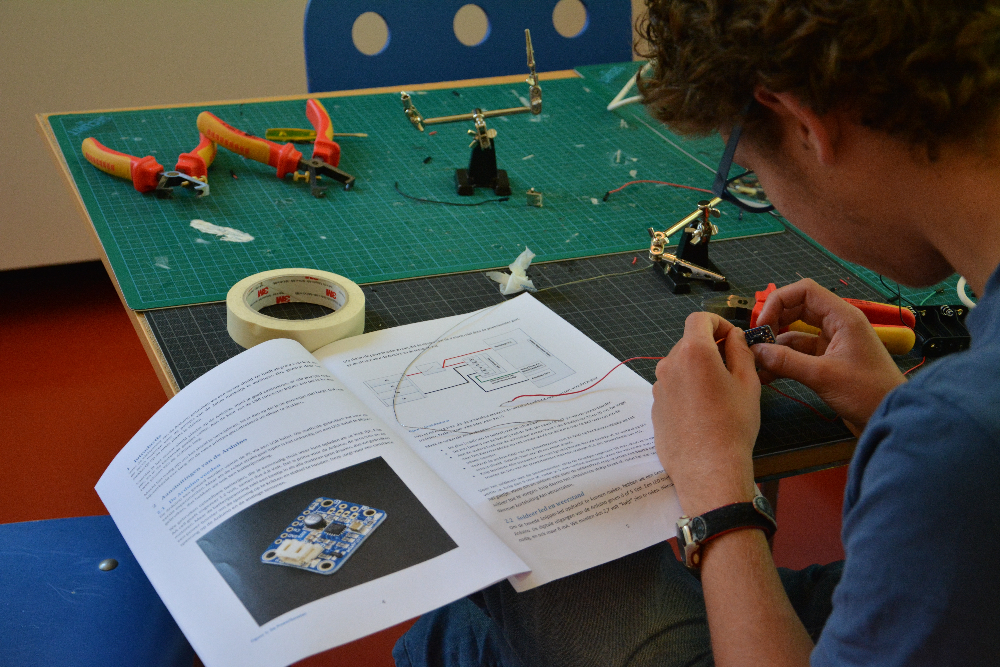
Credit: RoboValley
The Robot Camp is an important event for Chris Verhoeven. According to Verhoeven, you can’t become an engineer, you’re born as one. “The Robot Camp is meant to help you realise that you are an engineer.” It’s extremely important that kids of this age that have been taught to think on an academic level, realise that. This helps them make the right decisions for their future education.
Zebros everywhere
While we were there, Chris Verhoeven showed us various Zebro models that are currently being built by the Robotics Institute. There was the familiar smaller Zebro, which we have seen before. We also got to see a very large Zebro, strong enough to carry a person once it’s finished. One of the other Zebros was programmed to be controlled with a tablet. With the press of a button, you can guide the robot in the right direction and turn its sensors on or off. This is the Zebro that’s also being built by the kids at the camp.
Pretty soon, there will be a lot more Zebros walking around. Not just because of the summer camp, but because the university is ramping up production. The Zebro has a lot of capabilities. Due to the various sizes they come in, Zebros can be deployed in a wide array of environments and situations, from exploring the surface of the Moon or Mars to walking around buildings.
But for now, the participants of the Robot Camp are still building their Zebro. Soon they will compete to see who has built the best one. Keep an eye out because these kids are the engineers of the future and will eventually be building robots of their own design.
tags: RoboValley
AUAI is supported by:









