
Robohub.org
 

Lab seeks funds for large-scale swarm | CU Boulder


by
03 May 2014


share this:


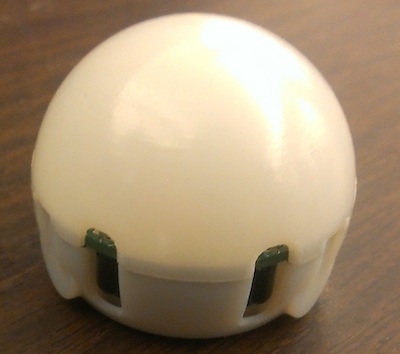
“Swarming is ubiquitous in nature. You can observe it in termites, slime mold, and ants, but if you think about it, everything is a swarm. Atoms as old as the universe interact with each other following the most basic laws of physics to form molecules, cells, brains and people. Our lab wants to understand and teach these mechanisms, a.k.a swarm intelligence, using the Droplets.”
John Payne‘s insight:

CU’s Correll Lab is seeking to raise funds to build enough of these tiny robots to conduct large-scale swarm experiments. As with most things, the larger the number produced, the lower the per-unit cost. More information is available at the pages linked below:

http://www.colorado.edu/crowdfunding/?cfpage=project&project_id=10341

http://correll.cs.colorado.edu/?page_id=2687

https://github.com/correlllab/cu-droplet

https://code.google.com/p/cu-droplet/

See on www.colorado.edu


tags:


John Payne


Related posts :


MIT engineers design an aerial microrobot that can fly as fast as a bumblebee

  31 Dec 2025
With insect-like speed and agility, the tiny robot could someday aid in search-and-rescue missions.

Robohub highlights 2025

  29 Dec 2025
We take a look back at some of the interesting blog posts, interviews and podcasts that we've published over the course of the year.

The science of human touch – and why it’s so hard to replicate in robots

  24 Dec 2025
Trying to give robots a sense of touch forces us to confront just how astonishingly sophisticated human touch really is.

Bio-hybrid robots turn food waste into functional machines

  22 Dec 2025
EPFL scientists have integrated discarded crustacean shells into robotic devices, leveraging the strength and flexibility of natural materials for robotic applications.

Robot Talk Episode 138 – Robots in the environment, with Stefano Mintchev

  19 Dec 2025
In the latest episode of the Robot Talk podcast, Claire chatted to Stefano Mintchev from ETH Zürich about robots to explore and monitor the natural environment.

Artificial tendons give muscle-powered robots a boost

  18 Dec 2025
The new design from MIT engineers could pump up many biohybrid builds.

Robot Talk Episode 137 – Getting two-legged robots moving, with Oluwami Dosunmu-Ogunbi

  12 Dec 2025
In the latest episode of the Robot Talk podcast, Claire chatted to Oluwami Dosunmu-Ogunbi from Ohio Northern University about bipedal robots that can walk and even climb stairs.


Robohub is supported by:


Would you like to learn how to tell impactful stories about your robot or AI system?


scicomm
training the next generation of science communicators in robotics & AI


©2025.05 - Association for the Understanding of Artificial Intelligence









