
Robohub.org
National Robotics Initiative celebrates five-year anniversary
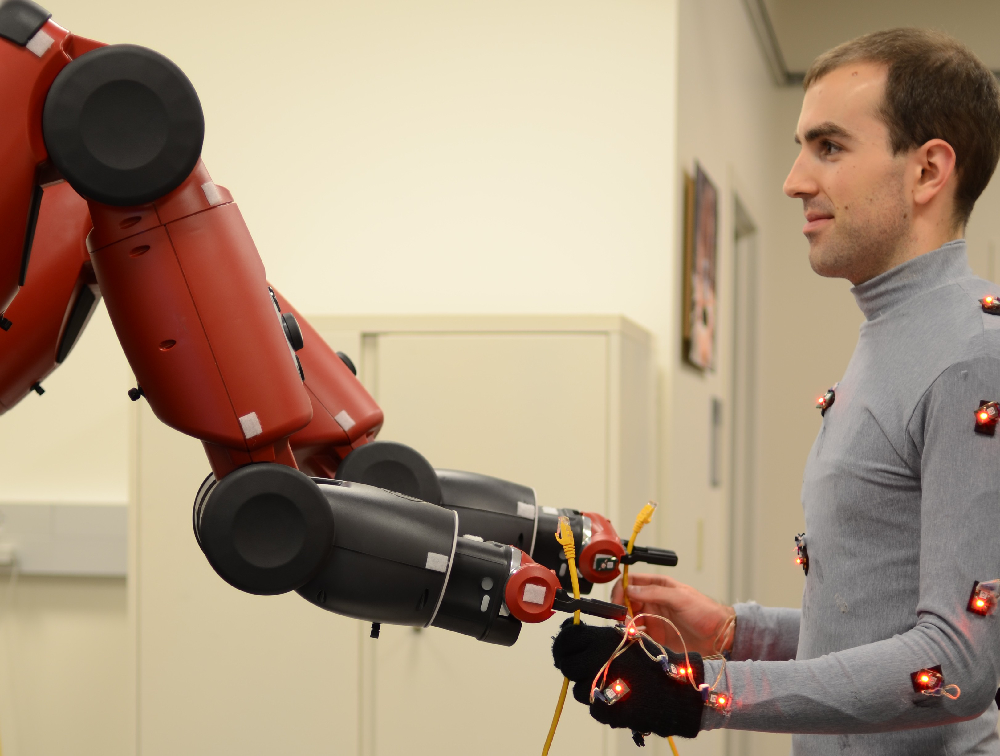
Credit: Aaron Bestick, UC Berkeley
The Congressional Robotics Caucus will host an expo on Thursday, June 9 in Washington, D.C. to promote the progress and promise of collaborative robotics (co-robot) research.
The event will mark the five-year anniversary of the National Robotics Initiative, a multi-agency effort among the National Science Foundation (NSF), NASA, the National Institutes for Health (NIH), the U.S. Department of Agriculture (USDA), the Department of Defense (DOD) and the Department of Energy (DOE) to accelerate the development and use of robots that work beside or cooperatively with people and solve problems in areas of national priority.
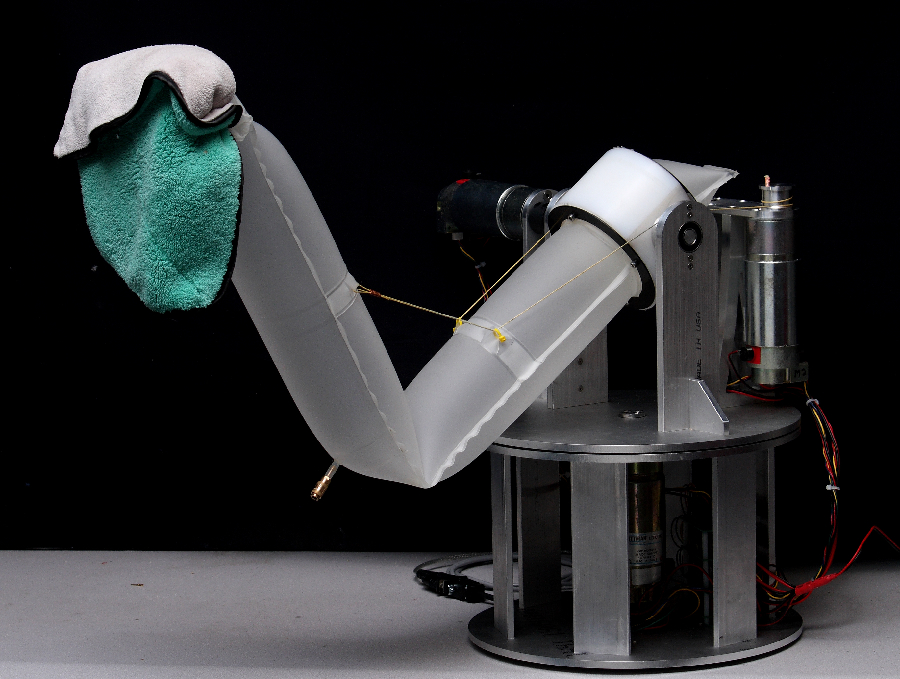
The National Robotics Initiative advanced research in soft robotics and other novel research areas. In this example, a soft inflatable robot arm from Carnegie Mellon is actuated using cables, motors and pneumatics.
Credit: Sanan/CMU
The event, hosted by Congressional Robotics Caucus Co-Chairs Congressman Rob Woodall and Congressman Mike Doyle, will feature the latest in robotic technologies, as well as a discussion among leading scientists, educators and thought-leaders, and will promote improved public understanding of development of co-robots in the modern world.
All event information can be found on their website.
The panel will feature:
- Moderator Martial Hebert, The Robotics Institute, Carnegie Mellon University
- Lynne Parker, co-chair, NITRD Interagency Working Group on Robotics and Intelligent Systems
- Robert Atkinson, president, Information Technology and Innovation Foundation
- Henrik Christensen, Institute for Robotics and Intelligent Machines, Georgia Tech University; fellow, IEEE Robotics & Automation Society
The exhibition will feature researchers leading NRI-funded projects and agencies, including:
- Aaron Becker, University of Houston
- Howie Choset, Carnegie Mellon University
- Jnaneshwar Das, University of Pennsylvania
- Aaron Ames, Georgia Tech Jessy Grizzle, University of Michigan, and Koushil Sreenath, Carnegie Mellon University
- Satyandra K. Gupta, University of Southern California
- Greg Hager, Johns Hopkins University
- Robert MacCurdy, MIT
- Marcie O’Malley, Rice University
- Josip Markus, Ekso Bionics
- Andrew Williams, Marquette University
- Tyr Wiesner-Hanks, Cornell University
- Cang Ye, University of Arkansas at Little Rock
- Department of Energy, Environmental Management
- National Institute of Standards and Technology, Robotic Systems for Smart Manufacturing Program
tags: events, National Science Foundation
AUAI is supported by:









