Robohub.org
 

NHTSA redefines “driver” of self-driving car

by
13 February 2016


share this:
google-buggy_car_autonomous_robocar

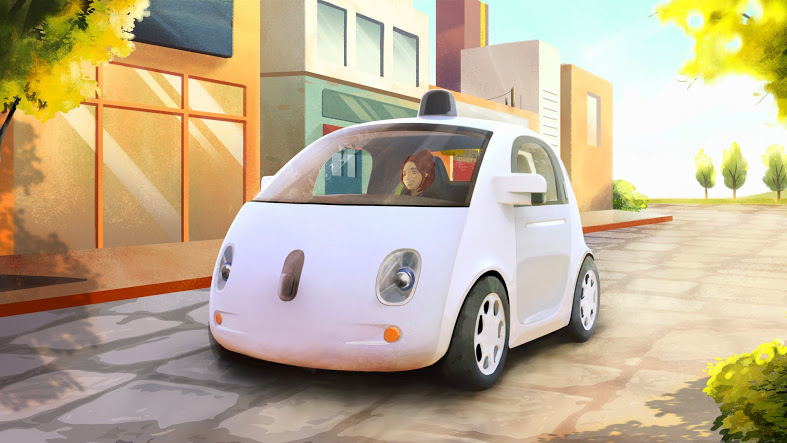
The National Highway Traffic Safety Administration (NHTSA) took an important step towards interpreting safety standards in ways that could make self-driving cars a reality for the public: it said that computers controlling those cars can be considered drivers just like humans.

The NHTSA said that it would write guidelines for self-driving cars within six months. Their answer was specifically given in response to a detailed request from Google, and was posted online so all could see.

Their answer to over 20 questions was that the SDS (self-driving computer and AI system) is the driver. But when it came to eliminating brake pedals, the NHTSA said that safety regulations and laws would need to be changed before brakes could be removed from the passenger compartment.

The question of who is responsible for a self-driving car is an important starting point for legal, insurance, and safety considerations. Setting the computer (and thus the maker of the computer and software) as the “driver” and as the responsible person/entity, is the first step along a long pathway toward establishing all the new rules for self-driving cars – including eliminating the need for brake pedals controlled by the human driver.

In a recent speech in Washington DC, the president of Volvo Cars, Hakan Samuelsson, said that the US is currently “the most progressive country in the world in autonomous driving… but it risks losing its leading position” because of the lack of Federal guidelines for the “testing and certification” of autonomous vehicles. Unanswered ethical and legal concerns, particularly when it comes to liability for driverless car accidents, are also stalling development. Thus the NHTSA's promise to write guidelines for self-driving cars within six months, and their defining the SDS as a driver, are both good signs.


tags: , , ,


Frank Tobe is the owner and publisher of The Robot Report, and is also a panel member for Robohub's Robotics by Invitation series.

            AUAI is supported by:


Subscribe to Robohub newsletter on substack


Related posts :

How to teach the same skill to different robots

  11 May 2026
A new framework to teach a skill to robots with different mechanical designs, allowing them to carry out the same task without rewriting code for each.

Robot Talk Episode 155 – Making aerial robots smarter, with Melissa Greeff

  08 May 2026
In the latest episode of the Robot Talk podcast, Claire chatted to Melissa Greeff from Queen's University about autonomous navigation and learning for drones.

New understanding of insect flight points way to stable flapping-wing robots

  07 May 2026
The way bugs and birds flap their wings may look effortless, but the dynamics that keep them aloft are dizzyingly complex and difficult to quantify.

Robotically assembled building blocks could make construction more efficient and sustainable

  05 May 2026
Research suggests constructing a simple building from interlocking subunits should be mechanically feasible and have a much smaller carbon footprint.

Robot Talk Episode 154 – Visual navigation in insects and robots, with Andrew Philippides

  01 May 2026
In the latest episode of the Robot Talk podcast, Claire chatted to Andrew Philippides from the University of Sussex about what we can learn from ants and bees to improve robot navigation.

Ultralightweight sonar plus AI lets tiny drones navigate like bats

  29 Apr 2026
Researchers develop ultrasound-based perception system inspired by bat echolocation.

Gradient-based planning for world models at longer horizons

  28 Apr 2026
What were the problems that motivated this project and what was the approach to address them?

Robot Talk Episode 153 – Origami-inspired robots, with Chenying Liu

  24 Apr 2026
In the latest episode of the Robot Talk podcast, Claire chatted to Chenying Liu from University of Oxford about how a robot's physical form can actively contribute to sensing, processing, decision-making, and movement.


AUAI is supported by:


Subscribe to Robohub newsletter on substack


©2026.02 - Association for the Understanding of Artificial Intelligence