
Robohub.org
No, a Google car was not ticketed for going too slow (and other robocar stories)
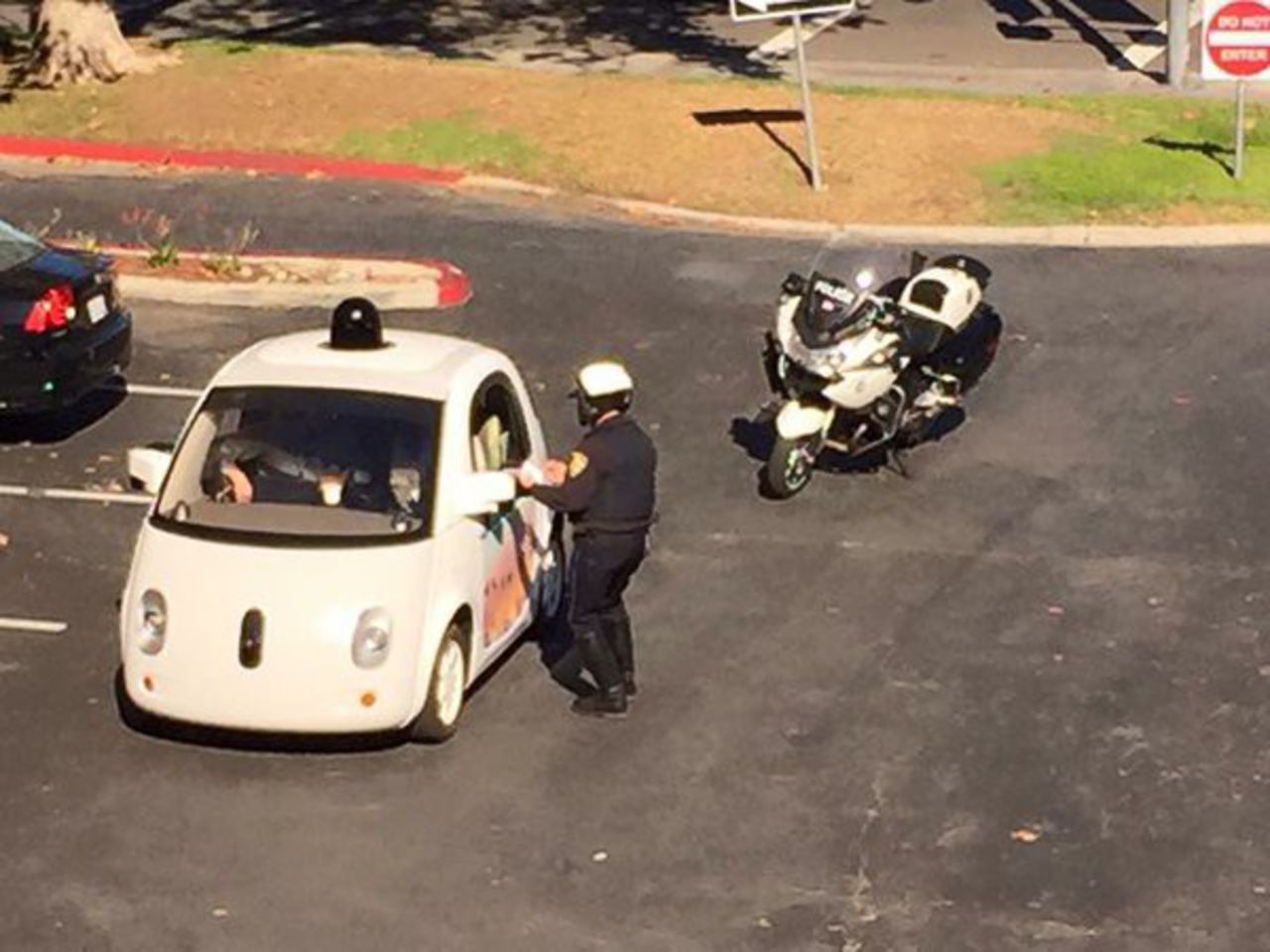 Almost every newspaper in the world reported the story of how a motorcycle cop pulled over one of Google’s 3rd generation test cars, the 2-seaters, and many incorrectly reported that the car was given a ticket for going too slow. Or that there was “no driver to ticket.” Today, Google’s cars always have a safety driver who has a steering wheel and who is responsible for the car in case it does something unexpected or enters an especially risky situation. Had there been a ticket to write, there would have been a driver in the car, just as there is if you get a ticket for speeding while using your cruise control.
Google’s prototype is what is known as a “Neighbourhood Electric Vehicle” or NEV. There are special NEV rules in place that make such vehicles much less subject to the complex web of regulations required for a general purpose vehicle. They need to be electric, must not travel on roads with a speed limit over 35mph and they must themselves not be capable of going more than 25mph. The Google car was doing 24mph when the officer asked the safety driver to pull over, so there was nothing to ticket. Of course, that does not mean an officer can’t get confused and need an explanation of the law — even they don’t know all of them.
The NEV regulations are great for testing, though there is indeed an issue around how the earliest robocars will probably want to go a little slow, because safety really is the top priority on all teams I know. As such, they may go as slowly as the law allows, and they may indeed annoy other drivers when doing that. This should be a temporary phase but could create problems while cars learn to go faster. I have suggested in the past that cars wanting to go slow might actually notice anybody coming up behind them and pull off the road, pausing briefly in driveways or other open spots, so that the drivers coming up behind never have to even brake. A well behaved unmanned vehicle might go slowly, but it doesn’t necessarily present a burden to hurried humans.
Ford may also avoid standby supervision
Recent reports suggest that Ford, like Google, may have concluded that there is not an evolutionary path from ADAS to full self driving — in particular, the so-called “level 3” (which I call standby supervision) where a human driver can be called on with about 10 seconds notice (but not less) to resolve live driving problems or to take the wheel when the car enters a zone it can’t drive. This transition may just be too dangerous, according to Google and others.
Cheaper LIDAR etc.
Noted without much comment, Quanergy (on whose advisory board I sit) has announced progress on the plans for an inexpensive solid state LIDAR, and plans to ship the first on schedule, in 2016. This sub-$1000 LIDAR keeps us on a path to even cheaper LIDAR, which should eliminate all the people who keep saying they want to build robocars without LIDAR (I am looking at you, Elon Musk). Nobody will make their first full robocar less safe just to save a few hundred dollars.
Also related to Starship (another company I advise) is the arrival of not one but two somewhat similar startups to build small delivery robots. “Dispatch Network” involves US roboticists who participated in a Chinese-based hardware accelerator and have a basic prototype, larger than the Starship robot. “Sidewalk” — a Lithuanian company, also has a prototype model and a deal with DHL to do research together with them on last mile robots.
More to come.
This post originally appeared on robocars.com.
tags: automotive, Google car, LIDAR

AUAI is supported by:









