
Robohub.org
 

Remember EATR, the military robot that was supposed to eat humans? | Gizmodo

by
29 September 2015


share this:

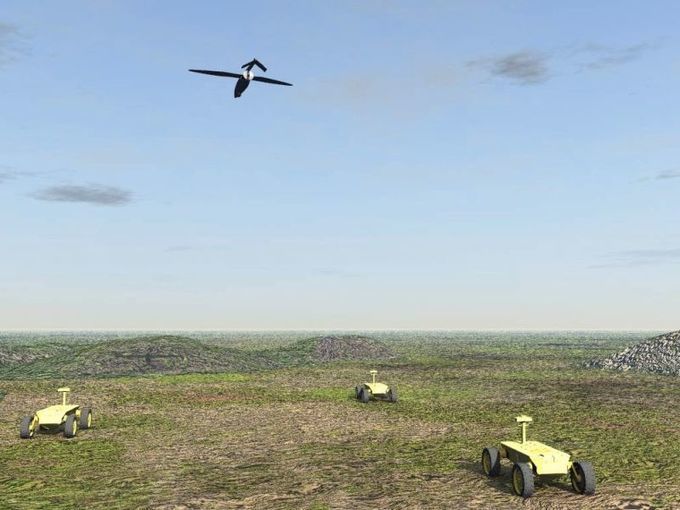
All EATR would need for power was the biomass it could find like dead trees. Oh, and did I mention it had a chainsaw? For chopping up vegetation, of course. As soon as people heard about this robot, they started asking the obvious question: Since this is a robot for the military, could it feed on dead humans who are killed in battle?

Reporters asked questions, blog posts were written, and EATR became, in the eyes of the public, the robot that was going to swallow humans whole. Or, if not whole, then chopped up with that chainsaw arm on the front. Cyclone, Robotic Technology Inc, and DARPA quickly went into damage control mode, despite the fact that they were never the ones claiming that EATR would ever feed on humans.

“We are focused on demonstrating that our engines can create usable, green power from plentiful, renewable plant matter. The commercial applications alone for this earth-friendly energy solution are enormous,” Schoell said.

Hallie Siegel’s insight:
Denouement on the EATR story – so sad to see this project abandoned over a communication crisis. Another one for the hype file.


Hallie Siegel robotics editor-at-large

            AUAI is supported by:


Subscribe to Robohub newsletter on substack


Related posts :

AI agents create virtual playgrounds to help robots get crucial training data

  07 Aug 2026
“SceneSmith” system uses collaborative AI agents to create realistic 3D environments of places like kitchens, hotels, and living rooms, where robots can simulate everyday chores.

Robots in society, business and culture: July 2026

A round up of robotics stories in a new monthly series from IEEE RAS.

Simulated zebrafish and a vision-equipped robotic fish reveal how the body shapes brain circuits

Researchers look to the fish brain to create a robotic zebrafish that can autonomously swim upstream.

Researchers develop modular nanorobot

  31 Jul 2026
A team at the University of Basel has developed a versatile nanorobot with propulsion and payload modules.

Surviving the paper deluge: a one-year study in learning from demonstration

With the explosion of robotics research, staying current in fields like Learning from Demonstration is a monumental challenge.

Soft robotic heart offers new way to study disease and test life-saving devices

Researchers have developed a soft robotic model of the human heart that can mimic disease and provide a realistic environment for testing the next generation of cardiac devices.

A mini robot to simplify dental treatment

  24 Jul 2026
Researchers have developed a miniature dental robot that could one day automatically prepare teeth for crowns.

Pressure-free growing robots for soft medical robotics

A Q&A with the best paper award winner at RoboSoft.


AUAI is supported by:


Subscribe to Robohub newsletter on substack


©2026.05 - Association for the Understanding of Artificial Intelligence









