
Robohub.org
Robot centenary – 100 years since ‘robot’ made its debut
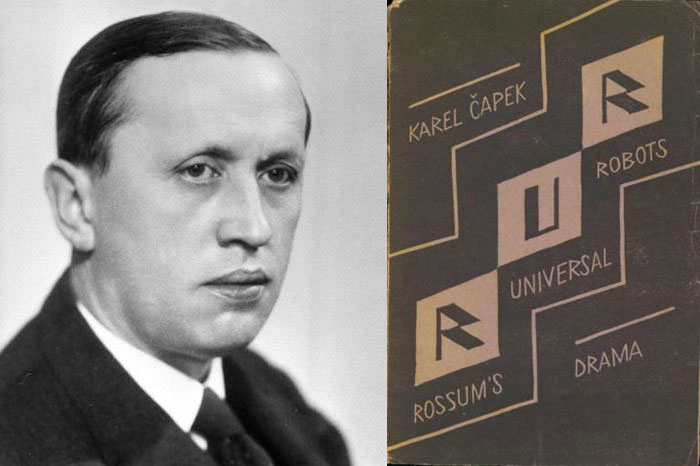
Robotics remained at the leading edge of technology development in 2021, yet it was one hundred years earlier in 1921 that the word robot (in its modern sense) made its public debut. Czech author Karel Čapek’s play R.U.R. (Rossum’s Universal Robots) imagined a world in which humanoids called ‘roboti’ were created in a factory. Karel’s brother, the artist and writer Josef Čapek had first coined the term robot before Karel adopted it for this theatrical vision.
The Slavic root of the word is even older and even its first known appearance in English dates back nearly two hundred years. During the time of the Habsburgs and the Austro-Hungarian Empire, robot referred to a form of forced labour similar to slavery. In Čapek’s play, the roboti were being manufactured as serfs to serve human needs.
Nowadays we would see Čapek’s creations more as androids rather than robots in the modern sense. However, the outcome of the play, with the robots rebelling against the humans and taking over the world, has since become a trope of science fiction which persists to this day. And yet the intended message in Čapek’s play wasn’t about the inherent risks of robots but of the dehumanising dangers of rampant mechanisation. We know that popular culture has taken a different reading from the play, of course, with robots on screen and in print more likely to be cast as the bad guy, although there are some notable exceptions, too. It’s interesting to wonder how different the mainstream image of robots might be today if Čapek’s play had placed his roboti and their owners in a more mutually benevolent relationship.
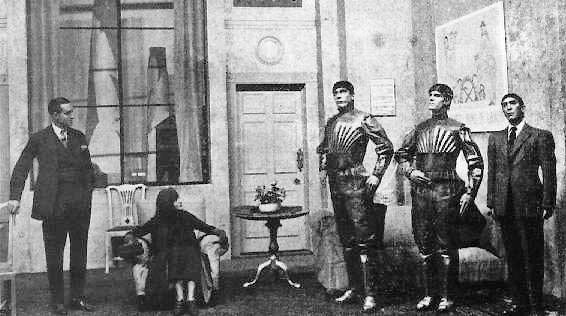
Čapek’s robots first appeared on the screen in a BBC television production of R.U.R. in 1938. Three years later the word ‘robotics’ was first used as a term for the field of research and technology that develops and manufactures robots. Like ‘robot’ in its modern sense, ‘robotics’ also has its origins in the creative imagination, thanks to a man who was born in the same year that the Čapek brothers were bringing the modern ‘robot’ into the world. Science fiction writer Isaac Azimov famously coined his three laws of robotics, which continue to resonate in discussions about the ethical use of robots, in 1941. Incidentally, Azimov wasn’t a fan of the play itself but his laws were designed precisely to prevent the kind of tragedy imagined in Čapek’s play.

AUAI is supported by:









