
Robohub.org
ShanghAI Lectures: Hisato Kobayashi “AI-ish approach for complicated robot control”
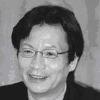 Guest talk in the ShanghAI Lectures, 2009-11-12
If we try to describe any kinds of robot by mathematical models, they must be very complicated equations. Even, such robotic systems are categorized as a conventional dynamic system consist of positive definite inertia matrix, Coriolis’ force term, friction term, gravity term and so on, we cannot derive any authentic control scheme from such complicated nonlinear systems.
Of course, we can make a servo system for a joint control but we do not have any systematic control scheme for whole robots.
https://www.youtube.com/watch?v=6-n6meJXyQo
Hisato Kobayashi was born in Japan 1951. He graduated from Waseda University, he received both master degree and doctoral degree in electrical engineering from Waseda University in 1975 and 1978 respectively. During 1977-1982, he was a research associate of Tokyo University Agriculture and Technology. He joined Hosei University in 1982. He spent almost one year at Stuttgart University Germany 1988-1989 as an invited visiting researcher of Alexander Humboldt Foundatiion. He is now professor of Hosei University Tokyo, department of art and technology,he was president of Hosei University Research Institute, California. During 1998-2001, he was a visiting scholar of Stanford University and doing a joint project entitled “Sleep Smart Project.” He was Editor in Chief of Advanced Robotics, which was issued by Robotics Society in Japan and published by Brill Publisher in Holland. He was elected as fellow of IEEE in 2002. His research interests cover control theory, mechatronics systems, robotics and health care systems.
The ShanghAI Lectures are a videoconference-based lecture series on Embodied Intelligence run by Rolf Pfeifer and organized by me and partners around the world.
The ShanghAI lectures have brought us a treasure trove of guest lectures by experts in robotics. You can find the whole series from 2012 here. Now, we’re bringing you the guest lectures you haven’t yet seen from previous years, starting with the first lectures from 2009 and releasing a new guest lecture every Thursday until all the series are complete. Enjoy!
tags: AI-cognition, lectures & seminars, ShanghAI Lectures, ShanghAI Lectures 2009
AUAI is supported by:









