Robohub.org
 

SMART trials self-driving wheelchair at hospital

by
26 July 2017


share this:

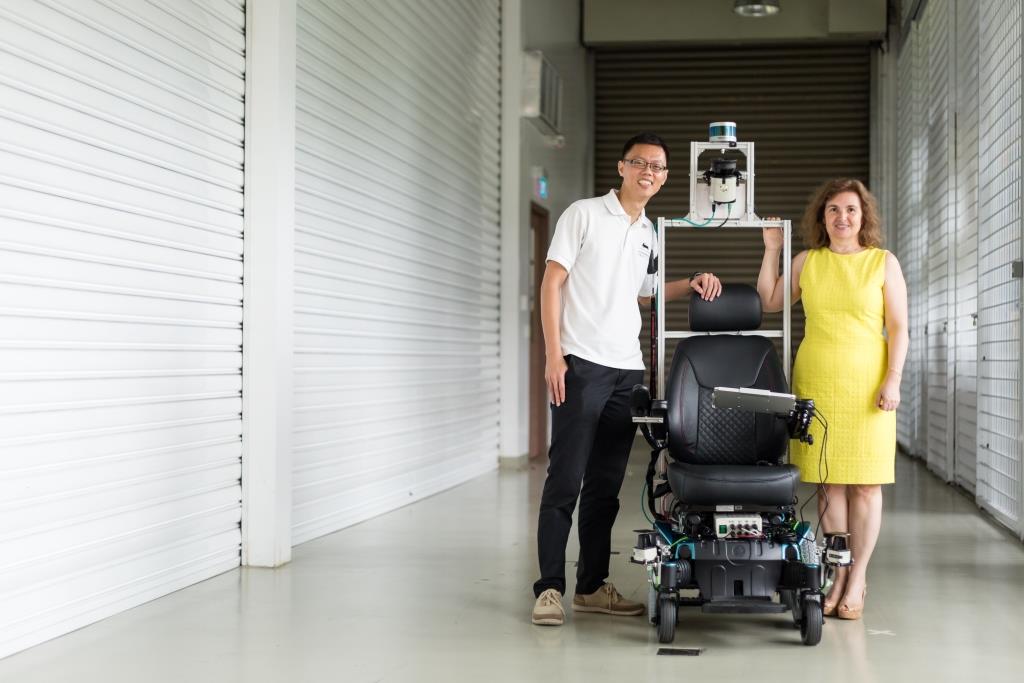
Image: MIT CSAIL

Singapore and MIT have been at the forefront of autonomous vehicle development. First, there were self-driving golf buggies. Then, an autonomous electric car. Now, leveraging similar technology, MIT and Singaporean researchers have developed and deployed a self-driving wheelchair at a hospital.

Spearheaded by Daniela Rus, the Andrew (1956) and Erna Viterbi Professor of Electrical Engineering and Computer Science and director of MIT’s Computer Science and Artificial Intelligence Laboratory, this autonomous wheelchair is an extension of the self-driving scooter that launched at MIT last year — and it is a testament to the success of the Singapore-MIT Alliance for Research and Technology, or SMART, a collaboration between researchers at MIT and in Singapore.

Rus, who is also the principal investigator of the SMART Future Urban Mobility research group, says this newest innovation can help nurses focus more on patient care as they can get relief from logistics work which includes searching for wheelchairs and wheeling patients in the complex hospital network.

“When we visited several retirement communities, we realized that the quality of life is dependent on mobility. We want to make it really easy for people to move around,” Rus says.


tags: , , , , , ,


MIT News

            AUAI is supported by:


Subscribe to Robohub newsletter on substack


Related posts :

Robotics roadmaps from around the world spotlight of the month: Japan

Robots have been a prolific theme in Japanese pop culture and media since the 1950s

Intermittent swimming promotes the energy efficiency of fish-like robot movements

How zebrafish-inspired robots save energy by swimming in bursts.

What does it take for a robot to hold a conversation with a room, not just a person?

and   14 Aug 2026
Find out about a summer school held at Imperial College London.

Robotics roadmaps from around the world

We embark on a tour into some of the recent and prominent robotics roadmaps from around the world.

A ‘5-in-1’ seed-sized surgical robot

Mini robot can move, cut tissue, release drugs, grip and store samples, and generate heat wirelessly

AI agents create virtual playgrounds to help robots get crucial training data

  07 Aug 2026
“SceneSmith” system uses collaborative AI agents to create realistic 3D environments of places like kitchens, hotels, and living rooms, where robots can simulate everyday chores.

Robots in society, business and culture: July 2026

A round up of robotics stories in a new monthly series from IEEE RAS.

Simulated zebrafish and a vision-equipped robotic fish reveal how the body shapes brain circuits

Researchers look to the fish brain to create a robotic zebrafish that can autonomously swim upstream.


AUAI is supported by:


Subscribe to Robohub newsletter on substack


©2026.05 - Association for the Understanding of Artificial Intelligence