
Robohub.org
 

SVR Guide to Robotics Research and Education 2023


by
22 August 2023


share this:

In the last decade we have seen more robotics innovation becoming real products and companies than in the entire history of robotics.

Furthermore, the greater Silicon Valley and San Francisco Bay Area is at the center of this ‘Cambrian Explosion in Robotics’ as Dr Gill Pratt, Director of Robotics at Toyota Research Institute described it. In fact, two of the very first robots were developed right here.

In 1969 at Stanford, Vic Sheinman designed the first electric robot arm able to be computer controlled. After successful pilots and interest from General Motors, Unimation acquired the concept and released the PUMA or Programmable Universal Machine for Assembly. Unimation was eventually acquired by Staubli, and the PUMA became one of the most successful industrial robots of all time.

Shakey was the first mobile robot able to perceive and reason. Also called the world’s first electronic person by Time Magazine in 1972. Shakey was developed at SRI International from 1966 to 1972 and pioneered many advances in computer vision and path planning and control systems that are still in use today.

These companies have been at the heart of Silicon Valley Robotics, the regional robotics ecosystem/association, but we have also seen enormous growth in new robotics companies and startups in the last decade.

And all of them are hiring.

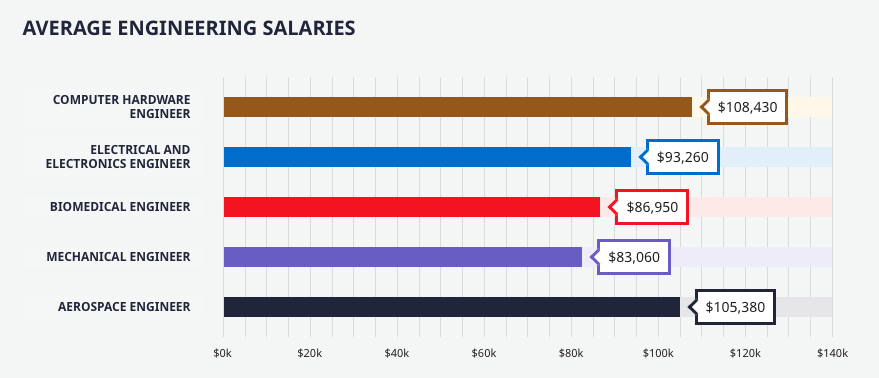
This volume serves as a guide to students who are interested in studying the field of robotics in any way. Robotics jobs range from service technician, electrical or mechanical engineer, control systems and computer science, to interaction or experience designer, human factors and industrial design.

All these skills are in great demand in robotics companies around the world, and people with experience in robotics are in great demand everywhere. Robotics is a complex multidisciplinary field, which provides opportunities for you to develop problem solving skills and a holistic approach.

The robotics industry also requires people with skill sets in growing businesses, not just robotics, but product and project management, human resources, sales, marketing, operations.

Get involved in robotics – the industry of the 21st century.
The guide



Silicon Valley Robotics is an industry association supporting innovation and commercialization of robotics technologies.

            AUAI is supported by:


Subscribe to Robohub newsletter on substack


Related posts :

Robotics Café brings together autonomous robot practitioners

  20 May 2026
Recently launched series for researchers, students and industry practitioners aims to provide a platform for students to present their work.

Table tennis robot defeats some of world’s best players – why this has major implications for robotics

  18 May 2026
Ace, from Sony AI, is the first robot to beat elite human players in competitive physical sport.

Robot Talk Episode 156 – Rugged robots for dangerous missions, with Gavin Kenneally

  15 May 2026
In the latest episode of the Robot Talk podcast, Claire chatted to Gavin Kenneally from Ghost Robotics about robot dogs for defence, security, and public safety.

Developing active and flexible microrobots

  13 May 2026
This class of robots opens up possibilities for biomedical applications.

How to teach the same skill to different robots

  11 May 2026
A new framework to teach a skill to robots with different mechanical designs, allowing them to carry out the same task without rewriting code for each.

Robot Talk Episode 155 – Making aerial robots smarter, with Melissa Greeff

  08 May 2026
In the latest episode of the Robot Talk podcast, Claire chatted to Melissa Greeff from Queen's University about autonomous navigation and learning for drones.

New understanding of insect flight points way to stable flapping-wing robots

  07 May 2026
The way bugs and birds flap their wings may look effortless, but the dynamics that keep them aloft are dizzyingly complex and difficult to quantify.

Robotically assembled building blocks could make construction more efficient and sustainable

  05 May 2026
Research suggests constructing a simple building from interlocking subunits should be mechanically feasible and have a much smaller carbon footprint.


AUAI is supported by:


Subscribe to Robohub newsletter on substack


©2026.02 - Association for the Understanding of Artificial Intelligence









