Robohub.org
 

Two MOOCs for robotics enrolling now

by
27 December 2014


share this:
Mooc overview

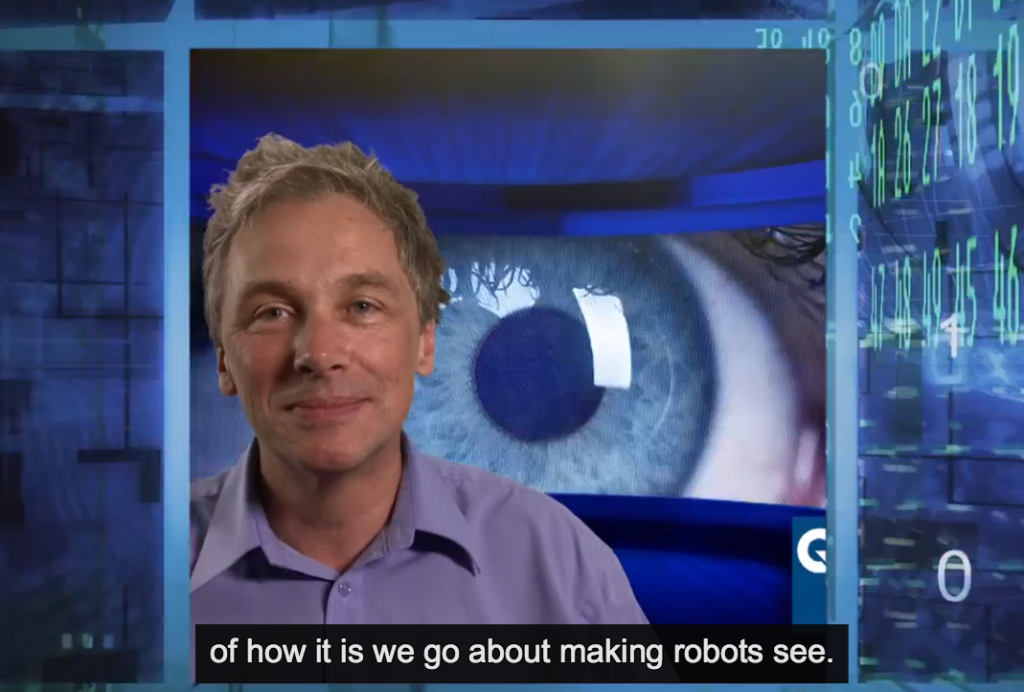
Anyone can now enrol in two robotics MOOCs, “Introduction to Robotics“ and “Robotic Vision” from Peter Corke at QUT which will run in early 2015. Registration is free. Peter Corke is a professor of robotics at QUT and director of the Australian Centre for Robotic Vision, who was recently featured on the Robots Podcast. He wrote the textbook Robotics, Vision & Control and authored the MATLAB toolboxes for Robotics and Machine Vision.

The MOOCs are based on Robotics, Vision & Control. ‘Introduction to Robotics will run from 16 February to 27 March 2015 and covers the topics like; creating and measuring motion, robot arms, forward and inverse kinematics, actuation, endpoint velocity, joint control and rigid body dynamics. You can also build a lego robot and control it with MATLAB.

‘Robotic Vision’ will run from 13 April to 22 May 2015 and covers; image processing and acquisition, spatial operators, feature extraction, color, image formation and geometry, 3D vision, motion and advanced image processing. You also build a robot vision system with a webcam and MATLAB.  If you did the first MOOC, you can connect them together to create a vision-guided robot.

Each MOOC runs for 6 weeks, with 2 1 hour lectures per week, quizzes, a weekly programming assessment in MATLAB and a weekly grade assessment. The courses are being delivered on the Open edX platform. Visit tiny.cc/robomoocs for more information or to register, and enjoy the story of what motivated Peter to develop the MOOCs.


tags: ,


Andra Keay is the Managing Director of Silicon Valley Robotics, founder of Women in Robotics and is a mentor, investor and advisor to startups, accelerators and think tanks, with a strong interest in commercializing socially positive robotics and AI.


Related posts :


MIT engineers design an aerial microrobot that can fly as fast as a bumblebee

  31 Dec 2025
With insect-like speed and agility, the tiny robot could someday aid in search-and-rescue missions.

Robohub highlights 2025

  29 Dec 2025
We take a look back at some of the interesting blog posts, interviews and podcasts that we've published over the course of the year.

The science of human touch – and why it’s so hard to replicate in robots

  24 Dec 2025
Trying to give robots a sense of touch forces us to confront just how astonishingly sophisticated human touch really is.

Bio-hybrid robots turn food waste into functional machines

  22 Dec 2025
EPFL scientists have integrated discarded crustacean shells into robotic devices, leveraging the strength and flexibility of natural materials for robotic applications.

Robot Talk Episode 138 – Robots in the environment, with Stefano Mintchev

  19 Dec 2025
In the latest episode of the Robot Talk podcast, Claire chatted to Stefano Mintchev from ETH Zürich about robots to explore and monitor the natural environment.

Artificial tendons give muscle-powered robots a boost

  18 Dec 2025
The new design from MIT engineers could pump up many biohybrid builds.

Robot Talk Episode 137 – Getting two-legged robots moving, with Oluwami Dosunmu-Ogunbi

  12 Dec 2025
In the latest episode of the Robot Talk podcast, Claire chatted to Oluwami Dosunmu-Ogunbi from Ohio Northern University about bipedal robots that can walk and even climb stairs.


Robohub is supported by:


Would you like to learn how to tell impactful stories about your robot or AI system?


scicomm
training the next generation of science communicators in robotics & AI


©2025.05 - Association for the Understanding of Artificial Intelligence