Robohub.org
 

WeRobot 2015 Panel 1: Anthropomorphizing robots, with Kate Darling
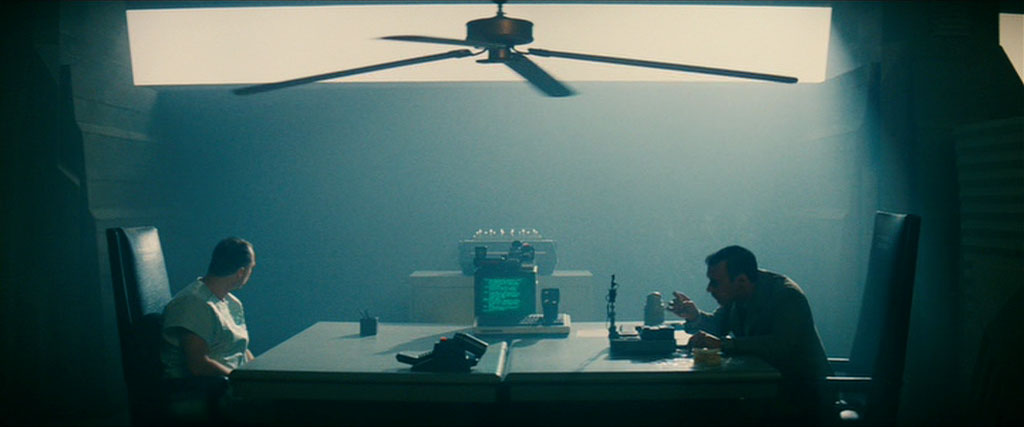
Anthropomorphism of AI and robotics is common in film, where plot often hinges on the confusion between what is really a human and what is an imposter. In the sci-fi movie Bladerunner, an empathy test is used to determine whether an agent is really human, or if it is a 'replicant'. An agent's response to questions focused on the treatment of animals are deemed an indicator of that agent's "humanity".

Anthropomorphism of AI and robotics is common in film, where plots often hinge on the confusion between what is really a human and what is an imposter. In the sci-fi movie Bladerunner, an empathy test is used to determine whether an agent is really human, or if it is a ‘replicant’. 

As we increasingly create spaces where robotic technology interacts with humans, our tendency to project lifelike qualities onto robots raises questions around use and policy. In this We Robot 2015 panel titled “Who’s Johnny? (Anthropomorphizing Robots)”, Kate Darling explores the effects of anthropomorphic framing in the introduction of robotic technology, and discusses concerns about anthropomorphism in certain contexts. She also argues that there are cases where encouraging anthropomorphism is desirable, and that because people respond to framing, it could serve as a tool to separate these cases. Moderated by Ken Goldberg.


WeRobot 2015 Panel 1: “Who’s Johnny? (Anthropomorphizing Robots)”
Author: Kate Darling
Discussant: Ken Goldberg
Paper: http://bit.ly/1bxvbfR


tags: , ,


Tech Policy Lab University of Washington is a unique, interdisciplinary collaboration at the University of Washington.

            AUAI is supported by:


Subscribe to Robohub newsletter on substack


Related posts :

Robot Talk Episode 156 – Rugged robots for dangerous missions, with Gavin Kenneally

  15 May 2026
In the latest episode of the Robot Talk podcast, Claire chatted to Gavin Kenneally from Ghost Robotics about robot dogs for defence, security, and public safety.

Developing active and flexible microrobots

  13 May 2026
This class of robots opens up possibilities for biomedical applications.

How to teach the same skill to different robots

  11 May 2026
A new framework to teach a skill to robots with different mechanical designs, allowing them to carry out the same task without rewriting code for each.

Robot Talk Episode 155 – Making aerial robots smarter, with Melissa Greeff

  08 May 2026
In the latest episode of the Robot Talk podcast, Claire chatted to Melissa Greeff from Queen's University about autonomous navigation and learning for drones.

New understanding of insect flight points way to stable flapping-wing robots

  07 May 2026
The way bugs and birds flap their wings may look effortless, but the dynamics that keep them aloft are dizzyingly complex and difficult to quantify.

Robotically assembled building blocks could make construction more efficient and sustainable

  05 May 2026
Research suggests constructing a simple building from interlocking subunits should be mechanically feasible and have a much smaller carbon footprint.

Robot Talk Episode 154 – Visual navigation in insects and robots, with Andrew Philippides

  01 May 2026
In the latest episode of the Robot Talk podcast, Claire chatted to Andrew Philippides from the University of Sussex about what we can learn from ants and bees to improve robot navigation.

Ultralightweight sonar plus AI lets tiny drones navigate like bats

  29 Apr 2026
Researchers develop ultrasound-based perception system inspired by bat echolocation.


AUAI is supported by:


Subscribe to Robohub newsletter on substack


©2026.02 - Association for the Understanding of Artificial Intelligence